
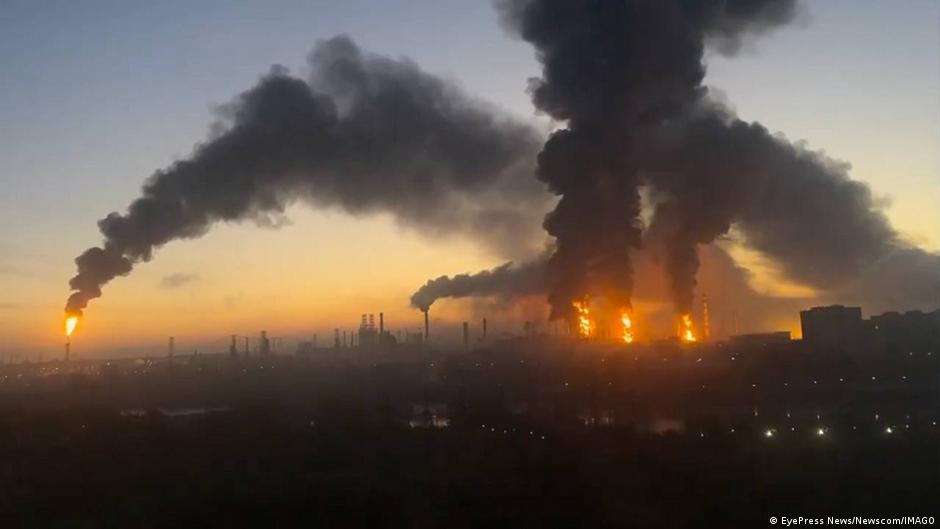
Ukraine’s President Volodymyr Zelenskyy on Thursday said his military resumed strikes on Russian energy infrastructure. Zelenskyy told the Financial Times, "The block is out. We're done." Kyiv previously paused attacks to support Donald Trump’s energy ceasefire, but Russia continued hitting Ukrainian power grids, leaving many citizens without electricity this week.
Ukraine's president, Volodymyr Zelenskyy, on Thursday said that his country's military had resumed strikes on Russian energy infrastructure despite US President Donald Trump's insistence that such attacks stop.
Zelenskyy made the statement in an interview with London's Financial Times (FT) newspaper, saying: "The block [on energy infrastructure attacks] is out. We're done."
The announcement came after Russia reported Ukrainian attacks on oil processing plants in Ryazan, where fire broke out, and Saratov.
Kyiv had refrained from making attacks to give Trump's "energy ceasefire" a chance for success.
On Thursday, Kremlin spokesman Dmitry Peskov praised "vigorous [US] efforts to initiate the peace process," and claimed that by resuming attacks, Ukraine "is coming into serious conflict with the peace efforts of the United States and American negotiators."
Russia, however, has paid no heed to Trump, instead continuing to hit Ukraine's civilian energy infrastructure, for instance on Wednesday, when Russian strikes cut power to 600,000 Ukrainian citizens.
Kyiv blasts dangerous lack of US intel
Ukraine had gone along with Trump's public proposal — despite not being notified of any "ceasefire" ahead of time — but it seemed to have helped little in the eyes of US leadership.
To that end, Zelenskyy railed against a "dangerous" lack of US intelligence information this week as well as the throttling of SpaceX Starlink satellite access for Ukraine's troops after Trump last week announced a number of decisions that have had adverse consequences for Ukraine.
The Ukrainian president said his country's military leaders had been warned that they would not be receiving US intelligence if they did not abide by Trump's "ceasefire."
Despite Ukraine's restraint, that withholding of intelligence was on full display this week when Kyiv was blindsided by Russian drones and missiles without any prior warning from the US.
"We will find a way out," said Zelenskyy of the situation as Ukraine's Western allies scramble to pick up the intelligence and defensive slack left by the US.
Zelenskyy said he would be willing to halt energy infrastructure attacks again but only if the US supplied Patriot interceptors that would allow Kyiv to down incoming the Russian ballistic missiles and drones that have been raining down on Ukraine since February 24, 2022.
Zelenskyy: Starlink throttling a question of US 'will'
Despite US claims that the Starlink situation was the result of a technical glitch, Zelenskyy told the FT, "It was not a technical problem, it was will."
SpaceX owner Elon Musk said the US owns and operates the Starshield military version of Starlink used by Ukraine, adding that he and his company had nothing to do with the issue.
The FT interview comes in the wake of Trump's decision to lift sanctions on Russian oil as well as his promise to buy "millions of barrels" of Russian diesel fuel amid high fuel prices caused by the US war with Iran.
The deal, just weeks from the US midterm elections, is unlikely to bring down oil prices. But it does extend a lifeline to Russian President Putin, allowing him to continue his illegal invasion of neighboring Ukraine.
Trump has repeatedly lashed out at Zelenskyy and went so far as to call for him to be replaced this weekend.
Trump's sanctions actions fly in the face of nearly five years of allied political efforts to pressure Moscow to end its invasion.
Trump's actions have enraged NATO allies and European leaders, with Italian Prime Minister Giorgia Meloni, for one, calling the US agreement to purchase Russian diesel "a very risky decision."
Meloni pointed out that the spike in oil prices was clearly precipitated by Trump's war in Iran and that his dealings with Putin would result in the Russian leader continuing his invasion of Ukraine rather than ending it.