
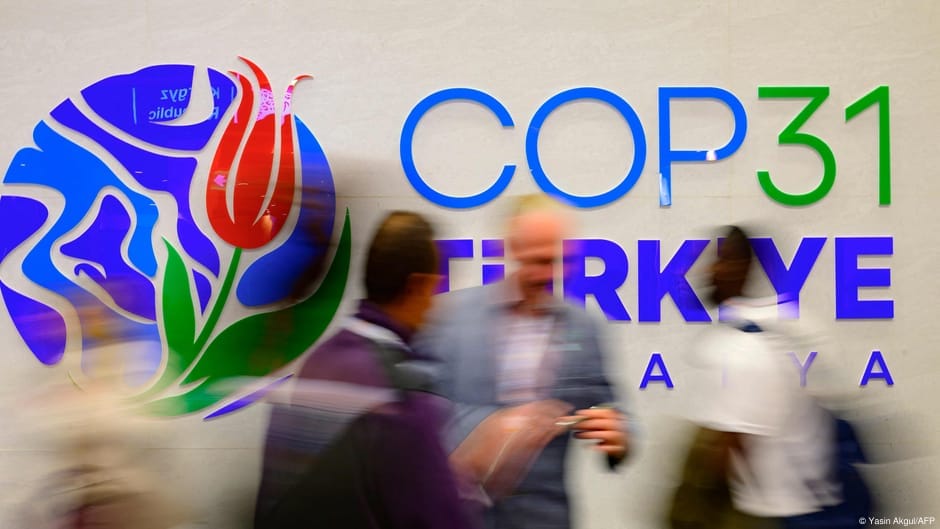
The COP31 climate summit in Antalya entered its final phase as negotiators struggled to reach a consensus. European Union officials said the current draft is not acceptable because it omits fossil fuels. Meanwhile, Turkey announced plans to start drilling for oil and gas off the coast of Pakistan next year.
European Union negotiators have told German news agency dpa that the current COP31 draft declaration, which omits any mention of fossil fuels, is "not acceptable," as they aired their frustration with the current state of negotiations.
The summit is formally set to end at 6 p.m. local time (1500 UTC), but it is likely that the deadline will be extended, as it has in previous years.
The draft declaration's main proposal aims to increase electricity's share of global energy consumption from 23% to 35% by encouraging nations to favor cleaner electric alternatives over fossil-fuel-powered cars, heating systems and industrial processes in order to cut emissions.
Some 90 governments, including many EU states, back the proposal, although it is likely to be watered down amid opposition from oil-producing states.
Meanwhile, a number of African countries have said they will only support the electrification target if they receive increased funding to help deal with the impacts of climate change.
A Turkish seismic research vessel is set to start searching for oil and gas off the coast of Pakistan next year, Turkish Energy Minister Alparslan Bayraktar said Friday.
The announcement that Turkey will start drilling offshore for oil and gas resources comes as the country hosts COP31.
"At a time when global oil and natural gas markets are experiencing a historic supply shock, we are bringing the experience we have gained in our own waters and our domestic engineering expertise to our friend and brother, Pakistan," Bayraktar said in a post on X.
Turkey's state oil company TPAO signed hydrocarbon exploration and production agreements last year with several Pakistani companies for three offshore fields in Pakistan, as well as two onshore fields.
Delegations from nearly 200 countries have been meeting in the Turkish resort city of Antalya since November 9 to negotiate ways to tackle global warming and provide financial aid to the world's poorest and most vulnerable nations to climate change.
But, as in previous years, countries remain sharply divided, and consensus has proven elusive.
Three years ago, at COP28 in Dubai, nations pledged to move away from fossil fuels, although no target or timeline was ever set.
Oil- and gas-producing countries have strongly resisted attempts to bring that particular issue back to the negotiating table.
Last year's COP30 summit in Brazil concluded with no mention of fossil fuels, prompting some nations to pursue the fight outside of the UN's sphere.
This year's summit is being held against the backdrop of rising living costs and the US-Israeli war with Iran, which has sent shockwaves through global energy markets and sent prices soaring.
Those challenges have taken the focus away from long-standing issues like rising global temperatures and increasingly frequent and extreme weather disasters, which have been exacerbated by this year's record-breaking El Nino.
In an initial draft deal earlier in the week, the phaseout of fossil fuels was included.
But a new draft declaration released on Thursday night by Australia, which is co-hosting the summit, omits any mention of gas, oil and coal, widely recognized as the main drivers of climate change.
The omission is a "black mark," France's Ecological Transition Minister Monique Barbut said.
Climate activists have also slammed what they call a "glaring regression."
"You cannot solve a fossil fuel crisis by pretending we don't need to phase out fossil fuels," said Harjeet Singh, convenor of the Fill the Fund campaign.
The director of Power Shift Africa, Mohamed Adow, also condemned the slimmed-down draft text, which he said had "gone backwards."
Despite the current differences, Australia's Climate Minister Chris Bowen, who is leading negotiations, said, "We will be consulting and negotiating until it is very clear to us that we have a consensus."