
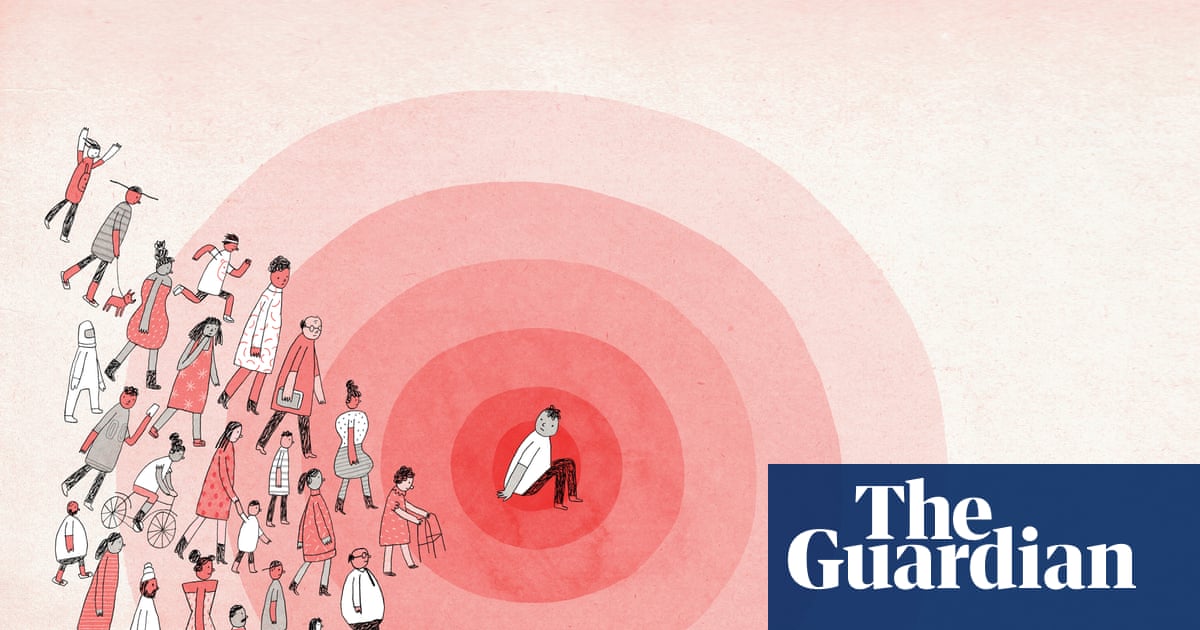
Dame Uta Frith says the autism spectrum has become too broad and risks losing its clinical meaning. After a 787% increase in UK diagnoses between 1998 and 2018, she argues many adults now labeled autistic differ from those with early learning disabilities. She says, “I tend to cope by just deleting them.”
The home of 85-year-old Uta Frith does not exactly look like the latest front in the culture wars. Located in a serenely quiet corner of north-west London, it suggests a life still well lived, a set of deep interests and an idyllic kind of retirement. There are so many books that some are reachable only using a very tall ladder. The four hours I spend talking to her – and her husband Chris, an expert in schizophrenia – are an absolute pleasure. There is no sense of outrage or upset: even when I ask her about the stream of hostile and abusive emails she has recently received, she is relaxed and phlegmatic. “I tend to cope by just deleting them,” she says. “I don’t dwell on it.”
“It” is a reference to the controversy kicked up by her recently expressed views on a subject that sits at the heart of Frith’s academic career: what it is to be autistic, and who should or shouldn’t qualify for a diagnosis. Back in March, Dame Uta Frith – she was honoured with the title seven years ago – gave an interview to TES magazine (formerly the Times Educational Supplement) scattered with stark pronouncements. Among them was a claim that the so-called autistic spectrum has “gone on being more and more accommodating”, to the point that it “has come to its collapse”. Then, in August, she published a piece in the academic journal Psychological Medicine claiming autism was in dire danger of being turned from a “precise, clinical” term into a “vague, culturally amplified identity category”.
What she said has inevitably added to the cacophony of political and media noise about rising autism diagnoses. In the UK, there was a 787% increase between 1998 and 2018, with the rise greater for women than men, and the single biggest jump among adults; credible American stats have shown an increase across the whole population of 175% between 2011 and 2022, with the largest rise occurring among 26- to 34 year-olds (in both countries, childhood rates have also leapt up). Once, Frith agreed with the idea of a broad autistic spectrum; now, she has come to the conclusion that many people diagnosed as adults are so different from the autistic people whose condition becomes obvious in their early years and have learning disabilities that most of the former group do not merit the label “autistic” at all.
“Some of them, I think, are being wrongly influenced by social media to believe that they’re autistic, because it’s a possible way to explain your difficulties,” she tells me. “And then we have a subgroup of people who used to be called neurotic, who have all sorts of mental issues, including anxiety. And a kind of hypersensitivity.”
Over the summer, Frith did an interview with the Times’s Andrew Billen, in which she expressed opinions about the TV presenter and autism activist Chris Packham – who was diagnosed with what was then known as Asperger’s syndrome when he was 44 – which she says she did not expect to make it into print. “He cannot be autistic in my opinion,” Frith said. “It is just absolutely absurd to me that somebody who can communicate as brilliantly as he does – that is what I call a blatant contraindication.” The day after we meet, Packham is scheduled to pay Frith a visit with a BBC camera crew: as with just about everything she talks about, her feelings on this prospect are characteristically relaxed (I subsequently learn that they got on very well).
I have a 20-year-old autistic son, James, who also has learning disabilities – as well as an amazing talent for music – and now goes to a specialist further education college. When he was diagnosed 17 years ago, understanding and awareness of autism seemed to be moving in roughly the right direction. I could never have anticipated the way it has ballooned into a subject of such controversy, which puts me and millions of others in a worldwide community of people who now follow the news with a mixture of bafflement and dread.
On and on it goes. The word “overdiagnosis” is now common currency, partly because of the bestselling book The Age of Diagnosis by the neurologist Suzanne O’Sullivan, which claims that autistic people “with the greatest need are becoming invisible” and that there are questions to be asked about diagnoses that cause “more harm than good”. Donald Trump and his health secretary Robert F Kennedy Jr look ahead to the absurd prospect of an autism “cure”. The rightwing press and its favoured politicians – whose loathing of any kind of diversity inevitably triggers a mistrust of neurodiversity – rage about how many neurodivergent young people are on disability benefits. Celebrities constantly lay claim to being on the spectrum. Meanwhile, there are real-world tragedies: Jason Arday, for instance, was not only a black Cambridge professor who ended his own life after relentless coverage of his allegedly specious claims about his life story and achievements. He was also autistic – which statistics show put him at a hugely increased risk of suicide.
In December last year, the then health secretary Wes Streeting commissioned three eminent academics to carry out what the government called an “independent review into mental health conditions, ADHD and autism”. The result, published a few weeks ago, traced the increase in autism diagnoses to “socio-cultural changes in awareness [and] recognition”, and the fact that “diagnostic concepts have also broadened”. But in some people’s eyes, its authors had tried to have their cake and eat it. “If present trends continue we are clearly entering a phase in which the balance of risks is changing … towards an increased risk of misdiagnosis and overdiagnosis,” they said. The review recommended much closer monitoring of privately run clinics that diagnose autism and ADHD. But it also said “we cannot conclude that overdiagnosis is occurring at scale”.
Frith is at pains to stand well away from all this political and cultural hurly-burly, telling the story of her change of mind as a matter of careful thought and worry that, as so-called high-functioning people cast the popular understanding of autism in their image, the needs of more intensely autistic children and adults are in danger of being forgotten. A few minutes after we have talked about the common idea that autism can be a “superpower”, she says, “I have had emails from parents who say, ‘I no longer call my child autistic. When somebody asks, I say he’s intellectually impaired, and they will say, ‘Oh, all right.’ But if I say he’s autistic, they will expect things that are just … not likely.’”
Frith is one of the tiny cluster of people who came up with the understanding of autism now accepted across most of the world. In 1964, she came to London from Germany, and found her niche at the Institute of Psychiatry, connected to the famous Maudsley hospital. She had planned to study obsessive-compulsive disorder, but her head was turned by new research into what were then known as “psychotic” children.
She vividly remembers her first encounters with such kids, at the UK’s first dedicated school for autistic children, in Ealing, west London. “I was fascinated,” she tells me. “The astounding thing was that they could do things I would not expect children who were then called mentally retarded to do.” Like what? “Jigsaw puzzles, tests that would be given to very young children to measure their intelligence. They did pretty well, sometimes in a way that was completely unconventional – like completing the jigsaw with the picture on the underside.”
Frith ran experiments that showed the autistic minds tended to be more responsive to visual cues than words. In 1989, she also came up with the so-called theory of Weak Central Coherence: the idea that autistic people tend to fixate on detail rather than big, over-arching things such as stories and themes.
While all this was going on, she was also keeping the company of the psychiatrist Lorna Wing (who had an autistic daughter) and the psychologist Judith Gould – who would spend four years in the 1970s transforming the understanding of autism. Focusing on the London borough of Camberwell, they interviewed more than 900 teachers of children under 15 who, at one point or another, had needed either psychiatric treatment or attention from social care services. They then visited and closely observed every one of the 132 children those interviews suggested might be autistic, which eventually led to the conclusion that autism was a much more widespread and complex phenomenon than had been previously thought, best considered a “continuum” – or, as they were to later term it, a “spectrum”, a word intended to conjure up images of how light works, combining different colours into a single beam.
Autism, Wing said, ran “from the most profoundly physically and mentally retarded person … to the most able, highly intelligent person with social impairment in its subtlest form”. But what unified everyone on the spectrum was what she and Gould called the “Triad of Impairments”: problems with social skills, reciprocal (ie give-and-take) language and “social imagination”, most obviously evident in children not understanding the concept of pretending while they play. Though subsequent diagnostic criteria have changed – it is now accepted, for instance, that autism usually involves sensory issues including heightened or lowered sensitivity to sound, light, texture, heat and cold – these ideas are still at the heart of what most people think autism is, along with a tendency to deep obsessions, or what the autism vernacular calls “special interests”.
Frith says when the idea of a spectrum arrived, “I was more than happy. I was always worried about the sort of marginal cases, so that was one good thing. And the other was that we had more people to work with.”
The subsequent story of autism included Wing’s creation (in 1981) of the category known as Asperger syndrome: a term named after the work with a group of “little professors” of the Austrian psychologist Hans Asperger, now understood as a collaborator in the Nazi extermination of disabled children. Wing used the term to describe autistic people without language issues or learning disabilities. In 1994, it was included in the Diagnostic and Statistical Manual of Mental Disorders, published by the American Psychiatric Association and now on its fifth edition. But it was taken out in 2013, leaving “autistic spectrum disorder” as a single broad category, now broken down into three levels: “requiring support”, “requiring substantial support” and “requiring very substantial support”.
By then, Wing – who died in 2014 – and her colleagues’ work had led on to the idea of neurodiversity, and the activism of so-called autistic self-advocates. And as all this happened, Frith says she began to feel increasingly uneasy. “I suddenly realised, maybe 15, 20 years ago,” she says, “that I had talked completely differently about autistic people in the past compared with people who didn’t have learning disabilities and had been diagnosed more recently. I’d used completely different language and completely different arguments. And that seemed to me to be a sign of something not being quite right.”
She is sceptical about some concepts that are now taken for granted by many autistic people and autism specialists. A good example is “masking”: people – particularly women and girls – trying to cover up autistic traits through a painstaking process of copying which, in most accounts, after a day at work or school, leaves them feeling exhausted. “It’s a non-scientific concept, if ever there was one,” she says. “It’s completely unfalsifiable: if you could use the idea that you’re masking – ie you don’t have any symptoms to show … ”
But, I counter, people who mask say, “I have got symptoms to show. And I show them when I get home from school or work or when I’m on my own.”
“But that’s entirely subjective. It’s true that they have fatigue and exhaustion. These are the really important things to notice. But why believe that they are caused by masking?”
Because it’s such an effort, I reply.
“We all do that,” she says. “It’s acting, which is exhausting. But what does that have to do with autism?”
Well, I say, the deficits and impairments they’re concealing are stereotypically autistic. But what Frith craves, on this subject and many others, is scientific certainty. “The studies I’ve seen measure masking on a test with items on it like ‘I copy body language’. And I dismiss that as non-scientific because subjective experience is not reliable.” She is keen to emphasise there is usually a tentative element to what she thinks and says. “I’m not certain. I may be wrong. But I think we’re at a point where it’s useful to have a debate.”
Disagreement with Frith’s opinions has inevitably been led by some of those aforementioned self-advocates. Among them is Mary Doherty, an Irish anaesthetist who was diagnosed at 45 and has a son and daughter who are both also on the spectrum. She has memories from her schooldays of trying desperately to mask her differences, and failing. Now she is one of the founders of Autistic Doctors International, which promotes the idea that medics who are on the spectrum “bring a variety of strengths to healthcare, including an array of benefits for autistic patients”.
We spend 90 minutes talking on an outdoor cafe terrace near London’s Victoria station. Throughout the conversation, Doherty constantly stretches and loosens an elasticated hairband: an example, she says, of the “stimming”, or self-stimulatory behaviour, many autistic people use as a way to calm themselves. Frith and others, she says, are effectively averting their eyes from “the harm that’s done by invalidating people’s life experience. If you are autistic, understanding your autistic nature is life-changing. It’s so damaging to deny that to people, particularly people who are already at risk of mental health problems.”
Even if they have a blurry intersection, I suggest, there is a pretty obvious distinction between her kind of autism and more intense, “classic” varieties, which is part of what people are now arguing about. “It’s not a clear division, she retorts. “If you see me on a bad day … ” So does she feel a strong instinctive affinity with, say, an autistic person who is non-verbal and has learning disabilities? “Yes. And that was probably one of the biggest shocks to me in the earliest days of my advocacy journey.”
One big current argument, as she knows, is that when it comes to public services and healthcare, more confident, articulate autistic people will somehow get to the front of the relevant queues much more quickly than more intensely affected people (or their parents and carers). And as a consequence, people with more complex needs will get neglected. Maybe, in fact, that has been happening already.
In thousands of people’s everyday lives, the debate about supposed “overdiagnosis” – and whether certain people are now prioritised over others – is very real, not least at the proverbial school gates. One mother I speak to, who asks to remain anonymous, lives in the south-east with her partner and two children, one of whom is a girl with an intense kind of autism that seems to defy cliched categories: she is bright and intellectually curious, but also has profound sensory issues and difficulty navigating through the world that means she requires constant support at school.
She has recently heard that one in five of the children in her daughter’s year are reckoned to be autistic. “From day one, I just felt my child’s needs were lost and misunderstood because that word now applies to so many children.” A lot of kids, she says, “find modern school life very difficult. And people are seeking a diagnosis so their child is treated as an individual. I don’t blame them for that. But it isn’t helpful to the children who have a classically autistic inability to cope with those environments.”
She has one other concern. “When my daughter got her diagnosis, I would have described her as high-functioning because she was verbal and she could read and write. But that term has shifted very far, even from my child. It now seems to mean children who can do every sort of activity; it’s becoming unrecognisable. And you wonder: how wide can the spectrum be?”
Is there any way out of what feels like a polarised stalemate? One possible solution is offered by Frith’s one-time protege Simon Baron-Cohen, another autism expert who has felt the heat of cultural controversy, thanks to his theory that autism might be a byword for what he used to call “the extreme male brain”, low on empathising, but good at understanding systems and patterns (earlier this year, he said such language was no longer useful).
Baron-Cohen’s working life has been defined by autism since he began working at a trailblazing autism school called Family Tree in north London in the early 1980s. And he has seen plenty of past conflict about who should and shouldn’t be considered for particular diagnostic categories, not least when Asperger syndrome was first talked about.
He now thinks the catch-all term “autistic spectrum disorder” – or “autistic spectrum condition” – is proving to be increasingly problematic. “By removing the diagnosis of Asperger syndrome [from the diagnostic manual] and lumping all forms of autism together,” Baron-Cohen recently wrote, “we have ended up with individuals like Elon Musk calling himself autistic, and a child being called autistic who will never leave home or live independently and who has significant learning and language disabilities … So, in 2013, overnight, the prevalence of autism massively increased, as now both major subgroups of autism were folded together.”
I speak to Baron-Cohen – who is in his rooms at Trinity College, Cambridge – via Zoom. “The term ‘autism’ is too much of a sledgehammer,” he says. “It’s being used to cover too many things. So … I want to see subgroups.
We can call them type one, type two, type three, and we can decide. You know, type one is autism with an intellectual disability and a language delay. Type two is autism without an intellectual disability. But the reason why I’d be happy to see a proliferation of subgroups is the research that now shows most autistic people have at least six diagnoses: autism with ADHD, autism with dyslexia, autism with dyspraxia, autism with anxiety, autism with gastrointestinal pain, autism with or without epilepsy. I just think we need to start being more precise.”
I have one possible objection to that, to do with my son James. Most people who are familiar with the politics of autism will know there is often an awkward tension between articulate self-advocates and parents – like me – who have no choice but to speak on their children’s behalf. And woven through it, for me at least, is a nagging ambivalence. I sometimes worry that ideas of autism being a difference rather than a disability overlook James’s lived experience. On the other hand, because of the broad definition of autism, it’s really helpful for me to be able to say, “You know that thing Chris Packham’s got? This is my son’s version of that.” If we move to subtypes and he’s given the label type one – which is understood as lower functioning – that’s going to other him, and I don’t want that to happen.
“Nobody wants to be othered,” Baron-Cohen replies. “We want to make sure all subgroups are equal in terms of access to resources and cultural esteem. And we must never prejudge what someone is capable of.”
Two days after my chat with him, I go back to where the modern understanding of autism all started: the clump of buildings around the Maudsley, where I meet Francesca Happé, another Frith protege and professor of cognitive neuroscience at King’s College London, who is now pioneering research into how the condition is experienced by older people.
“Uta’s right that the most important things to know, to the extent that you can know anybody’s life trajectory, are about levels of language and speech and general intellectual functioning,” Happé says. “Within autism, they’re the most determinate things.”
But she clearly worries about categorisation and her sense that it may well not reflect people’s psychological complexity. “We tried it with Asperger’s: we had a go at, on the one hand, high-functioning, lots of language and no intellectual impairment, that type of autism – and then all the rest of autism. And it didn’t work – because everything blurs, and because people change.
“I’ve met people where, at first sight, I wouldn’t pick up anything. I meet them on another occasion when they’re more tired, and I can begin to see the mask almost literally slip. There’s a particular woman who came to stay with us, and my children could have diagnosed her within about half an hour when she was out of her comfort zone. You know, if she had a bad day, it was a disastrous day.”
Happé has a tentative solution to the overdiagnosis wars. “I would say there’s an argument for autism spectrum disorder as a medical diagnosis, and it must require support. If you don’t require support, then by all means you can say you have an autistic identity, but you don’t have autism spectrum disorder, because it’s not impairing you. What you need at the ground floor, before you get to the disorder level, is understanding: self-understanding, understanding from other people, reasonable accommodations. That’s level zero.”
Which brings us to perhaps the most important question of all: right now, amid all the hue and cry, what is it like to be autistic, particularly if some people might place you – rightly or wrongly – on the borderline? When I contact the National Autistic Society, they put me in touch with two women who roughly fit that description.
Hina Shaikh’s story is so fascinating, it probably deserves a book. She lives in Bradford and was diagnosed with autism four years ago, when she was 42. She was working in a car dealership, and made a successful sale to a man who turned out to be a social worker. “He just said, ‘I think you might be an undiagnosed autistic adult’, just like that. And I was taken aback: you thought of special needs children who weren’t living normal lives. But he started pointing out everything he had noticed: I didn’t make eye contact, I didn’t shake his hand, I didn’t do small talk. And he noticed how I had organised my desk, how all my pens were lined up.”
As she read up on autism, all this seemed to chime with her past history, and her profound unease about everyday social rituals. After her GP instigated a spell of form-filling, she found the average local wait for an NHS diagnosis was 18 months, and went instead to a private clinic in Shropshire. There, a consultant said, “If I had diagnosed you 15 or 20 years ago we would have called it Asperger’s. Now it’s all under one umbrella called autism. But yes, you are autistic.”
She still receives no support for her autism, but has since changed jobs and is now employed by a neurodiversity-friendly company that allows her to work from home. The big issue she spends her spare time on is the lack of autism awareness in her own community. “After I was diagnosed, I went on YouTube, trying to find something in Urdu that would explain autism to my mum. And there was nothing. In the Asian-Muslim community, with a lot of people, if a child is autistic, you take him or her to an Imam and an amulet or something is going to cure them.”
Her dad, she tells me, left the family home in his 50s (“He was one of those people who should have never got married – he couldn’t deal with family life”) and moved to Manchester. He died of Covid-19 in 2021, and she and her sister were given the keys to his flat, where they found apparent proof that Shaikh’s autism had genetic roots. “That’s when we realised he had special interests: there were 13 bikes there, and toolboxes, and collections of albums we couldn’t even have imagined.” They also found a pile of medical paperwork. “I realised they were his autism diagnosis. He’d been diagnosed in his late 50s, after he left.”
Shaikh likes Baron-Cohen’s idea of new autistic subtypes. “I think maybe they could have changed the name of Asperger’s because of its connotations, but they still needed to keep different criteria and different diagnoses. I’m gonna be very blunt now, but I am not like an autistic child who is having severe meltdowns, and who is really struggling socially and academically.”
Abigail Stow is 28. She was diagnosed in April and lives in Stevenage, where she works in the NHS, “booking, doing counselling appointments, answering emails, stuff like that”. As she grew up, she tells me, “I was very horrendously bullied, and it caused a lot of anxiety and depression, and at one point self-harm.” Even if she displayed some signs of autism, she got no extra help or support at school. Then, when she was 19, her stepdad heard a podcast about girls and autism. When she listened, she heard loud echoes of her own experience. “So I went to my GP, got booked in for an assessment, and they turned around to me and said, ‘You can’t possibly be autistic or ADHD because you’re giving me eye contact and you have a boyfriend, and you’re able to work.’ So I was like, I must just be weird.”
Nonetheless, she carried on reading about autism and became increasingly convinced she had autistic traits. “I was really struggling to hold down work. If places were busy, that really stressed me out. I’d wear noise-cancelling headphones if stuff was too noisy. And I really struggled to make friends and keep them.”
She has an autistic brother who got his diagnosis two years earlier (“School just thought he was an angry kid”) and two special interests: dogs and heavy metal. “When I’m obsessed with something,” she says, “it becomes my whole personality.”
She also freely talks about masking. “Work is very masky. I think people at work would probably describe me as outgoing and bubbly and chatty. And then I come home and I’m like, don’t even talk to me.”
When she was diagnosed – by a private company paid by the NHS – it was an epiphanic experience. “I cried. I could breathe again. It just felt so good, knowing I wasn’t crazy and I wasn’t wasting anyone’s time.”
I wonder how she feels if she sees people on, say, TikTok, laying claim to autism when they seem to show none of the signs? “It really depends. I don’t know … I feel like they’re almost trying to, like, cutify autism – like, ‘Oh, I’m a little bit autistic’ or, ‘I’m neuro-spicy, and I’ve got a touch of the tism.’ It just makes me cringe. But I also appreciate [that there are] some people like that who are autistic as well. It’s complicated.”
Back in north-west London, I ask Uta Frith what she thinks will happen next. “Things come in waves,” she says. “There are sometimes subgroups, then sometimes they’re put together again, and then it splits back up. You always have the splitters and the lumpers, don’t you?”
And we’re still in a lump phase, I suggest. “Yes. And the next one will be a split. It’s the pendulum swing.”
And why does she think that will happen?
“Just because the extension of the spectrum has gone too far. There are too many cases that were not anticipated to appear.”
Mary Doherty stands on the opposite side: she insists that what some people see as overdiagnosis is really just the birth pangs of a proper understanding of how many people are autistic. “Without the self-advocacy movement, when [autism] was just people who were obviously disabled, that picture was incomplete. I think we’re moving towards a much more holistic and complete version of what it means to be autistic.”
Is there a way through this ever more intense conflict? Simon Baron-Cohen has a different belief again: in accepting an extended spectrum, but moving into what he calls “precision diagnosis” and “support for whichever group you’re in. Because I see them as equally needy; it’s just that the needs are different.”
And all the time, yet another quintessentially 21st-century battle rumbles on. “I’d like the polarisation of views to change into a discussion where all sides start with the assumption of goodwill and we can actually talk about things without being afraid,” Francesca Happé says, somewhat optimistically. “But I would like that in all aspects of life.”