
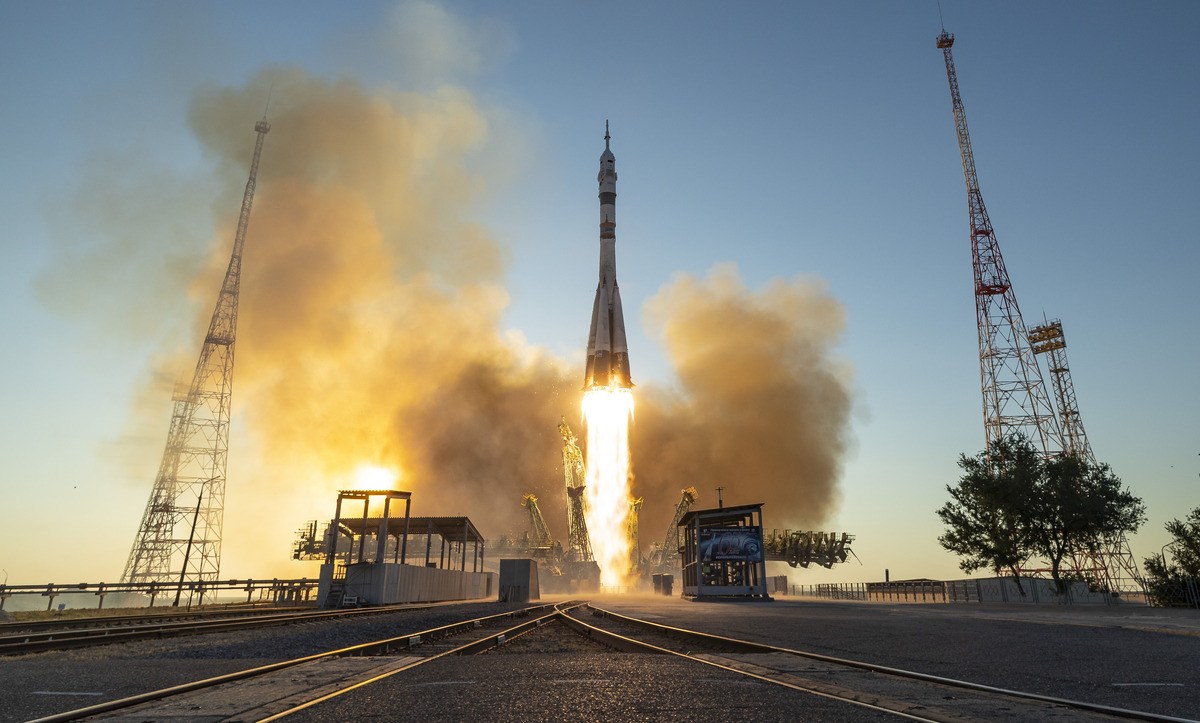
NATO intelligence reports Russia plans to launch a nuclear-armed satellite into space before the end of the year. German media said Moscow is preparing to orbit the Sputnik-S soon. Russia called these claims unfounded propaganda. Experts fear such weapons could destroy critical satellites and trigger a dangerous space arms race.
NATO intelligence assesses that Russia is planning to launch a nuclear-armed satellite into space before the end of the year, according to several German media outlets.
Western officials, including from Germany's BND foreign intelligence service, believe Moscow is gearing up to put the "Sputnik-S" satellite into orbit in the next few weeks, German broadcasters WDR and NDR reported on Monday, along with the major Süddeutsche Zeitung daily newspaper.
The Russian Embassy in Berlin called the reports "unfounded" and "part of a propaganda campaign," according to the German outlets.
The satellite is said to have been pieced together several years ago and is in the region around the Russian capital. Newsweek has reached out to the German government, the Russian delegation in Berlin and the BND for comment via email.
Weaponizing space has been highly controversial for decades, enmeshed with fears that the U.S., Russia and China could set off a new space-based nuclear arms race.
The subject has largely been taboo because a nuclear detonation in orbit could damage critical military, civilian and commercial satellites, and potentially scatter radioactive debris.
A 1967 treaty banned placing weapons of mass destruction in space, four years after nuclear explosions in outer space were prohibited. Russia is a party to both treaties.
Major General Michael Traut, who heads Germany's Space Command, warned in June that Russia was preparing to put nuclear weapons in space.
"At the very top end of escalation, there is the suspicion that Russia may be working on technology to place a nuclear explosive device in orbit," he told Politico.
The U.S. said during former President Joe Biden's administration that it had intelligence that Moscow was developing a weapon to target satellites in space.
"Russia's pursuit of this particular capability is troubling," John Kirby, the White House's national security spokesperson at the time, told reporters in early 2024. Unnamed officials then described this future weapon as nuclear-capable.
Mike Turner, a Republican Representative who was serving as the chair of the House Intelligence Committee, had pressed the administration to declassify information on a "serious national security threat" posed by Russia.
If Russia deployed a nuclear warhead in space, this would not just destroy any potential target -- it would also likely take out Russia's own satellite constellations, plus those belonging to its allies, like China, said William Alberque, a former head of NATO's nuclear non-proliferation center, now with the Pacific Forum nonprofit.
Traut's previous comments on Moscow's possible designs for space-based nuclear weapons indicate Berlin is "concerned enough to try and dissuade Russia through exposure," he told Newsweek.
Speculation has in recent years surrounded Russia's 2553 Cosmos satellite amid questions over whether it could be used to hide sensitive systems -- including nuclear weapons -- from sensors belonging to other countries.