
Iran threatened to strike oil, AI, and data facilities across seven Gulf countries if the US and Israel renew attacks. Mohsen Rezaei said, “There can be no arrangement in which Iran’s economic lifelines come under attack.” Tensions rose as the IRGC claimed to have struck ships near the strait.
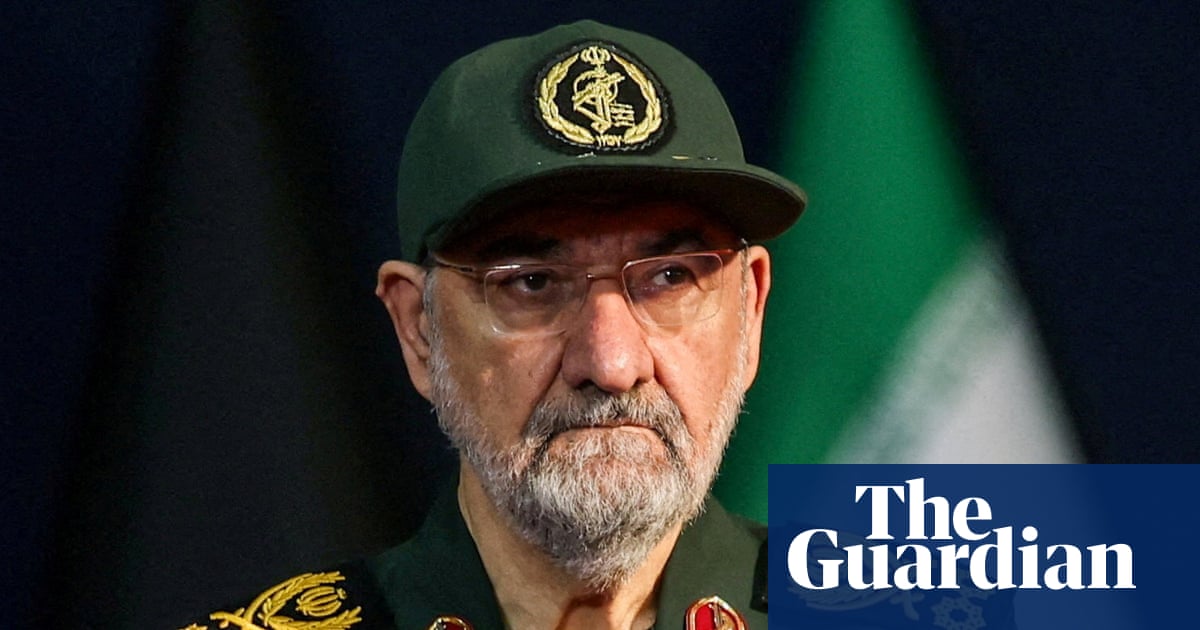
Iran will strike oil facilities, undersea cables, datacentres and AI facilities across as many as seven countries in the Gulf in the event of a fresh US-Israeli attack, Mohsen Rezaei, the secretary of Iran’s supreme national security council, has said.
Mehdi Mohammadi, an adviser to Mohammad Ghalibaf, the hardliner who led Iran’s negotiations with the US to end the conflict between the two countries, said Donald Trump and Benjamin Netanyahu had agreed in principle on an attack, but could not guarantee a successful outcome. He added: “We see the next conflict as an existential threat. The third war in two years means a threat to existence. Our strategy is ‘zero red lines’.”
Mohammadi said: “We break the temporal and spatial dimensions of the conflict. The war will continue longer and in a wider geographical area than the enemy anticipates.”
Iran’s ability to mount such operations, including any unofficial help it receives from China or Russia, will be a key factor in any American decision to restart the war.
Iranian media reported that Rezaei had declared: “In the event of a war, cables, datacentres and artificial intelligence facilities could also be targeted. If the conflict breaks out again, we will have a broader plan.
“There can be no arrangement in which Iran’s economic lifelines come under attack while the economic architecture enabling those attacks is considered untouched and immune.”
According to recent reports in US media, US military advisers have drawn up a detailed list of targets for a fresh joint US-Israel assault on Iran to be implemented after the US midterm elections on 3 November.
Foreign ministers from three European countries, as well as Turkey, Saudi Arabia, Pakistan and Egypt, will meet in Istanbul on Friday to establish agreed policies on the linked Iranian, Yemini and Palestinian crises. There is an alarm that a further war is now the working assumption in Tehran and Washington.
The naval services of Iran’s Islamic Revolutionary Guards Corps (IRGC) claimed to have simultaneously struck four commercial ships seeking to navigate through the strait of Hormuz on Wednesday. The ships were said to be transferring oil from ship to ship.
The IRGC claimed a further three ships had been struck when they hit mines in the strait. There was no independent verification that this number of ships were hit, but Brent crude oil was trading at $113.4 a barrel, a recent high, propelled by US reports of the imminent renewed joint Israeli-Iranian assault on Iran.
Trump has backed away from striking Iran again seven times in the past four months. However, a deadlock in diplomatic negotiations has led US government officials to brief about a potential new military campaign that would target missile sites, oil installations and nuclear sites.
The sabre-rattling by both sides has coincided with extended joint-training manoeuvres by the US and Israel, including practice runs over Iraq. Dozens of Israeli planes also flew close to the Iranian border earlier this week, according to the news site Axios. A big fire at a large aluminium factory in Arak in central Iran suggests sabotage operations may be under way inside the country.
Netanyahu met the US secretary of defence, Pete Hegseth, in Israel on Monday to discuss the timing and purpose of a joint attack, including the possible political implications for Netanyahu’s chances of re-election.
Netanyahu would prefer it if Iran attacked first, he reportedly told Hegseth.
A US military buildup is due to be completed by early November, before a possible newly Democrat-inclined Congress or Senate take their seats in January. Trump intends to have stationed three aircraft carriers, thousands of marines, fighter jets and special operations forces in the Middle East by November.
Reza Nasri, an international lawyer close to the Iranian foreign ministry, said: “A third wave of war would not stay contained. Power grids, desalination plants, refineries and ports across the region would burn. Tens of millions would be left without water or electricity, and a massive wave of refugees would move from Arab countries towards Europe.
“Hormuz would close completely, oil would spike, and the global economy would tip into recession. Israel’s economy, already bled by mobilisation and missile fire, would not survive a prolonged war of attrition. And Trump would be trapped in a crisis that consumes the rest of his presidency and leaves a wreck for his successors,” Nasri said.
Fars news agency, which is close to the IRGC, said Iran had issued directives to its various military and operational units “stipulating that in the event of a new widespread war, involving the assassination of Iranian officials and the killing of civilians, the Iranian response will not be limited to military targets, but will also include political targets”.
Mediators from Iran and Pakistan this week again explored familiar if reconfigured options for a ceasefire, including proposals that Iran receive billions in frozen assets in return for lifting its blockade of the strait, allowing UN weapons inspectors to view its bombed nuclear sites and to export its stockpile of highly enriched uranium to a third country.
Iran has offered to end the Hormuz blockade within seven days and start talks on its nuclear file, but only if preconditions are met first including lifting US sanctions.