
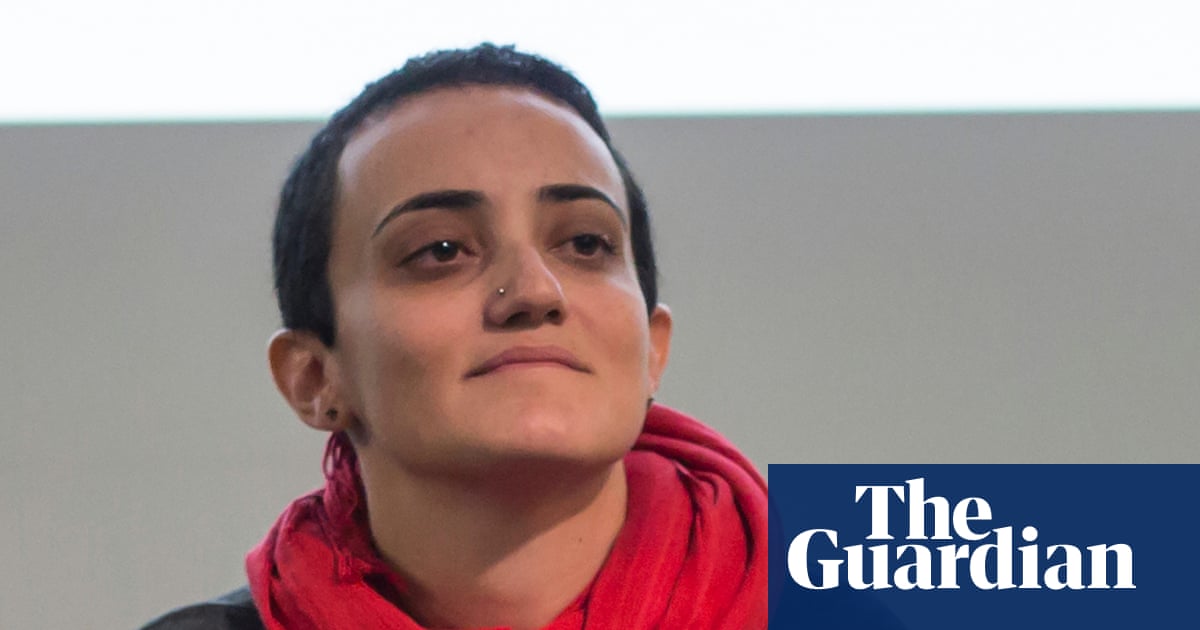
Egypt fined editor Lina Attalah and ordered the closure of her news outlet Mada Masr. Authorities released Attalah after the outlet paid a 3m Egyptian pounds fine. “Lina Attalah was released after we paid the said fine,” said her lawyer. The court also sentenced her to one year in prison.
Lina Attalah, a prominent Egyptian journalist and the editor-in-chief of the news outlet Mada Masr, has been released from detention by Egypt’s authorities and had her website ordered to be shut down by a court amid an intensifying crackdown on independent media in the country.
Attalah was taken briefly into custody after a Cairo court convicted her of managing an unlicensed website, prompting fresh international concerns over press freedom in Egypt.
According to Mada Masr, Attalah was released after the news outlet had paid a fine of 3m Egyptian pounds ($53,500; £40,100), prompting statements of support from global human rights groups.
“Lina Attalah was released after we paid the said fine,” said her lawyer Hassan al-Azhari. “In the process, we discovered that she had been sentenced in absentia in 2024 to a year in prison, as well as a fine of 20,000 Egyptian pounds,” he told AFP.
Attalah’s defence team had appealed that sentence, and a new court hearing was scheduled for 11 November, Azhari added.
Attalah founded Mada Masr in 2013, after coming to international prominence in 2011 during the Arab spring. An advocate for press freedom, she has been arrested on a number of occasions.
Attalah’s detention, and the ordered closure of Mada Masr – which says it had applied for a licence to operate three years ago and had no reply from Egyptian authorities – follows the arrest of the entire six-person team at the independent factchecking platform Matsadaash, who were charged with belonging to the outlawed Muslim Brotherhood.
Attalah’s legal team suggested she had been, in effect, ambushed during a court appearance, with a judge appointing a defence lawyer for her before security personnel detained her in the courtroom.
The crackdown “can only mean that Egypt’s security agencies are moving from years of harassing independent media to wiping them out completely”, said Hossam Bahgat, the head of the Egyptian Initiative for Personal Rights (EIPR), who attended the court hearing.
“This escalation validates our fears that the arrest and continued detention of the six Matsadaash journalists would signal a crackdown of unprecedented magnitude,” said Bahgat. “It risks fully eviscerating the narrow margin of press freedoms that have been carefully maintained in Egypt over the past decade, albeit amid great personal sacrifice – a margin that had allowed the continued operation of a handful of news outlets and human rights organisations despite frequent harassment, including through legal avenues.”
According to EIPR, the recent moves against independent media follow an increasing frequency of statements from the Egyptian president, Abdel Fatah al-Sisi, since August claiming a conspiracy to destabilise the country. He has said he intended to remain in power until 2030 to protect Egypt from “traitors, criminals, and saboteurs”.
Reporters Without Borders said the court’s decision was “outrageous” and “shameful”, urging authorities to release Attalah “at once”. The Committee to Protect Journalists (CPJ) also condemned the verdict. Amnesty International said the verdict represented “a crushing blow to press freedom”.
Egypt is among the top jailers of journalists globally, with 25 currently behind bars, according to the CPJ. Attalah’s lawyers took steps to challenge the ruling, with a hearing in a retrial of the case scheduled for 11 November.
Underlining concerns over the crackdown, Pen International issued a statement with several dozen civil society organisations condemning the moves.
“Though this is the sixth case brought against Mada Masr in six years, this is the first time that a case of this nature has been referred to trial,” the writers’ association said. “For years, Egyptian authorities have leveraged their repressive and restrictive tactics against independent media outlets to harass journalists, restrict their operations and chill freedom of expression. To escalate to the step of referral to trial must be read as a clear intent to entirely shutter the independent media space, and to permanently close what remains.”