
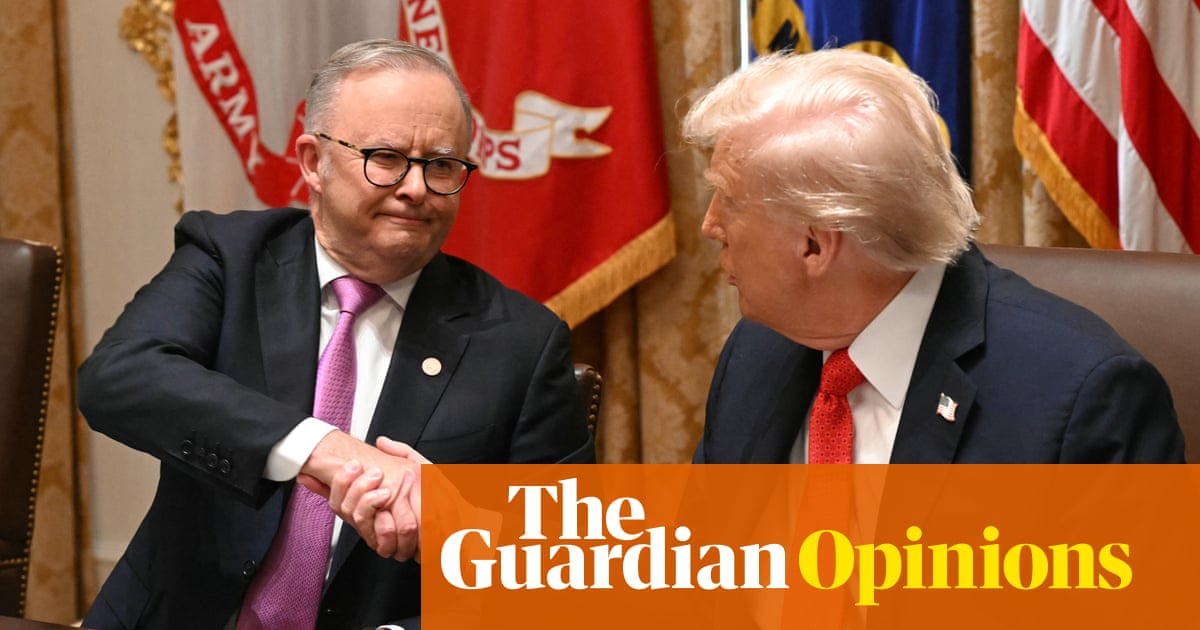
Anthony Albanese will meet Donald Trump at a Quad summit in Manila later this month. The leaders of India and Japan will also join the talks. Bruce Wolpe said Albanese has managed his ties with Trump successfully, treating the relationship as “transactional, not existential” during his second term in office.
Just a few weeks ago, Anthony Albanese and his closest advisers thought the possibility of a meeting of the Quad leaders taking place before the end of the year was remote in the extreme. Officially titled the Quadrilateral Security Dialogue, the group includes Albanese, Donald Trump, India’s Narendra Modi and Japan’s Sanae Takaichi. In theory, the Quad leaders meet annually.
Last year, a blow-up between the hot-headed US president and the hardliner Modi stalled momentum. Talks due to take place in India were quietly cancelled. The 2023 summit was also put off at short notice, as Joe Biden faced a debt ceiling crisis in Washington.
One seasoned diplomat observed that meetings of the Quad foreign ministers, designed to fill the vacuum, were happening with such regularity in recent years that they risked drawing attention to the fact the leaders clearly had other priorities.
But, amid furious preparation for Albanese’s next big overseas trip, a Quad summit has somehow been scheduled for later this month in Manila.
After flying to the Turkish resort city of Antalya for the Cop31 climate summit on Tuesday, the prime minister will head to the Philippines for talks with south-east Asian leaders next weekend. There, before he heads to China, he is expected to sit around a table with Trump, Modi and Takaichi.
In the wake of Tuesday’s US congressional elections, the trip holds even more significance than usual. Just how a diminished Trump acts on the world stage will be fascinating, especially if the rumoured three-way meeting with China’s Xi Jinping and Russia’s Vladimir Putin goes ahead on the sidelines of the Asia-Pacific Economic Forum in Shenzhen.
This latest round of diplomacy may also serve to remind Albanese just how quickly things can change on the international landscape.
Sign up for Guardian Australia’s Politics, really newsletter here
Trump has appeared downcast and dejected since his Republican party lost control of the US House and Senate this week – with swings of a scale not seen since at least 1974 in the wake of the Watergate scandal and Richard Nixon’s resignation.
As the American-born commentator and author Bruce Wolpe observed to Guardian Australia after the thumping result, Albanese has managed his ties with Trump successfully in the first two years of his second term, treating the relationship as “transactional, not existential”.
Unlike Canada’s Mark Carney and some European leaders, Albanese has kept things on an even keel with Trump by sitting out much of the drama, including not retaliating against the president’s misguided tariff regime.
From the prime minister’s point of view, Trump remaining engaged on the question of peace and stability in the Indo-Pacific – pushing back against China’s expansionist mindset and developing trade in critical minerals – is more important. He also would like to avoid a dressing down in the Oval Office.
But if Albanese will not speak up forcefully against the Iran conflict and the tariffs now, when will he? The scale of the midterm repudiation suggests Trump should urgently rethink his approach to negotiations.
The trade minister, Don Farrell, told the Australian Financial Review on Friday Trump’s loss of control was vindication of Australia’s objection to the additional taxes being added to our imports, noting tariffs only push up prices for domestic US consumers. States worst hit by Trump’s so-called “liberation day” scheme, including Ohio, Minnesota, Michigan and Texas all swung away from the Republicans.
Albanese and other leaders are expected to urge Trump to end the ongoing fuel shock, and reduce drivers of global inflation and cost-of-living pain hitting consumers and businesses around the world. While Trump was more focused on building his White House ballroom, Democrats successfully convinced voters they could help on the question of affordability in the economy. Trump’s position on control of the strait of Hormuz has been shown to be empty bluster.
The success of the affordability promise has already registered with Labor and the Coalition here at home.
As they try to drive down support for Pauline Hanson’s One Nation ahead of elections in Victoria and New South Wales, both parties are feeling the heat over household costs, petrol prices and rising interest rates. So often elections come down to the state of the economy, and in Australia, the next federal poll looks to be the same.
Too many American voters perceived Trump as not only failing to control their economic reality, but actively making their lives worse. His signature policy positions increased the cost of doing business and buying food, choked supply chains and pushed fuel prices through the roof.
Voters here are increasingly linking Labor’s spending to the stubborn inflation. If more voters move to blame the government’s actions for making their own economic reality worse, they’ll punish Labor in even greater numbers. The treasurer, Jim Chalmers, this week conceded as much, saying he expected more pain in opinion polls after interest rates went to an 18-year high on Tuesday.
It is no wonder some in the government are quietly pleased the massive climate summit isn’t happening in Adelaide as originally planned, with thousands of delegates instead gathering in a faraway time zone to try to address the climate crisis.
Trump’s talks with Xi will also be critical in the coming fortnight. Presidents often turn to foreign affairs to avoid lame duck status in their final two years in office but the rising power of Democrats could add to friction between Washington and Beijing on the issue of control of Taiwan. The Quad should be one tool for countries to deter and balance China in the Indo-Pacific.
It was Beijing’s increased assertiveness and unwelcome actions on the world stage that saw the group resurrected in 2017. Talking with Trump and the leaders of India and Japan, just days after things have changed so much for the US president, will be greatly valuable for Albanese.