
Ahold Delhaize said an IT incident affected refrigerators and freezers at dozens of its supermarkets in Belgium and Luxembourg. Hackers now target everyday internet-connected devices like cameras, routers, and thermostats. These attacks can disrupt operations or steal data. Users must secure their home networks to keep these appliances safe.
Cyberattacks involving supermarket refrigerators and freezers have raised concerns about the security of everyday internet-connected devices. From smart appliances and security cameras to routers, thermostats and connected cars, several products could be vulnerable to hacking. Here is what cybercriminals could do after accessing these devices and the precautions users can take to protect themselves.
A refrigerator, security camera or even a toothbrush connected to the internet could potentially become a target for cybercriminals, exposing users to risks that go beyond stolen passwords and personal data. Recent incidents involving supermarket freezers have drawn attention to the vulnerabilities of everyday appliances that can be monitored or operated remotely.
Dutch multinational retailer Ahold Delhaize said on Monday that an IT incident had affected refrigerators and freezers at dozens of its supermarkets in Belgium and Luxembourg. The development followed an earlier cybersecurity incident reported by the company to Dutch police in October. Around the same period, a cyberattack in France caused refrigerators and freezers at hundreds of stores to heat up to 50 degrees Celsius overnight, resulting in fires and food spoilage, Reuters reported.
These incidents have highlighted how internet connectivity has expanded the potential targets for cyberattacks. Products that were once largely mechanical, including heating systems, refrigerators and security equipment, can now be accessed through apps, cloud platforms or home networks, creating additional opportunities for hackers.
Can hackers break into your refrigerator?Yes. Any appliance connected to the internet, either directly or through a mobile application, cloud service or Wi-Fi network, could potentially be vulnerable if it has security weaknesses.
A connected refrigerator may appear to be an unlikely target, but researchers demonstrated the possibility of compromising such an appliance as far back as 2015. At a hacking conference in Las Vegas, they showed how a Samsung smart refrigerator could be accessed to intercept some of the internet traffic passing through it.
However, cybercriminals do not always target an appliance for the information it contains. They may exploit a poorly secured device to disrupt its functioning, collect data or gain access to other systems connected to the same network.
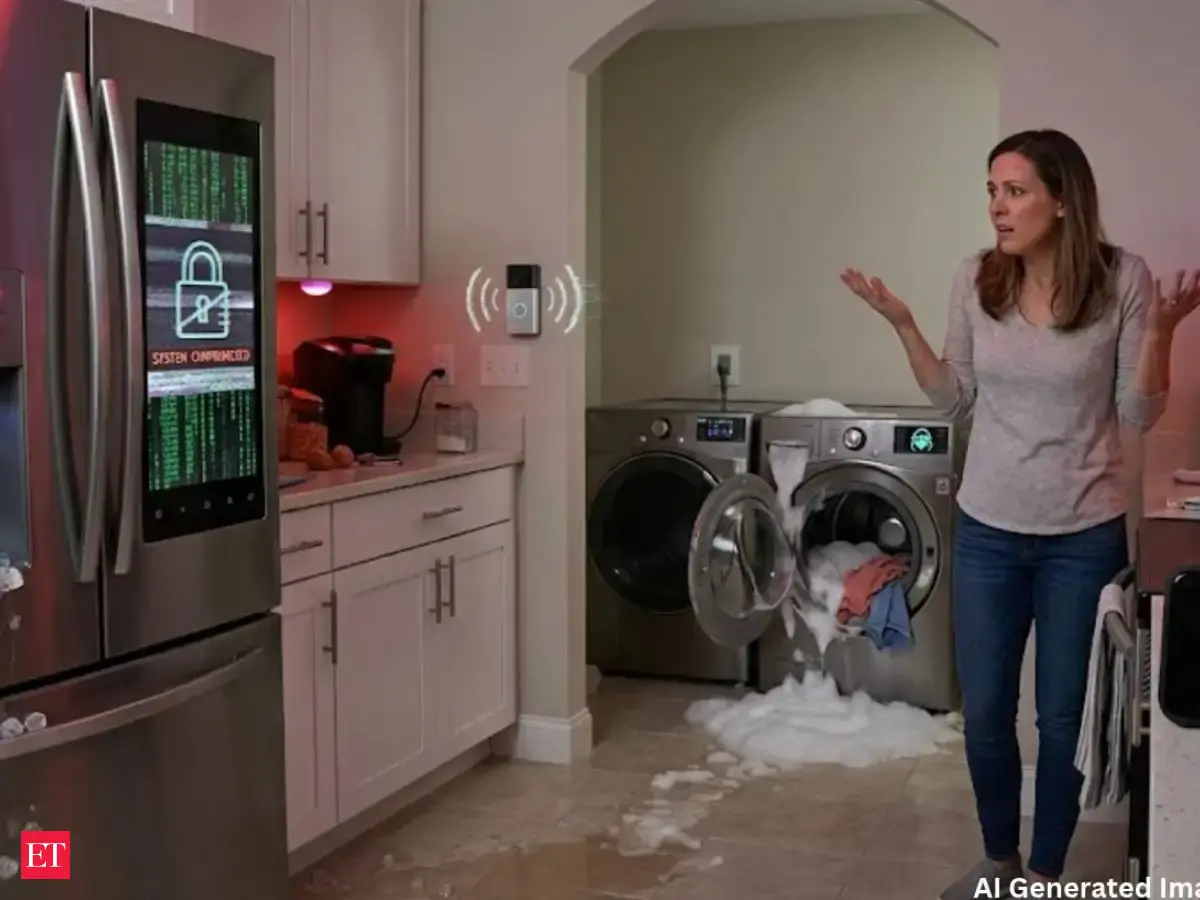
AI generated image
Which everyday devices could hackers target?The risk extends beyond smart refrigerators and other kitchen appliances. Any device that connects to the internet or can be controlled remotely may offer an entry point if it is not adequately secured.
Some everyday devices that could be vulnerable include:
* Smart refrigerators, ovens and washing machines: Internet-connected appliances may be accessed or manipulated if attackers exploit security flaws in their software or network connections.
* Security cameras and video doorbells: A compromised camera could allow an intruder to view parts of a home or monitor its occupants.
* Smart locks and alarm systems: Hackers could potentially interfere with security settings or gain unauthorised access to connected systems.
* Thermostats and central heating systems: Compromised controls could allow attackers to change temperature settings or disrupt heating.
* Routers: These are particularly important because they connect multiple devices to the internet. Security-industry data cited by Reuters indicates that routers account for more than three-quarters of attacks on connected devices.
* Internet-connected toothbrushes: Even personal-care products are increasingly being equipped with connectivity, expanding the range of devices that could potentially be exposed to cyber risks.The growing number of connected products has widened the potential attack surface. Devices that previously operated independently can now exchange information and receive remote commands, making their security increasingly important.
AI generated image used for representation
What can hackers do after accessing a connected device?Cybercriminals who gain access to a connected device may use it to collect information or take control of its functions. The consequences depend on the device, the security weakness exploited and the level of access obtained.
A compromised security camera could expose images from inside a home, while a device equipped with a microphone could potentially be used to capture audio. Access to a router could be more serious, as it may expose information travelling across the home network or provide a route to other connected devices.
Attackers may also interfere with how appliances operate. They could potentially switch equipment on or off, alter settings or prevent users from accessing their accounts. In the case of a connected refrigerator or freezer, unauthorised changes to temperature controls could affect food storage.
In some cases, hackers may use an insecure device as a stepping stone to reach other systems on the same network or access personal information associated with online accounts.
Image used for representation
Could hackers take control of cars, electricity or water systems?The threat is not limited to household appliances. Researchers have demonstrated vulnerabilities in connected vehicles, although the risks and security measures vary considerably across systems.
In 2015, cybersecurity researchers remotely took control of a moving Jeep through its internet-connected entertainment system. The incident led to a recall of approximately 1.4 million vehicles and the release of software fixes.
Years later, researchers disclosed a security flaw that could allow them to track, unlock and start certain Kia vehicles using only a licence plate number. They said they had reported the vulnerabilities to the company, which fixed them within months. There was no evidence that the flaws had been exploited in real-world attacks.
Modern vehicles and aircraft also have extensive safety mechanisms and backup systems. Similarly, critical infrastructure such as electricity and water networks generally operates with multiple layers of security, monitoring and regulation. These systems are not immune to cyberattacks, but they are typically more difficult to compromise than poorly secured consumer devices connected to a home Wi-Fi network.
How can you protect your smart devices from hackers?Cybersecurity experts recommend taking basic precautions to reduce the risk of unauthorised access to internet-connected products. Some measures include:
* Change default passwords: Replace factory-set passwords with strong, unique ones that are difficult to guess.
* Enable two-factor authentication: Use an additional verification step wherever the device or its associated account supports it.
* Install software updates: Regularly update device software and firmware to address known security vulnerabilities.
* Replace unsupported devices: Consider replacing products that no longer receive security updates, as newly discovered flaws may remain unpatched.
* Limit internet connectivity: Connect appliances to the wider internet only when there is a clear need for remote access or online functionality.
* Secure your home network: Keep routers updated and use strong passwords to prevent unauthorised access to the network.
* Separate connected devices where possible: Keep smart appliances and other internet-connected products on a separate local network from devices containing sensitive personal or work information.As more household products acquire internet-based features, the number of potential entry points for cybercriminals is also increasing. Limiting unnecessary connections, keeping software updated and securing home networks can help reduce the risks.
What happened in the supermarket freezer incidents?Ahold Delhaize reported that an IT incident had affected refrigeration equipment at dozens of its stores in Belgium and Luxembourg. The company had also reported a separate cybersecurity incident to Dutch police in October.
Meanwhile, a cyberattack in France disrupted refrigeration systems at hundreds of retail outlets, causing temperatures inside refrigerators and freezers to rise to 50 degrees Celsius. The incident reportedly led to fires and the loss of stored food.
Although the incidents involved commercial refrigeration equipment, they have also raised broader questions about the security of internet-connected appliances used in homes and businesses.