
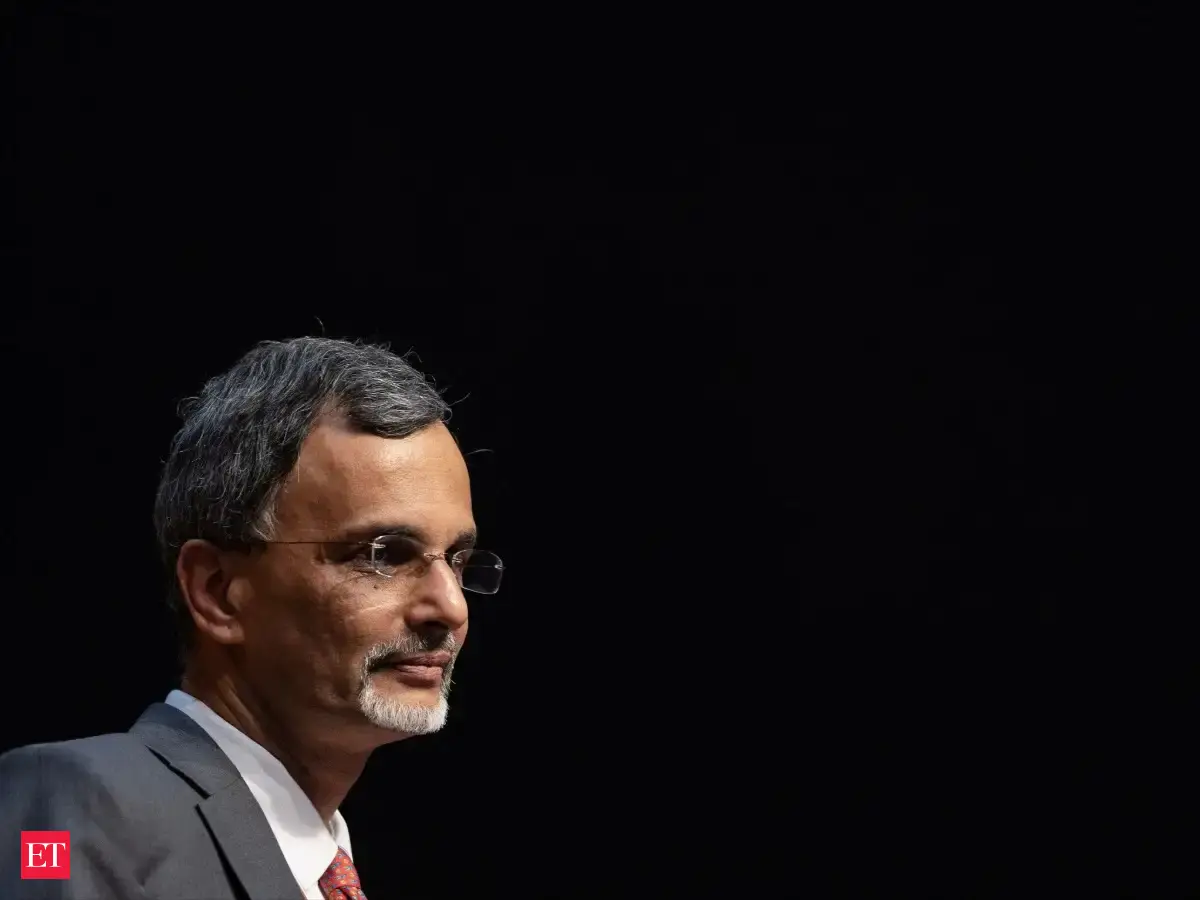
Chief Economic Adviser Anantha Nageswaran warned that finance ministries, central banks, and households could bear the costs of artificial intelligence. "Finance ministries, central banks, and households will pay the bill if today's optimism on AI proves wrong," he said. He highlighted risks like job losses and weakened human cognitive capabilities.
Synopsis
Chief Economic Adviser Anantha Nageswaran raised concerns over the financial risks linked to artificial intelligence. He stated that finance ministries, central banks, and households could face costs from misplaced optimism. Even if AI expectations are met, these entities may still incur expenses. Nageswaran intends to outline five specific risks regarding this issue. He plans to suggest potential government actions to mitigate these risks in future discussions.
Listen to this article in summarized format
Loading...
×
Chief Economic Adviser (CEA) Anantha Nageswaran has warned that finance ministries, central banks and households could bear the cost if current optimism around artificial intelligence (AI) proves misplaced, adding that they may still end up paying part of the bill even if those expectations are met.
"Finance ministries, central banks, and households will pay the bill if today's optimism on AI proves wrong. They may pay part of it even if it proves right," said the CEA.
The five risks of AI
Laying out the five risks, the CEA said the first is that the AI boom could threaten entry-level jobs, disrupting the first rung of the career ladder. "Firms are hiring fewer juniors. In a study of 41 countries, the junior share of the workforce fell in 23 of the 31 that could be measured. In the United States, employment of 22 to 25 year olds in the most exposed jobs has fallen about 19% behind that of the older workers in the same jobs. The people who will check AI's work tomorrow are made on that first rung today. Today, for developing countries, the stakes are much higher."
The second risk, according to Nageswaran, is the impact on human capabilities. Citing a four-month study by researchers at the MIT Media Lab, he said brain activity and connectivity weakened among participants who relied on an AI model to write essays. In the first session, 83% of ChatGPT users could not quote a single sentence from the essay they had submitted just minutes earlier. The researchers described this phenomenon as “cognitive debt”.
The third risk, according to CEA Anantha Nageswaran, is the threat to safety posed by AI.
Live Events
The fourth risk lies in the financing. "The U.S. data center buildout may need over 10 trillion dollars by 2032, about 3.6% of GDP a year. This year, for the first time, the big cloud firms will spend more on capital expenditures than they generate in cash. Debt increasingly fills that gap on the balance sheet," said the CEA.
Nageswaran further warned that the fifth risk associated with AI concerns public finances.
(You can now subscribe to our Economic Times WhatsApp channel)
US mid-term elections – Part 2: What does it mean for Trump to lose control of Congress?
The ABCD of the US mid-term elections – Part 1: Why it matters across the globe
Curbing rupee bets: What the RBI’s new rules mean for the hedge-now-or-wait question