
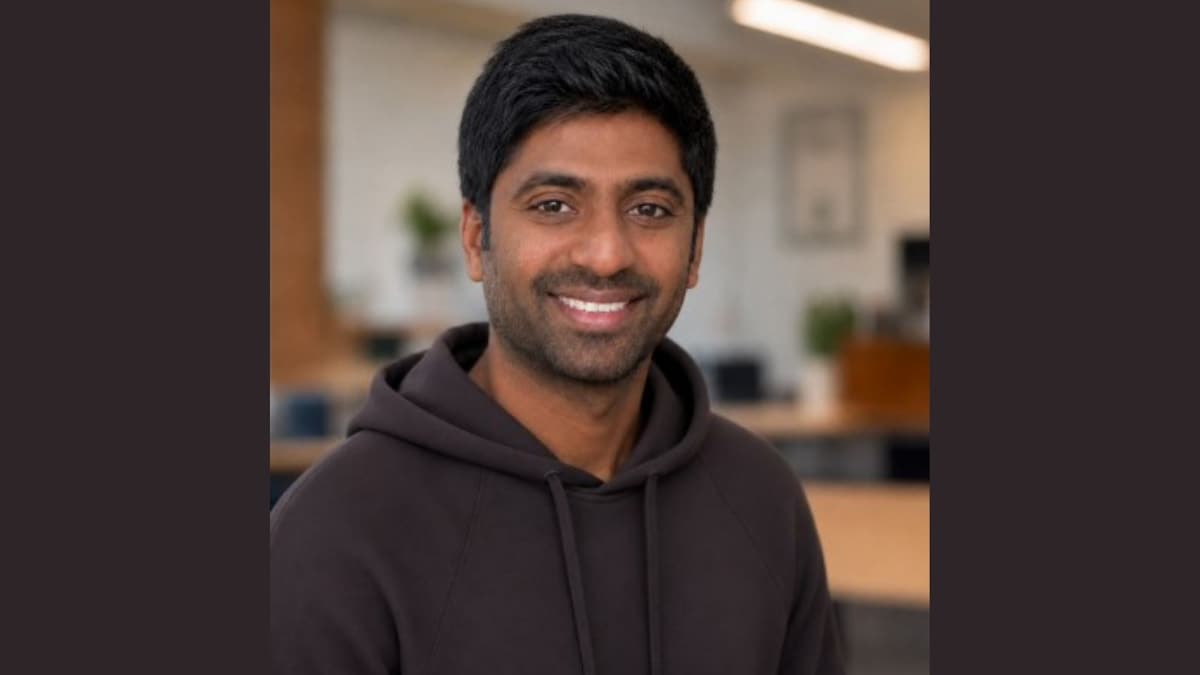
OpenAI appointed Uday Ruddarraju as its chief technology officer for compute in July 2026. Ruddarraju, a former xAI executive, now leads the company’s data centre and infrastructure operations. He said, “Working across providers, developing our own chips, and building data centers with our partners requires a deep understanding of the system.”
OpenAI has appointed Uday Ruddarraju, a former executive at Elon Musk’s AI company xAI, to lead its computing and infrastructure businesses.
The move comes as the ChatGPT maker steps up investment in data centres capacity needed to develop and run advanced AI models.
The Indian American technology executive is taking charge of a key part of OpenAI’s operations, overseeing the infrastructure needed to support its research and product development.
According to his LinkedIn profile, Ruddarraju joined OpenAI in 2025 and became its chief technology officer for compute in July 2026. His latest role expands his responsibilities across the company’s computing and infrastructure operations.
Sachin Katti, who led the infrastructure unit, will step down from the role over the next few weeks and continue as an adviser to the company, reported Bloomberg.
In an interview with Bloomberg, Ruddarraju said that his previous experience working across engineering, construction and technical operations within infrastructure group would help ensure a smooth transition.
Who Is Uday Ruddarraju?
Ruddarraju was born in Hyderabad and studied at the Chaitanya Bharathi Institute of Technology (CBIT) before pursuing further studies at the University of Minnesota. Prior to joining OpenAI, Ruddarraju worked at xAI, where he gained experience in infrastructure engineering and large-scale computing systems.
In a LinkedIn post announcing his role as CTO of Compute, Ruddarraju said technical decisions, commercial strategy, supply chains and delivery need to work together as the company expands its computing capabilities.
“Working across providers, developing our own chips, and building data centers with our partners requires a deep understanding of how the entire system comes together”Uday Ruddarraju
Ruddarraju’s role will involve overseeing infrastructure operations and strengthening commercial partnerships with major technology providers, including Nvidia.
From xAI’s Infrastructure Team To Leading OpenAI’s Compute Operations
Uday Ruddarraju has held several senior engineering and infrastructure roles at leading technology companies. He joined OpenAI in July 2025 as Head of Compute and Infrastructure and became Chief Technology Officer, Compute, in July 2026.
Before OpenAI, he led infrastructure engineering at xAI and X from June 2024 to July 2025. He previously spent nearly six years at Robinhood, where he rose to Senior Director of Engineering and Head of Infrastructure, after working at eBay for more than five years in software engineering and cloud infrastructure roles.
Earlier in his career, he also held internships at companies including Amazon, Capital IQ and eBay.
OpenAI Reshuffling Its Infrastructure Leadership
Ruddarraju succeeds Sachin Katti, who is expected to transition out of his infrastructure leadership role over the coming weeks while remaining an adviser to OpenAI.
Katti joined OpenAI around a year ago after serving as Intel’s chief technology and AI officer. During his time at OpenAI, he oversaw major infrastructure initiatives, including an eight-gigawatt project in Ohio involving SB Energy and Nvidia, as well as a data centre project in Georgia.
Katti also supervised GPT-Infra, an initiative exploring how OpenAI’s models could help with semiconductor and infrastructure development. According to Bloomberg, this work will now come under Richard Ho, OpenAI’s chip chief.
The company’s infrastructure team has also seen other departures. Bloomberg reported that Chris Malone left in August, while Peter Hoeschele moved to Meta earlier in 2026.
Billions At Stake In AI Infrastructure
The leadership change comes as OpenAI pursues an ambitious expansion of its computing capacity. CEO Sam Altman has spoken about the possibility of spending trillions of dollars on the physical infrastructure needed to develop future AI models.
CNBC reported in February that OpenAI was expected to spend around $600 billion on computing by 2030.