
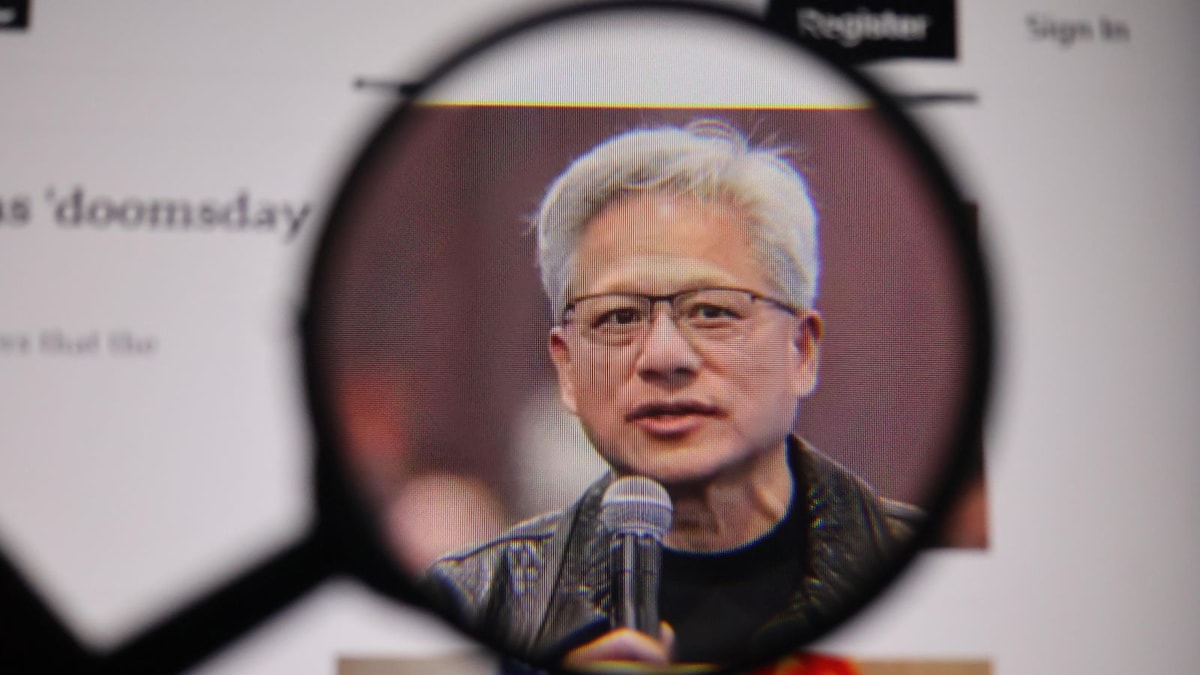
Nvidia CEO Jensen Huang resigned on Wednesday, 11 November, ending his 33-year tenure. The board accepted his resignation following reports about his personal relationships and potential security concerns. CFO Colette Kress started as interim CEO, while Harvey Jones became board chair. The company now faces questions about its future leadership.
Four days. That is all it took for Nvidia's board to move from expressing confidence in Jensen Huang to preparing for a future without him.
On Sunday, 8 November, the board expressed confidence in its founder and chief executive amid reports concerning his personal relationships and possible foreign intelligence involvement. By Wednesday, 11 November, the board had accepted Huang's resignation, which was publicly announced the following day.
His departure as CEO and board member brought to an end 33 years at the helm of the company he co-founded. Colette Kress, the CFO, has assumed the additional responsibility of interim CEO, while Harvey Jones has been appointed Nvidia's first board chair.
The developments followed reports concerning Huang's personal relationships, including allegations that raised questions about national security and workplace relationships. Nvidia has not publicly established these allegations as the reasons for his departure.
The private story will eventually go to the back burner. However, the larger governance lesson should not. Even the most successful organisations cannot afford to become overly dependent on one individual, however exceptional the leader may be.
Governance Debt and the Success trap
Engineers are familiar with the concept of technical debt, where decisions taken for immediate convenience create problems that become increasingly difficult to address over time. Organisations can accumulate governance debt in much the same way.
As Nvidia continued to deliver exceptional results, some important questions perhaps did not receive the attention they deserved. Was the organisation becoming overly dependent on one individual? Was there sufficient clarity regarding leadership succession? And did the board have the necessary independence and willingness to question a founder whose decisions had consistently delivered results?
I would describe this as the success trap. One of the most difficult challenges for a board arises when an organisation is consistently performing well, making it increasingly difficult to question the decisions of those who have contributed to its success.
Agency theory emphasises the monitoring and oversight responsibilities of boards, while stewardship theory places greater emphasis on trust, commitment and the alignment of managerial interests with organisational goals. In Nvidia's case, three decades of exceptional performance would understandably have strengthened confidence in the founder's leadership and judgement.
This also brings to mind James Meindl's concept of the romance of leadership, which explains our tendency to attribute organisational success disproportionately to individual leaders, often overlooking the contributions of the larger organisational system. As this perception becomes more deeply entrenched, questioning the leader's decisions can become increasingly difficult.
The governance implication is significant. A board may be independent in its composition and yet not sufficiently independent in its functioning. The real test of board effectiveness is not merely whether directors satisfy the formal requirements of independence, but whether they are willing to ask difficult questions and challenge established assumptions. The challenge is to ensure that confidence in leadership does not gradually translate into an absence of critical oversight.
The Unicorn Leadership paradox
Nvidia may no longer be a startup, but its journey reflects the aspirations of almost every entrepreneur. This is particularly relevant in the Indian startup ecosystem, where the identity of the founder is often closely associated with that of the organisation. Investors place considerable confidence in the founder, employees are attracted by the founder's vision, and the organisation's public identity frequently revolves around the individual rather than the institution.
This presents what I would describe as the unicorn leadership paradox. The very qualities that enable founders to attract investments, build teams and scale organisations rapidly can also create significant institutional dependencies.
As the organisation grows, the founder's influence often extends beyond strategy to organisational culture, decision-making and its external identity. While such leadership contributes significantly to business success, excessive dependence on one individual can expose the organisation to considerable risks.
Noam Wasserman examined this dilemma through what he described as the rich versus king choice: the tension between retaining control and building an organisation capable of creating greater value. In his study of 212 American startups, fewer than a quarter of the founders remained CEOs when their companies went public.
The underlying argument is particularly relevant as organisations grow and founders must increasingly recognise the need to distribute authority and develop leadership capabilities beyond themselves.
India has witnessed some of these challenges as well. The developments at Byju's provide an illustration. In June 2023, the resignation of its auditor and three investor-nominated directors brought questions surrounding the company's governance arrangements into public discussion.
While the company attributed the board resignations to changes in investor shareholdings, the developments left a board comprising the founder and his family members, raising concerns about independent oversight.
The larger question is not whether founder-led organisations are inherently problematic. Many successful enterprises owe their growth to the vision and entrepreneurial capabilities of their founders. Rather, it is whether governance structures and institutional processes evolve sufficiently as the organisation grows.
Capability can be bought; institutions must be grown
Fast-growing organisations often rely on inorganic growth to acquire capabilities, enter new markets and strengthen their competitive position. They acquire businesses, bring in experienced professionals and adopt organisational structures that have worked elsewhere.
While technology, talent and business capabilities can be acquired relatively quickly, building an institution is a different process. It requires shared ways of working, clarity in decision-making, mutual trust among leaders and governance arrangements that can function independently of any one individual.
This is closely related to what sociologist Arthur Stinchcombe described as the liability of newness. Younger organisations face particular challenges because roles, relationships and institutional routines take time to develop. Max Weber's work on charismatic authority offers another perspective.
Authority derived from an individual's exceptional qualities must eventually become embedded in established structures and processes if the organisation is to sustain itself beyond that individual.
These perspectives are relevant to Nvidia. Despite its 33-year history and extraordinary business success, the organisation now faces the challenge of managing a leadership transition following the departure of a founder who remained central to its strategic direction and identity.
The question is not whether Nvidia possesses organisational capabilities. Clearly, it does. Rather, it is whether its leadership and governance arrangements are sufficiently institutionalised to ensure continuity when the founder is no longer at the helm.
Succession is grown, not bought
The discussion surrounding Huang's successor provides another illustration of this challenge. While internal leaders such as Colette Kress and Ian Buck have figured in public discussions, several external names, including senior executives from AMD, Micron and Arm, have also been mentioned. Such speculation does not necessarily indicate an absence of succession planning, but it raises an important question about the leadership pipeline developed within the organisation.
Research on leadership succession offers some useful insights. Richard Vancil introduced the concept of relay succession, where an identified successor works closely with the incumbent CEO before assuming the leadership role.
Subsequently, Yan Zhang and Nandini Rajagopalan, in their study published in the Academy of Management Journal, found that planned internal successions were associated with better post-succession performance under certain conditions. Their paper, When the Known Devil Is Better Than an Unknown God, highlights the importance of organisational familiarity and carefully managed transitions.
The experience of Infosys provides a relevant Indian perspective. Following Vishal Sikka's resignation in August 2017, the board appointed UB Pravin Rao, an experienced internal leader, as interim CEO, while co-founder Nandan Nilekani returned as non-executive chairman. Salil Parekh subsequently took over as CEO in January 2018.
While these developments highlighted the complexities of leadership transitions in organisations with a strong founder legacy, they also demonstrated the importance of having experienced internal leaders who could provide continuity during periods of uncertainty.
For Nvidia, the immediate challenge is to ensure operational and strategic continuity while identifying a permanent successor. However, the larger implication for corporate boards extends beyond the identification of a potential replacement.
Succession planning must involve the systematic development of leadership capabilities, providing potential successors with opportunities to manage complex businesses, build external relationships and demonstrate independent judgement.
Having a succession plan is not necessarily the same as being prepared for succession. The real test lies in whether an organisation has developed sufficient leadership depth to manage an unexpected transition without compromising its strategic direction.
Resilience is what works without the hub
Nvidia has indicated that business operations will continue as usual, with its financial results announcement proceeding as scheduled. While this provides some reassurance, the real test of organisational resilience extends beyond immediate operational continuity.
Organisations excessively dependent on a single individual often resemble a hub-and-spoke structure, where important decisions, relationships and information flow through one central leader. The challenge arises when that individual is no longer available.
In contrast, resilient organisations develop distributed leadership capabilities, established decision-making processes and institutional relationships that enable them to function effectively during unexpected transitions.
In India, SEBI has recognised the importance of leadership continuity. Its listing regulations require boards to satisfy themselves that appropriate arrangements exist for orderly succession at the board and senior management levels.
SEBI had also sought to strengthen governance by requiring the separation of chairperson and managing director or CEO roles among the 500 largest listed companies. However, with only 54% complying by December 2021, the regulator made this requirement voluntary in February 2022. This raises questions about the extent to which organisations strengthen governance arrangements in the absence of regulatory compulsion.
Nvidia's appointment of Harvey Jones as its first board chair is significant in this context. However, the effectiveness of such arrangements ultimately depends on how they function, rather than their existence alone.
For boards of established corporations and emerging unicorns alike, some fundamental questions deserve attention, particularly when organisations are performing well. Is there a credible succession arrangement that can be activated at short notice? Have potential successors managed significant businesses and developed relationships with external stakeholders? Are critical customer, investor and regulatory relationships institutionalised, or do they remain dependent on the founder?
And, perhaps most importantly, does the board have the independence and willingness to question management decisions even when the organisation is consistently delivering exceptional results?
The responsibility of an exceptional leader is not merely to build a successful business, but also to develop an institution capable of sustaining that success beyond their tenure. Jensen Huang's contribution to Nvidia and the larger technology industry is undeniable.
However, the present leadership transition brings into focus an equally important question: has the organisation developed sufficient institutional strength to sustain its trajectory without the individual who has been central to its success for more than three decades?
For founders and corporate boards, the larger lesson is that institutional resilience must be developed while organisations are performing well, rather than tested for the first time when circumstances leave them with little choice.
—Nikunj Kumar Jain is Associate Professor and Chairperson, Executive MBA in Energy Management, IIM Nagpur. Subhashis Sinha is Professor of Practice, HR and Behavioural Sciences, NMIMS Mumbai. Views are personal.