
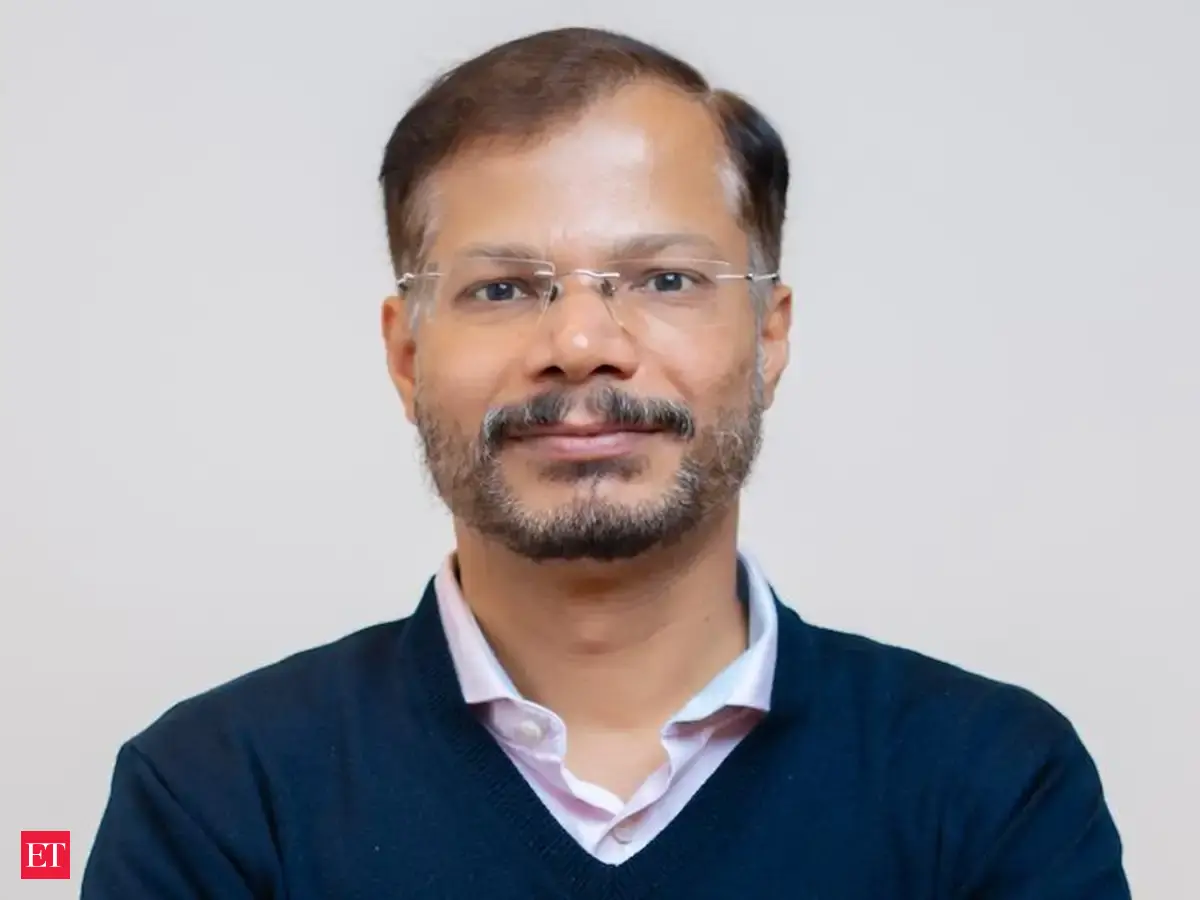
Publicis Media CEO Lalatendu Das said the advertising sector is shifting from media costs to business value. He noted that clients now want agencies to solve business problems rather than just run cheap media deals. Agencies must use AI and analytics to help brands grow and stay relevant for years.
Synopsis
India's advertising sector is experiencing a transformative phase driven by innovations in artificial intelligence and the rise of the creator economy. Marketers are prioritizing agencies that provide tangible business outcomes over mere media optimization. As a result, there is a transition in advertising budgets from traditional celebrity endorsements to content created by influencers.
India’s advertising landscape is being reshaped by AI, the rise of the creator economy, evolving consumer behaviour and growing pressure on media agency remuneration. In this interview, Lalatendu Das, CEO – South Asia, Publicis Media, discusses the changing role of media agencies, the importance of net new business, emerging investment trends, and the opportunities and challenges shaping the industry’s next phase of growth.
Edited excerpts:
What do you think the Comvergence Report for H1 2026 tells us about the competitive landscape, particularly when it comes to net new business?
The report is being read through just one lens in the industry. It reports two sets of numbers: new business, including retention, and net new business. Net new business is what matters. It is what you have won minus what you have lost, and therefore what has actually been added to your business. The industry looks only at the headline numbers without examining the underlying figures. We are number one on the headline numbers anyway, but I think the real story is in net new business.
What are clients looking for from media agencies today, beyond media efficiency?
Live Events
Clients are looking for three things. First, media efficiency. Efficiency remains important, and we have to be competitive. Second, the ability to solve business problems. It is not enough to offer a better CPM or a cheaper media deal. Clients want to know whether we can help them grow their businesses.
For example, we challenge clients when the creative is unsuitable for the platform. We also use analytics to recommend where they should move their money to generate better outcomes. Our job is not just to run media cheaply. It is to deliver real business outcomes.
The third is future-proofing. Clients want to know what we are doing today to keep their businesses relevant three years down the line. Our AI capabilities through Marcel and our connected identity graph of 610 million identities in India are important differentiators.
How has the role of a media agency evolved, particularly in balancing platform relationships with clients’ business objectives?
Clients appreciate the fact that we put the brand at the centre rather than our relationship with a platform. Some agencies may recommend particular platforms based on existing commercial arrangements or commitments, which may not always align fully with the client’s business objectives. We develop the brand plan first and then buy media efficiently. Rates are important, but business outcomes matter more than incremental efficiency savings.
How challenging is media planning in an increasingly fragmented market?
I would break it down into three challenges.
First, how do you allocate the marketing budget across a portfolio of brands? We ask what the client’s current market share is, where it wants to grow and how much investment each brand needs. We do not simply take a brief and prepare a line-by-line media plan.
Second, we use scenario planning to show clients different ways of allocating their budgets across television, digital formats and creators. Not all digital media is the same, and not all impressions deliver the same level of attention. We have also worked with Lumen on attention measurement.
Third, we distinguish between the core audience and the growth audience. Most brands understand their existing customers, but the question is where the next phase of growth will come from.
The growth audience may be encountering a brand for the first time, so it requires more persuasion. We need to ask how to reach these consumers and what kind of mid-funnel activity will convince them.
Media agency remuneration remains an industry-wide challenge. How can agencies change the conversation from fees and media costs to the business value they deliver?
This is an industry-wide problem. I believe clients will value you as much as you value yourself. Some of our recent wins have come at fees approximately 15% higher than those of the next-best alternative. That tells you that it was not simply the commercials that won us the account. Typically, our fees are around 2% of overall media spend. Even if we charge a 20% premium on that 2%, it is not a big deal relative to the money being managed.
The question is whether the agency approaches the entire media budget with the mindset that every rupee should be deployed to deliver business value. We have to change the conversation from how cheaply we can buy media to what business problem we can solve.
What is your outlook for India’s advertising market and the upcoming festive season?
For the industry as a whole, I expect advertising volume growth to remain in the high single digits. There is cautious optimism. Advertisers were initially enthusiastic about spending more, but as plans have taken shape, I have seen some caution and delays in approvals. I expect this festive season to be broadly on a par with, if not better than, last year’s, which benefited from a GST boost. However, external uncertainties could affect actual spending.
The more interesting development is the shift in expenditure. Money is moving from large celebrity-led productions towards creators, while quick commerce is attracting investment from categories such as food, beauty and clothing.
Television is under pressure in terms of its share of advertising expenditure, although its absolute volume remains relatively steady. Connected TV is another growth area because it can combine television’s co-viewing advantage with the convenience of taking action on a phone. The integration of content and commerce is important, although frequency capping remains a challenge on some platforms.
How is the growth of the creator economy changing the way brands allocate advertising budgets, particularly between celebrity-led productions and creator-led content?
Brands are moving money from non-working media to creators. Traditionally, companies spent substantial amounts on celebrity-led productions. Now, they are asking whether they can reduce that expenditure and work with 1,000 nano-creators instead. Retail is also using creators as affiliates. Each creator gets an affiliate code, and if someone buys a product using that code, the creator receives a commission. The difference is that retailers can track the eventual sale directly. Across other categories, the shift is largely towards creator-led content and away from large production budgets.
What impact is AI having on media agencies today, and how do you see it changing workflows, efficiency and the nature of agency work?
I would distinguish between work being assisted by AI and work being eliminated by AI. AI assistance is happening across 100% of our business. But as of now, I would say nothing has been eliminated. AI still needs human oversight. I cannot send something to a client without checking it first. AI is assisting us with audience identification, planning, campaign activation, optimisation and reporting. Through Marcel, we are enabling more of the media workflow.
Our YT Sensei platform optimises bids in real time, and we have seen efficiency gains of around 15% through automated bidding. Reporting is also becoming less manual and time-consuming. The efficiency gains are significant, but human oversight remains important.
Could advertising on ChatGPT and other conversational AI platforms disrupt Google’s search advertising business?
ChatGPT and Gemini are both significant platforms, and I expect both OpenAI and Google to play important roles. People are moving from keyword searches towards asking fully formed questions and having conversations. That is an important shift. Based on the early preview of ChatGPT advertising that we examined, I do not currently see it as a significant threat to the existing search advertising business. The reach and reporting capabilities need to become more sophisticated. Advertisers need to know how many people actually saw their advertisements and what outcomes they delivered.
The platforms will evolve, but I think people will increasingly ask more questions and engage in conversations rather than rely only on keyword searches.
India’s advertising expenditure-to-GDP ratio remains low compared with mature markets. What will drive the next phase of growth in the country’s advertising market, particularly in relation to consumer purchasing power?
I think advertising expenditure as a percentage of GDP is the wrong measure. What we need to look at is advertising expenditure in relation to GDP per capita. That is the more relevant measure.
India has very different economic segments. There are 50–60 million people at the top with purchasing power comparable to that of consumers in developed markets, around 100–140 million people with purchasing power comparable to that of consumers in middle-income countries, and the rest of the population has lower incomes.
The challenge is that we may be reaching people through advertising who cannot afford the products being advertised. That does not mean lower-income consumers do not buy anything. They buy smaller packs and affordable products, such as Rs 2 shampoo sachets or Rs 5 chocolate products.
But many advertisers are not approaching these consumers with products and communication suited to their needs. As more people gain the ability to afford products and services, advertising expenditure will increase naturally. The growth of advertising is closely linked to the growth of consumer purchasing power.
(You can now subscribe to our Economic Times WhatsApp channel)
(Catch all the Business News, Breaking News and Latest News Updates on The Economic Times.)
Subscribe to The Economic Times Prime and read the ET ePaper online.
...moreless
(You can now subscribe to our Economic Times WhatsApp channel)
(Catch all the Business News, Breaking News and Latest News Updates on The Economic Times.)
Subscribe to The Economic Times Prime and read the ET ePaper online.