
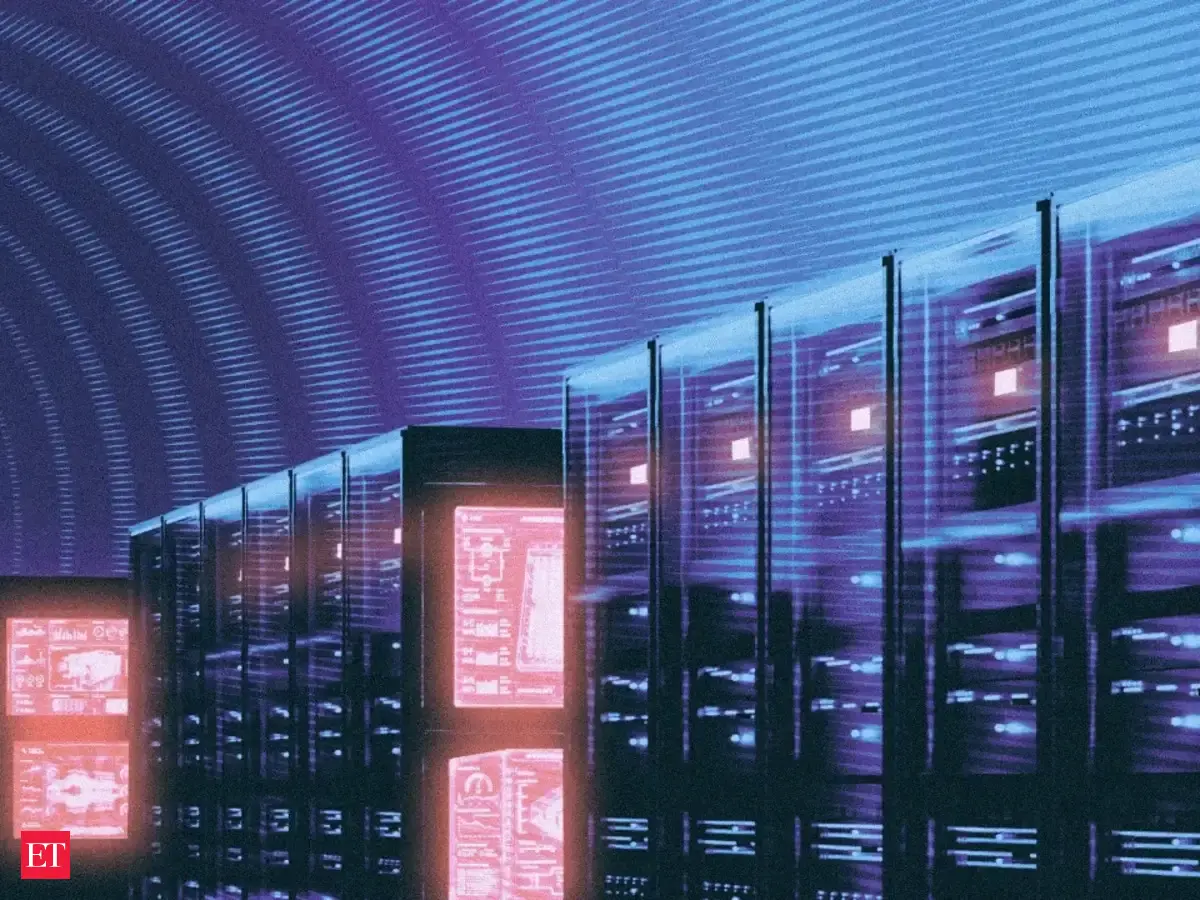
AI data centers are becoming a major issue for the 2026 US midterm elections. Voters worry about rising electricity bills, water use, and environmental impacts. Stephen Farnsworth said, "data centres are becoming a part of the wider economic discussion." Candidates now face pressure to address these growing community concerns.
Synopsis
The 2026 US midterm elections are on the horizon and data centers for artificial intelligence are becoming a big issue Voters are worried about the effect on their electricity bill, water consumption, the environment and local development.Surveys show a strong opposition to new facilities in residential neighborhoods, causing candidates from both parties to reassess their stances.
As the 2026 US midterm elections loom, the issue of artificial intelligence (AI) data centers is becoming a more and more prominent local and national political concern. Along with economic issues, voters are increasingly examining and questioning how these facilities will impact electricity bills, water resources, jobs and environment.
Political analysts say that opposition to data centre expansion is receiving attention in party lines, putting pressure on candidates to address community ’ challenges while weighing the possible economic advantages of the industry.
Economic concerns put data centres in the spotlight
Stephen Farnsworth, professor emeritus of political science at the University of Mary Washington, stated that the data centres are becoming a part of the wider economic discussion because of concerns regarding rising household utility expenses.
A Heatmap Pro poll conducted by Embold Research found that around 75% of respondents would not support a new data centre being established near their homes. A separate University of Massachusetts Amherst poll, directed by Tatishe Nteta, discovered that 65% opposed constructing AI data centres in their communities, while just 11% supported such developments.
Erin Covey, House editor at The Cook Political Report, stated Democrats and some Republicans were backing development moratoriums and stricter regulations. She also cautioned that candidates who earlier obtained support from AI-funded super PACs could encounter political challenges in the general election.
Live Events
Electricity demand and environmental impact raise concerns
As per US Data Center Map, existing data centres in the country consume around 49 gigawatts of electricity. Projects planned or under construction represent almost 350 gigawatts of extra capacity, approximately a quarter of current US electricity generation capacity.
Critics fear that the rapid expansion might strain electricity networks and increase energy expenses. Other issues are water consumption, pollution, noise and the loss of farmland and open spaces. Some developers are also establishing private natural gas plants to power their facilities, initiating concerns regarding emissions and public health.
US midterms 2026: Why AI data centres, power bills and water use are becoming local election issues.Shutterstock / gguy
Ohio becomes a centre of resistance
Ohio has emerged as a significant focus of opposition to data centre development.
Nick Owens, an attorney with Conserve Ohio, attributed the state's appeal to its regulatory framework and natural resources.
Owens became involved in attempts to oppose further development after knowing about a proposed project in his rural Brown County community. Conserve Ohio has operated with local activists on ballot projects seeking to ban data centres, change zoning regulations or needing voter approval for huge facilities.
As per Ballotpedia, 39 data centre-related ballot measures in eight states are set for consideration this year, that includes 21 in Ohio municipalities.
Election campaigns reflect the growing backlash
The controversy has extended to statewide races. In Ohio, Republican Senator Jon Husted has encountered criticism for supporting data centre tax breaks in his time as lieutenant governor. His Democratic opponent, former US Senator Sherrod Brown, has run advertisements naming Husted “the face of data centers.”
Husted drafted legislation that would need state utility regulators to consider making data centres span their electricity infrastructure expenses. Senate Democrats blocked the bill last month, stating it as “toothless” political messaging.
Technology industry defends data centre expansion
Industry supporters cite that data centres strengthen economic competitiveness, create construction employment and elevate property tax revenue. Leading the Future, a technology-backed super PAC, has invested in federal and state campaigns supporting candidates who support AI development.
Josh Vlasto, the group's co-leader, stated that communities wanted economic opportunities along with safeguards against possible harm.
Now, with midterms looming, data center development has become a debate about investment, infrastructure costs and local decision-making. Candidates must answer voters who want economic benefits but also want more awareness of the industry’s impacts on their communities.
Source: Stateline and WTOP News
The ABCD of the US mid-term elections – Part 1: Why it matters across the globe
Onion inflation at 108%? Yes, but not really. What is different this time?
Curbing rupee bets: What the RBI’s new rules mean for the hedge-now-or-wait question