
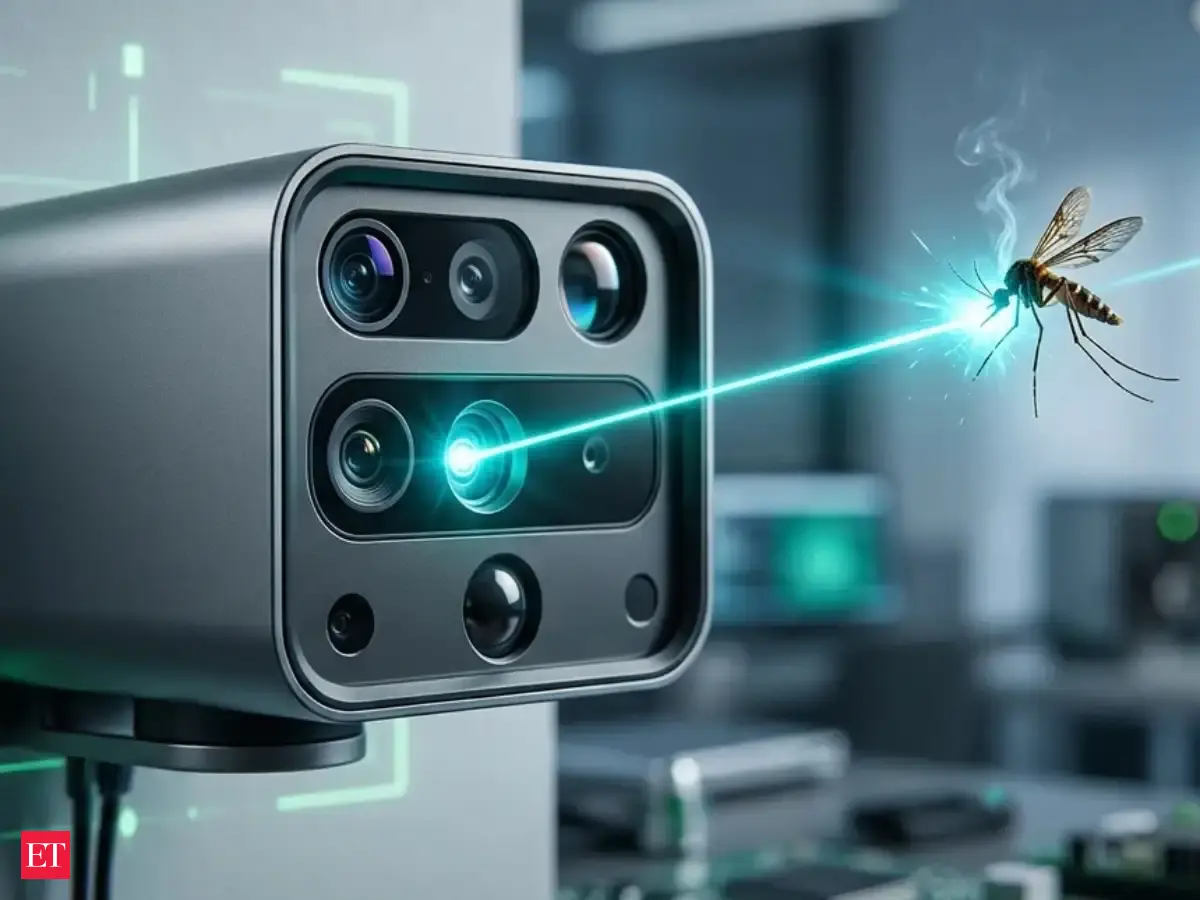
Photon Matrix started selling a mosquito trap for Rs 94,835 that uses a blue laser and sensors like those in self-driving cars. The device tracks insects mid-flight to kill them while keeping people and pets safe. Many users got interested, though the company said delivery takes around 120 days.
Photon Matrix has introduced a laser device that identifies and eliminates mosquitoes effectively. The products are priced at around $1,000 each, with a delivery estimate of 120 days. Both the indoor and outdoor models utilize advanced A.I. for mosquito detection and targeting. The system is designed to be safe for humans and pets, although independent safety testing is pending. This technology aims to revolutionize traditional mosquito control methods.
A Chinese startup has introduced an AI-powered mosquito killer priced at around $1,000, which tracks insects mid-flight and uses a laser to burn their wings. The device combines technology commonly used in self-driving cars to detect and locate targets with AI systems that determine when it is safe to fire. During a demonstration at Photon Matrix's office, the machine appeared to eliminate mosquitoes rapidly, with each insect producing a brief blue or green flash and a faint popping sound when hit by the laser.The company claims the device can detect a mosquito in three milliseconds and eliminate up to 30 insects every second, even in complete darkness. It operates without chemicals or noise.
However, these performance claims are based on the company's own figures and have not yet been independently verified.
How much does the laser mosquito killer cost?Photon Matrix is offering two versions of the device. The outdoor blue laser model is priced at $1,088 (around Rs 95,000), while the indoor infrared version costs $988 (approximately Rs 87,000).
The outdoor model produces a visible flash whenever the laser fires, while the indoor version uses an invisible 976nm infrared beam and is designed for bedrooms and hotel rooms.
Both versions come with a rotating base, a 12-month warranty and a 20,000mAh power bank that provides approximately four hours of operation without a mains connection. The company estimates delivery will take around 120 days.
How does Photon Matrix detect and eliminate mosquitoes?The device uses a LiDAR-based detection system to identify mosquitoes in its surroundings. It scans a flat plane of light across the area in front of it and continuously measures the distance to the background.
When a small object crosses this plane, the system detects a change in the distance reading. It then examines the object's size and movement to determine whether it matches a mosquito.
According to the company, the device can identify insects measuring between 2mm and 20mm and moving at speeds below one metre per second. Once a mosquito is detected, an internal galvanometer (galvo) mirror directs the laser along the same optical path and targets the insect's wings.
Photon Matrix claims the system can lock onto a target within three milliseconds and eliminate up to 30 mosquitoes per second. It has a six-metre detection radius and a 90-degree coverage arc. A rotating base helps expand its coverage across a wider area.
The accompanying app offers features such as kill tracking, mosquito activity heat maps and scheduling options to switch the device on or off. It also includes a global leaderboard that ranks users based on their mosquito kills.
Check features of the two devices:
Blue laser version
Technical Specifications
ParameterSpecificationEffective Range6-meter radius, 90° horizontal fan-shaped scanning planeTarget Detection2-20 mm flying insects, flight speed ≤1 m/sLaser TypeBlue visible laser / Infrared invisible laser -- two optionsLaser Safety ClassIEC 60825-1 Class 4 internal diode, fully enclosed with multi-layer active safety protectionCore TechnologiesLaser Strike + LiDAR + Millimeter-Wave Radar + AI Vision ModulePower Input100-240V AC adapter, 24V DC, or Type-C to DC with PD/QC power bankPower Consumption≤20W -- operates 24/7 with minimal electricity costNoise Level<30 dB -- quieter than a whisper, imperceptible during sleepIngress ProtectionIP56 -- splash-resistant, suitable for patios and gardensOperating Temperature0-40°CControl MethodOnboard knob + mobile app, Bluetooth / Wi-FiDimensions200 × 92 × 88 mm / L × W × HWeightApprox. 1,200 gEnclosureAluminum alloy + engineering plasticWarranty12 months, covering laser module, LiDAR, mainboard, power adapter, and galvanometer
Photon Matrix Infrared Laser Mosquito Air Defense
Technical Specifications
ParameterSpecificationEffective Range6-meter radius, 90° horizontal fan-shaped scanning planeTarget Detection2-20 mm flying insects, flight speed ≤1 m/sLaser TypeBlue visible laser / Infrared invisible laser -- two optionsLaser Safety ClassIEC 60825-1 Class 4 internal diode, fully enclosed with multi-layer active safety protectionCore TechnologiesLaser Strike + LiDAR + Millimeter-Wave Radar + AI Vision ModulePower Input100-240V AC adapter, 24V DC, or Type-C to DC with PD/QC power bankPower Consumption≤20W -- operates 24/7 with minimal electricity costNoise Level<30 dB -- quieter than a whisper, imperceptible during sleepIngress ProtectionIP56 -- splash-resistant, suitable for patios and gardensOperating Temperature0-40°CControl MethodOnboard knob + mobile app, Bluetooth / Wi-FiDimensions200 × 92 × 88 mm / L × W × HWeightApprox. 1,200 gEnclosureAluminum alloy + engineering plasticWarranty12 months, covering laser module, LiDAR, mainboard, power adapter, and galvanometer
What safety concerns surround the laser mosquito zapper?The use of a laser powerful enough to disable insects has raised questions about what happens when the device misses its target.
Photon Matrix says the system has a background-sensing mechanism that allows it to fire only when it detects a solid surface within range. The laser is switched off when the device cannot identify a suitable background.
The company also claims that the system has cleared certifications covering safety for humans, pets and birds. It says the device can distinguish mosquitoes from larger insects, including butterflies, and avoid targeting them.
However, independent testing of these claims is still awaited. Photon Matrix has said it will release additional testing results and safety information. Until independent reviewers assess the device, its performance and safety claims remain unverified.
From a 2006 concept to commercial productionThe idea of using lasers to eliminate mosquitoes dates back nearly two decades. In 2006, an astrophysicist who had worked on missile defence during the Reagan administration proposed the concept at a brainstorming session.
A prototype turret with a reported range of 50 metres was demonstrated in 2010, but the technology did not find a commercial buyer at the time.
Photon Matrix later took the concept forward through a crowdfunding campaign on Indiegogo, raising $2.7 million against an initial target of $20,000. More than 4,000 backers reportedly contributed around $630 each.
The project faced repeated delays, with sensor calibration and safety approvals among the issues that pushed back its delivery timeline. Following the start of mass production in August, the company has now opened preorders for both versions of the device.