
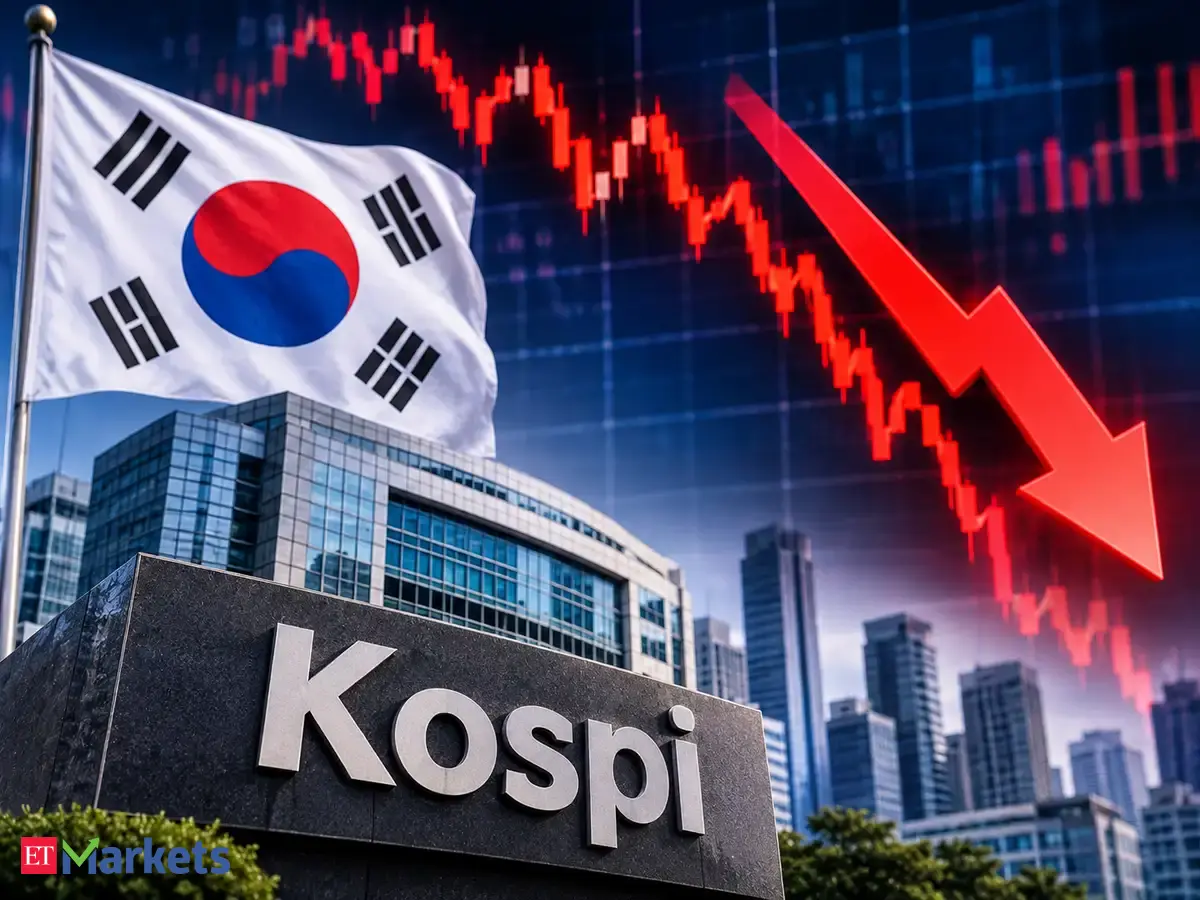
South Korea's Kospi index plunged over 8% on Friday, triggering a circuit breaker as tech stocks crashed. The sell-off followed a global market rout after US midterm elections. Jun Kwang-woo said, "investors appeared to be overreacting to the election outcome." Heavyweights like Samsung and SK Hynix led the sharp market fall.
South Korea's benchmark Kospi index, one of Asia's key equity markets, plunged more than 8% in early trade on Friday, triggering a circuit breaker as a sharp sell-off in semiconductor and technology stocks dragged the index below the 5,000-point mark for the first time in nine months.
The selling was led by market heavyweights Samsung Electronics Co. and SK Hynix Inc., which together account for nearly half of the index's total weight. Both stocks fell more than 11% in early trade before recovering some of their losses. The Kospi dropped as much as 8.8%, prompting the Korea Exchange to suspend trading for 20 minutes shortly after the market opened.
As on 06 Nov 2026, 02:30 AM IST
S&P 500 Top Gainers
AppLovin356.10(31.04%)
EPAM Systems165.70(20.63%)
Tapestry134.17(7.07%)
Verisk Analytics211.47(6.88%)
Gainers"
S&P 500 Top Losers
Micron Technology656.39(-17.46%)
Western Digital267.63(-17.35%)
Lam Research185.20(-16.36%)
Losers"
Other heavyweight stocks on the KOSPI also faced selling pressure. Battery maker LG Energy Solution declined 4%, while Hyundai Motor fell 6.9%. Its sister automaker Kia Corp lost 4%.
AI selloff extends beyond KoreaThe sell-off followed a global market rout on Thursday, which saw the Nasdaq 100 plunge 6.4%, wiping out a record $2.3 trillion in market value. The weakness extended across Asia on Friday, with chip-heavy indices coming under pressure. Japan's Nikkei 225 Stock Average and Taiwan's Taiex were also on course to enter technical bear market territory, having fallen 20% from their respective peaks.
The sharp correction in South Korean equities comes amid growing concerns that the Democrats' sweeping victory in the US midterm elections could slow the pace of artificial intelligence infrastructure investments.
According to a Reuters report, Jun Kwang-woo, chairman of Seoul-based financial thinktank Institute for Global Economics, said some correction in the market was warranted, but investors appeared to be overreacting to the election outcome.
Jun said the market could stabilise soon, although concerns in several US states, including Texas, could affect the pace of
AI infrastructure development, particularly data centre investments. He is a former chairman of South Korea's National Pension Service.
AI sell-off on Wall StreetThe pressure on South Korean technology stocks followed
Wall Street's worst single-day performance in more than a year on Thursday, as investors rushed to book profits in semiconductor and technology companies that had witnessed sharp gains.
Nvidia shares dropped more than 9%, while Micron plunged as much as 18% in a single session. AMD declined more than 17%, while Microsoft, Google, Amazon and Meta fell by up to 3% overnight.
Concerns over the future direction of AI and data centre policies following the Democrats' sweeping electoral gains weighed on hardware manufacturers and semiconductor suppliers. Wall Street's AI-driven rally faced a major setback as fears of tighter regulation and a slowdown in data centre expansion triggered widespread selling across technology stocks.
The sell-off wiped out around $3 trillion in the S&P 500's market value, while the Nasdaq Composite tumbled 5.46%, marking its steepest single-day decline in 19 months and pushing the index into correction territory, Reuters reported.
"Investors appear to be recognizing that some newly elected members of Congress and governors are looking to slow the pace of AI infrastructure development," Melissa Brown, global head of investment decision research at SimCorp, said.
The correction marks a sharp reversal for the Kospi, which had nearly tripled in value over the year leading up to its June peak. The rally was driven by expectations of higher earnings at Samsung Electronics and SK Hynix amid soaring memory chip prices. Strong gains in the two companies attracted a wave of retail investors, while leveraged exchange-traded funds linked to the chipmakers also expanded. The rally briefly lifted South Korea to the position of the world's sixth-largest equity market by market capitalisation.
However, the rally began losing momentum over the summer as concerns mounted over the funding of AI infrastructure and the possibility that major technology companies could scale back spending on chips. This raised questions over the sustainability of demand from the chipmakers' Big Tech customers. The Kospi has since fallen around 46% from its record high in June.