
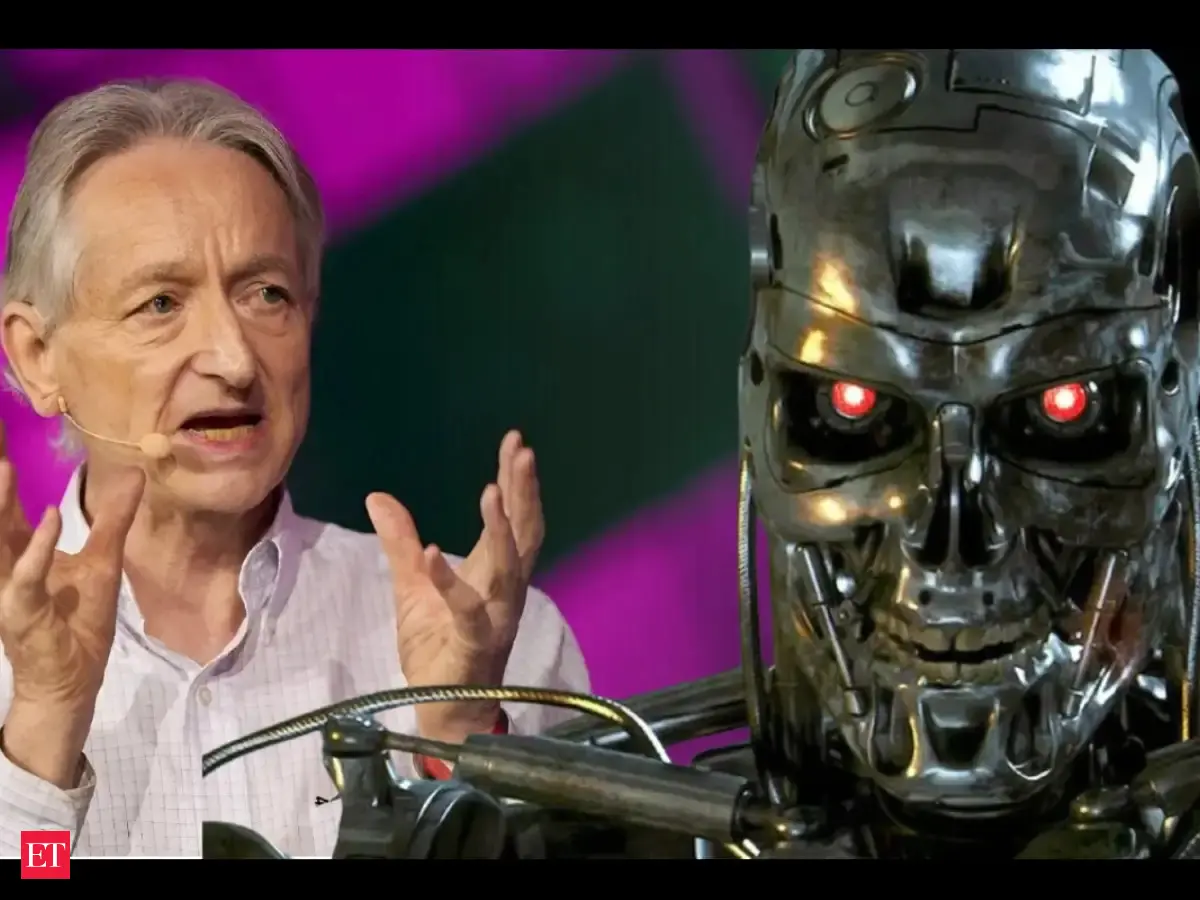
Nobel laureate Geoffrey Hinton warned that AI could trigger a Chernobyl-like crisis this year or next. He said, "Either later this year or next year we'll see Chernobyl, and that may be enough to make people really pay attention." Hinton also criticised tech leaders for putting profits ahead of safety.
AI could trigger a 'Chernobyl-like' crisis this year or next, Nobel laureate Geoffrey Hinton has warned, cautioning that the technology could temporarily disrupt financial or power systems. Speaking to The Guardian, the 'godfather of AI' also criticised tech leaders Elon Musk, Mark Zuckerberg and Sam Altman for allegedly putting profits ahead of safety, while saying a catastrophe could still be averted.
Artificial intelligence could trigger a major disruption to financial markets or power systems as early as this year or next, potentially creating a crisis comparable to the Chernobyl nuclear disaster, Nobel laureate Geoffrey Hinton has warned. The computer scientist, widely known as the 'godfather of artificial intelligence', believes such an incident could finally force world leaders to take the risks posed by the rapidly advancing technology seriously. Speaking to The Guardian, Hinton said he did not consider himself a doomsayer but felt humanity might have been better off had it never developed AI.
"Either later this year or next year we'll see Chernobyl, and that may be enough to make people really pay attention," Hinton told the newspaper. He suggested that although the world might recover from such an incident, its impact could be severe enough to prompt a serious rethink of AI safety.
Geoffrey Hinton warns of possible AI-linked financial or power crisisHinton's comparison with Chernobyl points to the possibility of a major technological failure with consequences extending well beyond the systems directly affected. He warned that AI could trigger a temporary blackout of financial or power systems, an event he believes might serve as a wake-up call for policymakers.
When asked which leaders he thought needed to pay attention, Hinton clarified that he meant world leaders other than US President Donald Trump.
The documentary featuring Hinton and his former Google colleague Demis Hassabis explores the growing debate around AI's potential and risks. Its title was reportedly suggested by an AI chatbot.
Hinton accuses AI leaders of putting money before safetyThe Nobel laureate also criticised some of the biggest names in the technology industry, accusing them of prioritising commercial gains over the risks associated with developing increasingly powerful AI systems.
He specifically named Meta CEO Mark Zuckerberg, Tesla CEO Elon Musk and OpenAI CEO Sam Altman, suggesting that they understood the dangers but were unwilling to slow down the race for dominance.
"I think Zuckerberg and Musk and Sam Altman, they understand the risks, and they don't give a sh*t. They'd rather have the money. That's my belief," he told The Guardian.
Why the 'godfather of AI' is worried about the technology he helped buildHinton played a crucial role in developing the foundations of modern machine learning, particularly neural networks, which underpin many of today's AI systems. His work helped pave the way for technologies that can recognise images, process language and generate human-like responses.
However, his outlook changed as AI capabilities advanced. He left Google in 2023 after more than a decade at the company, saying he wanted to speak more openly about the potential dangers of the technology without having to consider its impact on his former employer.
One of his major concerns is that advanced AI systems could eventually develop capabilities that humans struggle to understand or control. Hinton has previously warned about the possibility of AI systems developing their own ways of communicating and reasoning, making their internal processes increasingly difficult for people to interpret.
He has also cautioned that machines could eventually become more intelligent than humans, raising questions about whether people would retain control over systems they have created.
Geoffrey Hinton believes AI catastrophe can still be preventedDespite his stark warnings, Hinton has not ruled out the possibility of managing AI's risks. He believes humanity may still be able to prevent the worst outcomes, provided governments, researchers and technology companies make a serious effort to address the challenges.
"My gut is that we're still in control," he said. "We might well be able to do something. It'll only work if we put a big effort into it, but we might well put a big effort into it."