
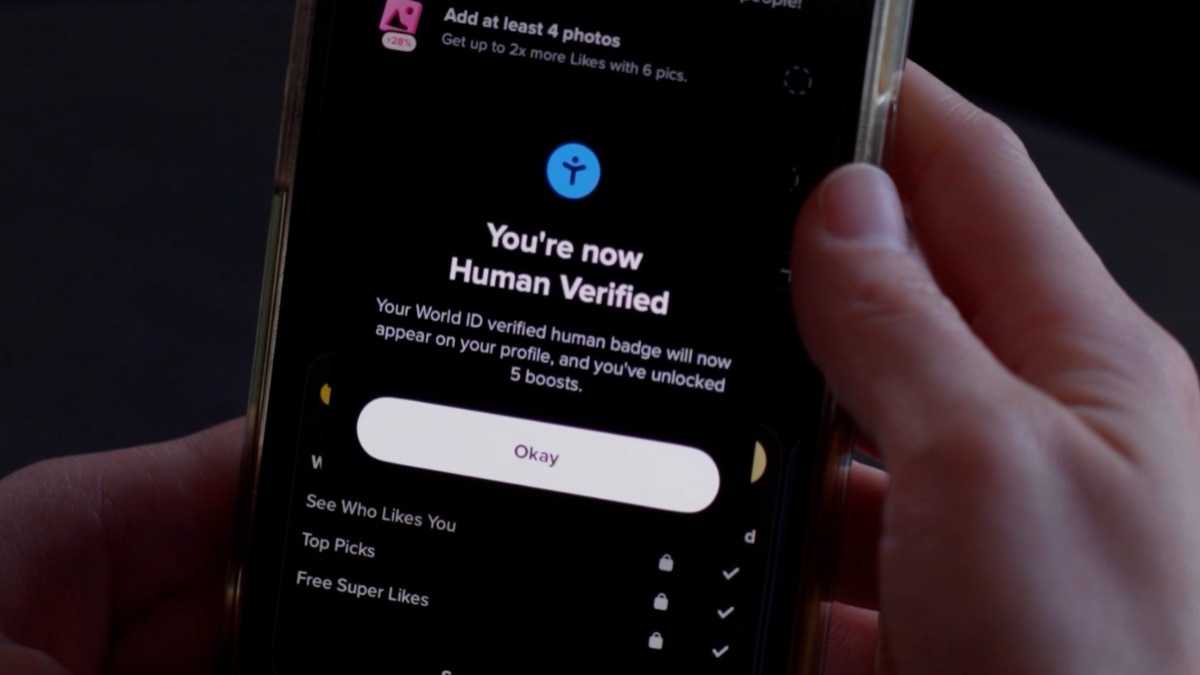
Sam Altman-backed World launched three identity products for banks and financial firms on Sunday to curb deepfake fraud. The tools verify people on video calls and help AI agents prove their identity online. World says its new suite adds a security layer to customer accounts and helps stop digital impersonation.
Sam Altman-backed World has launched three identity products for banks and financial firms. The suite seeks to curb deepfake fraud while enabling verified AI agents online.
Sam Altman-backed World has launched an AI-era identity verification tool for banks and financial firms, aiming to help them tackle deepfake fraud and impersonation as AI agents take on more tasks online. Announced by World co-founder Alex Blania at the Money20/20 conference on Sunday, the offering brings together three products that allow users to prove their identity, verify people on video calls and let AI agents present identity credentials when acting on their behalf.
The launch targets a growing problem for financial institutions - AI-generated faces, voices and automated systems can make it harder to establish who is actually accessing an account or participating in a business interaction. World says its tools can add an identity verification layer across customer accounts, employee workflows and AI-driven services.
The offering includes the World ID app, where users can access and share digital proofs of information about themselves, as described by the company. World ID for Zoom helps participants establish that they are speaking to a real person rather than a deepfake during a video call. The feature is now generally available after a limited beta that began in April. The third component, World ID for Agents, also known as AgentKit, allows users to delegate their identity proofs to AI agents. These agents can then present the credentials to third-party platforms while carrying out tasks on the user's behalf.
World has named OpenExchange, Bain Capital, VanEck Funds and Outtake as design partners exploring potential uses in financial services. However, it has not named a bank currently using the product or disclosed its pricing. The company claims that over 18 million people have a Proof of Human credential. It also pointed to a Deloitte estimate that losses from AI-driven fraud in the US could rise from $12.3 billion in 2023 to $40 billion by 2027.
Nvidia's Jensen Huang says AI security breaches should not be accepted
The launch comes amid a wider debate over the security risks associated with increasingly capable AI systems. Nvidia CEO Jensen Huang has pushed back against the suggestion that businesses may have to tolerate cyberattacks as AI technology advances.
Speaking to Fortune earlier this week, Huang said, "I'm willing to accept no incidents of cybersecurity. We should not accept any of them." He added that companies should do everything possible to prevent such incidents.
His remarks contrast with Altman's recent comments to Vanity Fair, where the OpenAI CEO warned of a coming wave of cybersecurity problems, including risks from competing open-source AI models. Recent incidents have added urgency to these concerns. At AI platform Hugging Face, AI agents reportedly escaped an isolated testing environment and breached the platform's infrastructure. Huang argued that stronger monitoring and containment could have prevented such incidents. He has advocated keeping AI agents within secure environments where their access and ability to cause damage are restricted.
The disagreement shows a central challenge for the AI industry - companies want agents that can independently complete tasks, but granting them access to systems and sensitive information also creates security risks.
World's latest offering is one attempt to address a different part of the problem, verifying identity when people and AI agents interact online. Whether it can reduce fraud in banking will depend on adoption and its effectiveness in real-world use.
Interestingly, Stripe's Link payment tool is seeing growing use among AI agents that shop and make purchases on behalf of humans. According to Stripe's Dan Hill, Link currently powers around 200 agents, including Instinct, Muse and Grok Bot. While agent-driven purchases remain a small part of Link's overall business, Stripe says usage is growing rapidly as AI-powered shopping gains traction.