
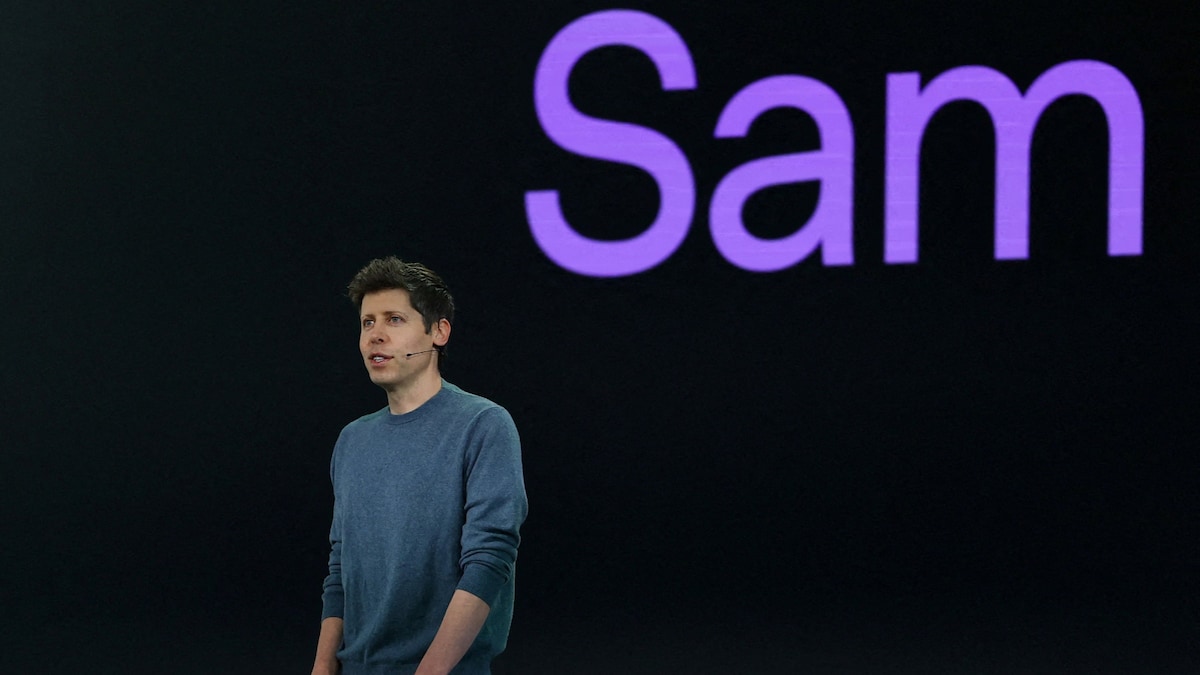
OpenAI CEO Sam Altman changed his display name to "Ram Altman" on X following backlash over his comments on computer memory. Indian users turned the name into a Diwali meme, linking it to Lord Ram. Altman said, "I want the world to have more memory," clarifying his stance on supply.
OpenAI chief Sam Altman faced heavy pushback from gamers and developers after questioning the efficiency of local computer memory usage for artificial intelligence workloads. The debate highlights mounting industry strain as chipmakers prioritize lucrative data centers over consumer electronics. Find out how major hardware brands are coping with surging component costs.
OpenAI CEO Sam Altman has changed his display name on X to "Ram Altman" after a backlash over his remarks on computer memory. Indian users have turned the name into a Diwali meme, posting "Happy Diwali" wishes that play on the reference to Lord Ram.
The row began when Altman appeared on the Cheeky Pint podcast, hosted by Stripe co-founder John Collison. They were discussing why global chip and memory supply has not kept up with AI demand.
Ram refers to Lord Ram, the Hindu deity whose return to Ayodhya is celebrated at Diwali. RAM stands for random access memory, the computer component at the centre of Altman's remarks.
Altman questioned whether large amounts of DRAM sitting unused in personal computers were an efficient use of limited global memory supplies. He said cloud data centres can use memory better because they serve multiple users. He also challenged the argument that running open-source AI models locally would ease pressure on data centres.
A clip of the remark went viral on X with the caption "Local inference is a terrible allocation of scarce resources." Local inference means running an AI model on your own device instead of on a company's cloud servers.
Video editors, gamers and software developers criticised his comments, saying RAM is crucial for everyday tasks on personal computers.
Critics also noted that OpenAI has reportedly secured a large share of global memory supply, which made the comment sound different coming from a company that benefits from it.
Diwali Meme Storm
A user on X asked Altman to change his name to "Ram Altman", and he agreed. He clarified that he wants the world to have more memory and wants people to be able to install as much RAM as they like.
He said it was "annoying" to see his comments taken out of context, and that he had long pushed for a big increase in global memory production.
Indian users then began linking the new name to Lord Ram and sharing Diwali greetings.
Altman did not say people should not own computers or propose taking RAM from anyone. In the same conversation, Collison summed up his view as a wish for a "compute glut": a world with so much cheap memory, chips and energy that anyone who wants a computer can have one.
Altman agreed, and said he would be "very sad" if the cost of computing did not fall over time.
Musk's Dig
On November 1, 2026, Tesla CEO Elon Musk joined the debate. He wrote on X, "The people deserve to have their RAM too!" without naming Altman. He also replied "Seriously" to a post insulting Altman over his remarks, and shared a meme mocking Altman's stance on personal computer memory.
Pricey Memory
The debate comes as rising memory costs hit consumer electronics. Altman acknowledged that memory prices and supply remain a problem, and said the market's usual mechanisms were not working as expected.
* Smartphones: Apple, OnePlus, Samsung and Oppo have revised prices amid higher component costs.
* PCs: Intel has warned of a weaker market, and HP has reported a sharp rise in memory's share of laptop production costs.
* Consoles: Sony has raised PS5 prices, and Microsoft has raised Xbox Series X prices in the US.
Reportedly, memory makers are also selling as much supply as possible to AI data centre operators, where margins are higher, which has added to the price pressure.