
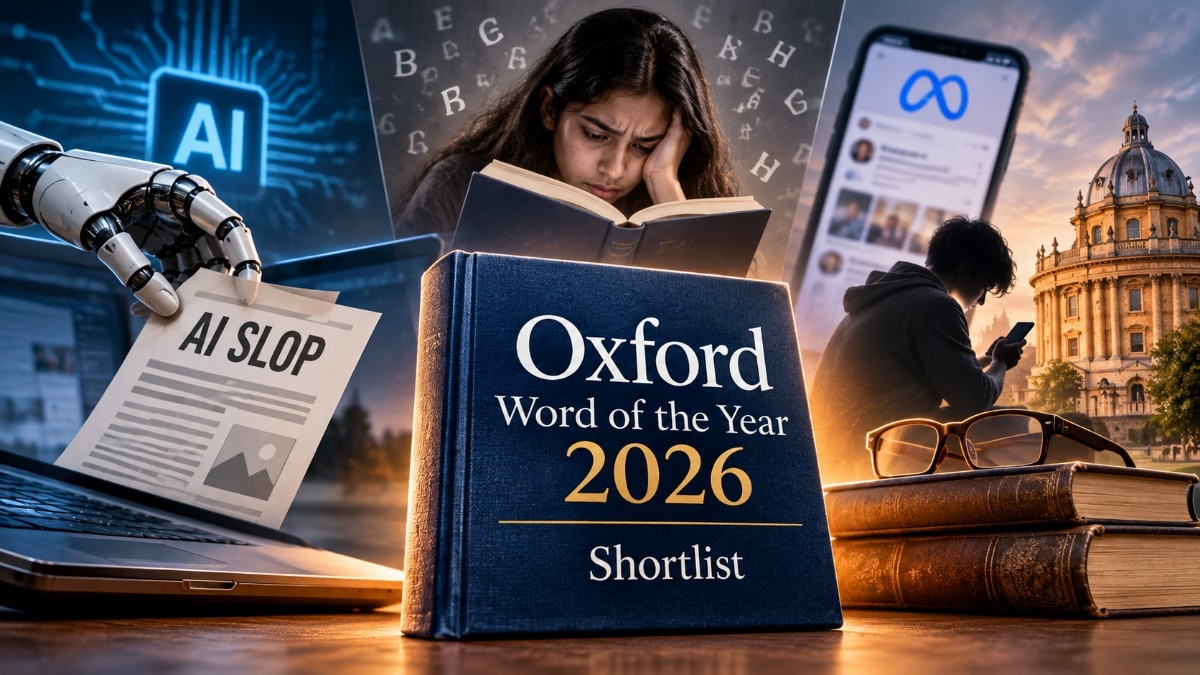
Oxford University Press shortlisted four words for its 2026 Word of the Year. The list includes doomerism, slopaganda, post-literate, and microdrama. These terms show how technology and changing habits shape our lives. Voting is open until November 24. OUP said the list reflects a year of uncertainty and deep existential self-reflection.
Oxford University Press (OUP) has put four words on the shortlist for its 2026 Word of the Year, and each offers a glimpse into something people are increasingly talking about — from artificial intelligence and climate anxiety to declining reading habits and short-form entertainment.
The shortlisted words are doomerism, slopaganda, post-literate and microdrama. Voting is open until November 24, after which one of them will be named Oxford's Word of the Year 2026.
The list reflects what OUP describes as a year of uncertainty and existential self-reflection, with technology changing how people connect, communicate and consume information.
AI ANXIETY HAS A NAME: DOOMERISM
Doomerism refers to extreme pessimism, particularly the belief that threats such as artificial intelligence or climate change will cause catastrophic damage to humanity that cannot be prevented.
OUP says the word has been growing in use since 2022, with its usage nearly doubling this year. Its rise reflects concerns about the speed of AI development, limited safeguards and the failure to meet climate targets.
WHEN AI CONTENT TURNS INTO PROPAGANDA
The second word, slopaganda, combines 'slop' and 'propaganda'. It describes low-quality propaganda created using generative AI and circulated widely online, particularly on social media.
According to OUP, the term's relative frequency has increased by more than 1,300% over the past year. Its growing use points to concerns about AI-generated political messaging, misinformation and attempts to influence public opinion.
ARE WE ENTERING A POST-LITERATE WORLD?
Post-literate describes a society in which literacy and the importance of written words have declined significantly.
OUP links the term to concerns about falling reading habits and the growing popularity of short-form videos and AI-generated material. The shift has also raised questions about what happens to critical thinking, empathy and attention spans when reading becomes less central to everyday life.
SHORT STORIES, BIG DRAMA: MICRODRAMA
The final word is microdrama, referring to drama series made up of very short, vertical episodes designed for smartphone viewing. These stories typically have fast-moving and melodramatic plots.
The format originated in China and has since spread to other markets. OUP says the word's usage has increased threefold in 2026, reflecting changing entertainment habits and the popularity of bite-sized video content.
HOW DOES OXFORD PICK ITS WORD OF THE YEAR?
OUP's lexicographers examine language data and trends from the previous 12 months to identify emerging words, expressions and changes in how existing terms are used. They also consider public and staff suggestions, alongside major events that have shaped the year.
The 2025 Oxford Word of the Year was 'rage bait', while 'brain rot' won in 2024. This year's shortlist now puts four very different expressions before the public, each reflecting a distinct part of life in the digital age.