
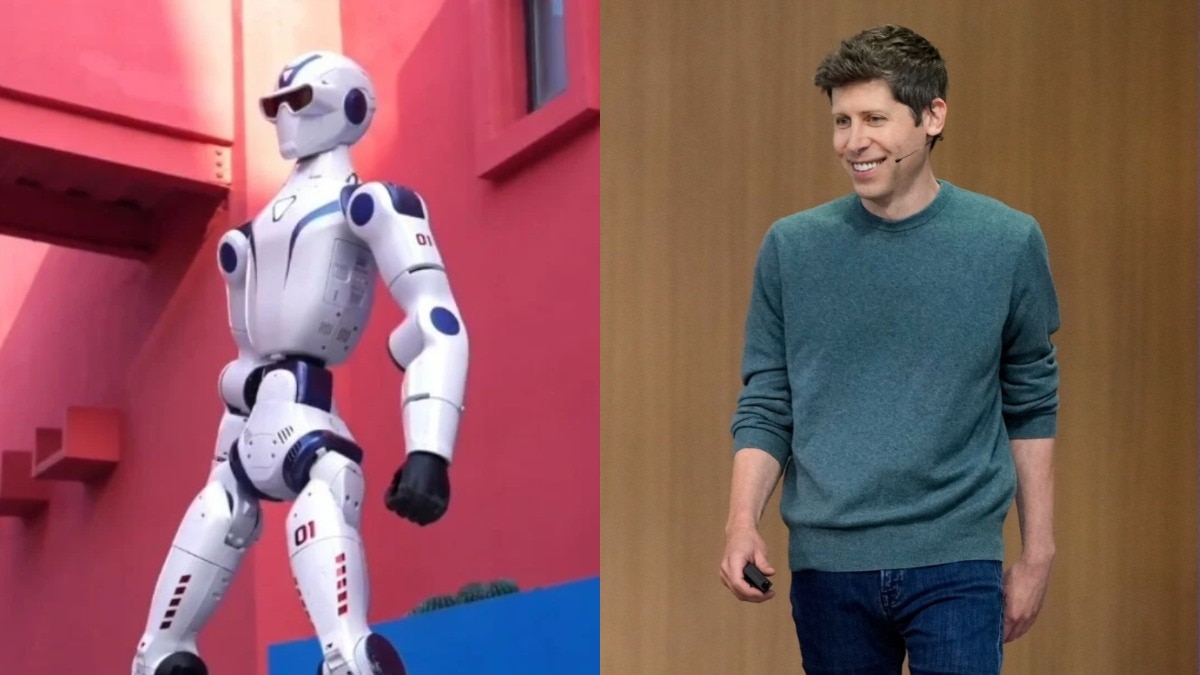
OpenAI is building humanoid robots, and CEO Sam Altman confirmed a demo is planned for 2027. Altman said, "The world is very much designed for people," explaining why this form factor works best. The company set up a robotics lab last year and currently has many open job roles.
OpenAI wants to join the humanoid robot race. CEO Sam Altman has confirmed that the company is building its own humanoid which may soon make its debut.
OpenAI is one of the leading labs when it comes to AI models. Now, it appears that the company wants to enter the humanoid robot space too. OpenAI CEO Sam Altman has confirmed that the company is working on humanoid robots, and you may get your first glimpse of one quite soon.
Speaking on the Sources podcast, Altman claimed that the world was better designed for humans. "The world is very much designed for people," he said. "Matching that form factor seems good." That is, Sam Altman believes that a humanoid robot would likely be better suited to move around and interact with objects such as doors and tools, compared to any other form.
Sam Altman teases humanoid demo for 2027
But when can we see this humanoid from OpenAI? According to Altman, you may have to wait just a little longer. "I think we'll have a cool demo in 2027," he told Fortune. However, Sam Altman hinted that humanoids are unlikely to become mainstream in the short term. "I don't think there will be robots walking the streets for a few years longer," he added.
While the OpenAI CEO did not reveal any specifics about what this humanoid might look like, he insisted that what went inside the robot mattered more. According to Sam Altman, the robot's design details were "less important than really figuring out ... the brain that makes the robot work."
A humanoid robot has a lot of parts, including working arms, legs, and fingers. But the robot usually relies on AI models that can process data coming from cameras and sensors to plan and executive movements.
OpenAI reportedly set up a humanoid robotics lab last year to focus on developing AI models required for robots. As per reports, OpenAI currently lists 27 robotics vacancies covering aspects such as motion control and whole-robot behaviour. The postings also cover manufacturing and the supply chain needed to produce hardware at scale.
Altman's comments over humanoid robots follow OpenAI's earlier Dactyl research project, which trained a robotic hand in simulation to manipulate physical objects. The company later applied the technique to solving a Rubik's Cube.
However, the humanoid industry has seen rapid advancements in recent years, particularly from China. While Tesla has been developing its Optimus robot for years, Chinese players such as Unitree and Xpeng have made major gains. Unitree's humanoid robots have managed to set sprinting records in the past. Meanwhile, Xpeng recently demonstrated its IRON humanoid walking autonomously off a production line after assembly.
OpenAI is likely still in early stages of humanoid robot development. The company has not given any specifics of what its robot might look like, or work. Though apart from humanoid robots, the company is also expected to launch hardware devices such as a smart speaker soon.