
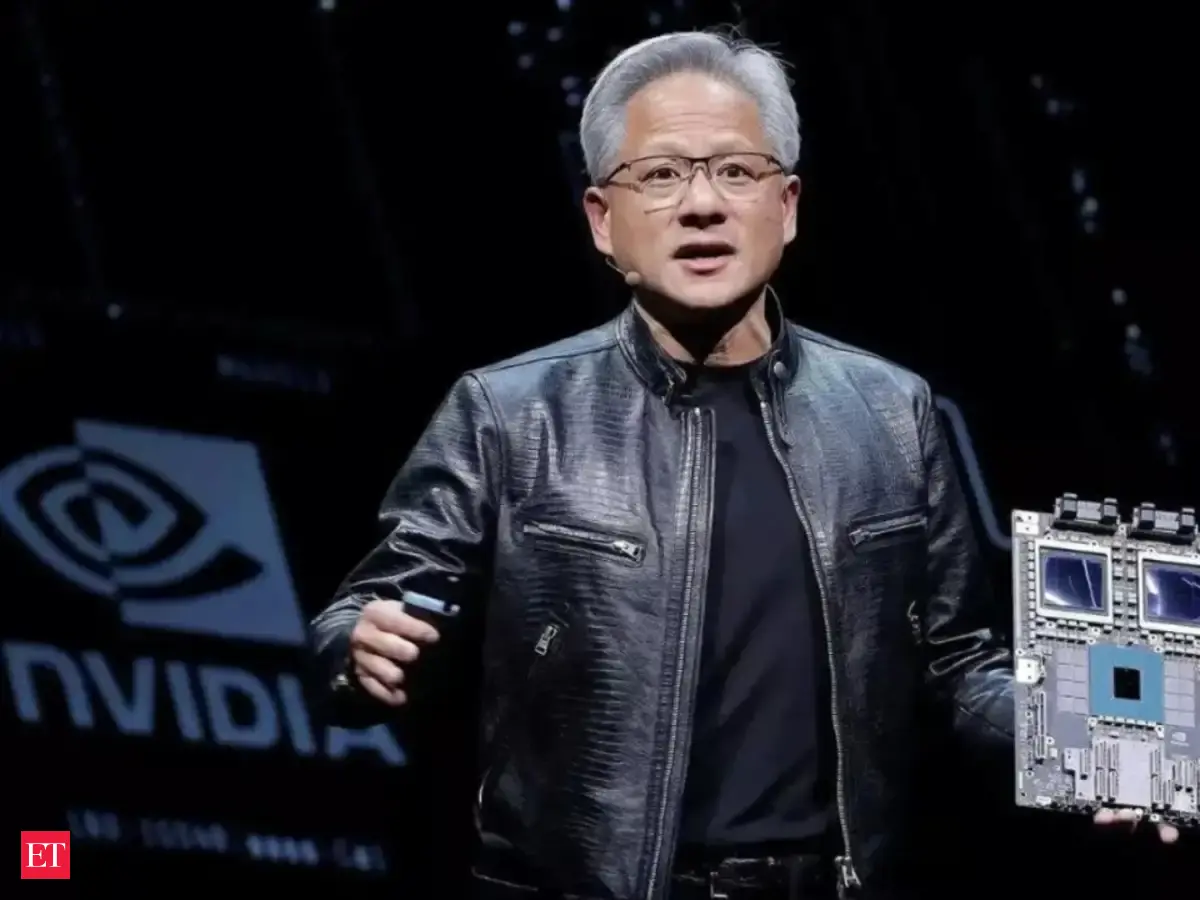
Jensen Huang returned as Nvidia CEO on November 23, ending an 11-day leadership crisis. The move sent Nvidia shares up more than 30% after a $1.4 trillion market-value loss. While AI infrastructure stocks rallied, rivals like AMD gained less. However, governance probes and Senate hearings still leave many questions for investors.
Synopsis
Jensen Huang’s return as Nvidia’s CEO on November 23 ended an 11-day leadership crisis and sent Nvidia shares up more than 30%. AI infrastructure stocks, including CoreWeave and Nebius, rallied. AMD and Broadcom gained less, losing a key chance to benefit from Nvidia’s turmoil. Governance probes, export-control oversight and a Senate hearing still leave questions unresolved for investors and regulators.
Jensen Huang is back as Nvidia CEO: Who wins, who loses and what risks remain? Jensen Huang is back as Nvidia’s president, CEO and board member after the company’s board unanimously reversed his resignation on November 23. Consultations with senior US government officials cleared the national security concerns surrounding his return. The decision ended an 11-day leadership crisis, sent Nvidia shares sharply higher and gave the wider AI infrastructure sector a reason to recover. Chip rivals, however, have lost one of their biggest opportunities to benefit from uncertainty at Nvidia.
The reversal came after President Donald Trump publicly urged Nvidia’s board to bring Huang back on November 22. The board confirmed that his return posed no national security risk. The market response was immediate. Nvidia shares rose around 30% to 31% at Monday’s open, reaching approximately $164.91 from Friday’s close of $125.53.
Jensen Huang returns to Nvidia: Winners and losers
Nvidia was the biggest beneficiary of the leadership decision. Its shares had fallen to $125.53 on November 20, reaching a 52-week low amid concerns about Huang’s departure and a wider sell-off in AI stocks. The stock had lost more than 29% from its late-October levels, wiping out roughly $1.4 trillion in market value.
Monday’s rally added an estimated $950 billion to Nvidia’s market capitalisation during the session. The recovery reflects more than investor confidence in one executive. Huang remains closely associated with Nvidia’s AI strategy, GPU development and relationships with major technology companies.
The company had already delivered strong third-quarter FY2027 results on November 17. Revenue reached $115.84 billion, beating expectations of $109.10 billion. Nvidia also provided fourth-quarter revenue guidance of $130 billion. Those figures had not prevented the shares from falling during the leadership crisis. Huang’s reinstatement gave investors a reason to reassess the stock.
Live Events
AI infrastructure companies also benefited from Nvidia’s return. CoreWeave and Nebius gained as much as 30% in early trading, reflecting investor expectations that Nvidia’s GPU supply, partnerships and financing relationships would remain on familiar terms.
Other companies connected to data centres and AI infrastructure joined the rally. SanDisk rose 22%, Seagate gained 18%, while Western Digital and Micron advanced 16% each. Coherent and Bloom Energy also recorded double-digit gains.
Dell Technologies, Applied Digital and IREN were among the other companies caught up in the recovery. These businesses have exposure to the expanding AI infrastructure market. Confidence in Nvidia’s leadership matters because its decisions influence the supply of the chips and systems that support much of that investment.
AMD, Broadcom, Marvell, Arm and Cerebras had attracted investor attention during Huang’s absence. The leadership uncertainty gave customers and investors another reason to consider alternatives to Nvidia's chips.
That opportunity has narrowed. Nvidia's return does not remove the competitive threat from rival chipmakers, but it weakens the immediate argument that a leadership crisis could accelerate customer diversification.
AMD shares rose 4.7% on Monday, while Broadcom gained between 1.9% and 4%. Both participated in the broader technology rebound but significantly underperformed Nvidia’s 30%-plus jump. Their longer-term prospects still depend on product performance, customer demand and the growth of custom AI chips.
Nasdaq, S&P 500 and Bitcoin join the relief rally
The reaction extended beyond semiconductor stocks. The Nasdaq Composite rose 6.8%, the S&P 500 gained 4.7% and the Dow Jones Industrial Average advanced 2.5%, according to the supplied market figures.
Bitcoin also moved above $64,000. The rally triggered approximately $440 million in mostly short liquidations across cryptocurrency markets. The gains showed how quickly sentiment shifted after the Nvidia announcement, although they do not establish that the wider market sell-off is over.
Huang’s reinstatement has settled the immediate leadership question. It has not closed every issue surrounding the company.
Nvidia has established a permanent National Security and Export Control Oversight Committee, chaired by Suzanne Nora Johnson. The company is also searching for a chief compliance officer who will report directly to the board. An independent directors' investigation into foreign intelligence reports and Huang’s personal conduct remains open.
The controversy followed media reports about alleged relationships involving Nvidia employees and an executive connected to a Singapore-based firm suspected by US officials of having links to Chinese intelligence. These reports raised questions about national security and corporate governance. The White House consultations addressed the national security concerns surrounding Huang’s return, but the independent investigation and government inquiries remain separate matters.
Huang’s return also changes Nvidia’s leadership structure. Harvey C. Jones will remain independent chairman, separating the board chair and CEO positions for the first time in the company’s history. Colette Kress has returned to her CFO role after serving as interim CEO for 11 days. She oversaw the company’s earnings announcement and supply-chain commitments during the uncertainty.
Who still has reason to worry at Nvidia?
External CEO candidates and executive search firms have lost a potential opportunity. Nvidia had reportedly engaged a search firm to assess outside successors before the board reversed course.
Contrarian prediction-market traders who backed Huang’s return also benefited. Kalshi had placed the probability of his reinstatement at just 16% before the announcement.
KYC and KYB: Zydus Lifesciences – From the chemist’s counter to US pharmacies. Part 1 of 3
What would it take for the world to stop needing the Strait of Hormuz?
Hidden export winners: The unlikely products finding real buyers abroad
India’s USD25 bn copper drive moves from building smelters to securing mines
Why IndiGo could land a sharp rebound in profit despite a sluggish aviation market
Gold still rules, but with a difference: How young India is redefining wedding jewellery