
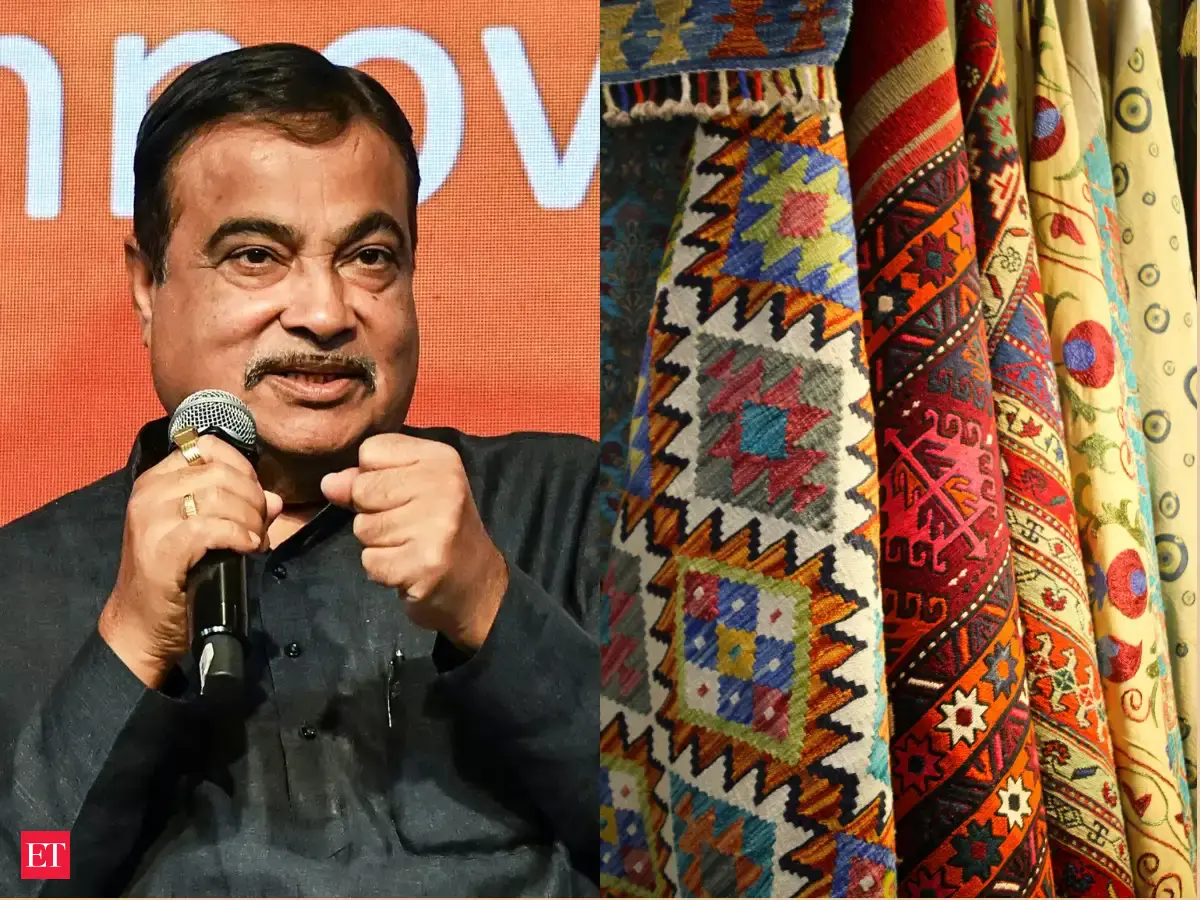
Union Minister Nitin Gadkari started a textile project in his village, Dhapewada, to revive traditional handloom weaving. The initiative aims to employ 5,000 women and sell sarees globally using artificial intelligence. Union Textiles Minister Giriraj Singh said, "The project could help weaving families earn nearly Rs 30,000 per month."
Synopsis
Nitin Gadkari's Dhapewada textile project near Nagpur aims to revive traditional handloom weaving and create employment opportunities for 5,000 women. The initiative produces tussar silk, silk-cotton and cotton sarees and plans to expand into global markets through exports and artificial intelligence. Union Textiles Minister Giriraj Singh said the project could help weaving families earn nearly Rs 30,000 per month throughout the year.
Listen to this article in summarized format
Loading...
×
Union Minister Nitin Gadkari has said a textile initiative in Dhapewada, his native village near Nagpur, aims to revive traditional handloom weaving and create jobs for the local Halba Adivasi community. The project, which focuses on products made by local women, is also looking to expand its reach through exports and the use of artificial intelligence. The announcement came after veteran actor and BJP MP Hema Malini inaugurated the building of Dhapewada Textile Udyog Producer Company Limited, a private entity, in the village on Saturday. Union Textiles Minister Giriraj Singh was also present at the event. Gadkari, who has adopted Dhapewada, said the initiative was intended to preserve the area's handloom heritage while creating sustainable livelihood opportunities for its traditional weavers.
Dhapewada textile project: Target of 5,000 women workers
Gadkari said the initiative began in 2021 with training programmes for women. In its early stages, the project faced uncertainty over market demand, but interest in its products increased as the quality of the textiles improved, he said.
The project aims to provide employment to 5,000 women in the future, according to the minister. It also plans to expand beyond local markets and take traditional handloom products to international buyers through exports and the adoption of artificial intelligence. The initiative focuses on creating employment opportunities for women while helping preserve the weaving skills associated with the Halba Adivasi community.
Tussar silk and cotton sarees made by local women
According to a press release, the Dhapewada unit manufactures tussar silk, silk-cotton and cotton sarees. Training and employment for local women form a central part of the initiative.
Live Events
The project seeks to combine traditional weaving techniques with improved product quality and wider market access. A fashion show held during the inauguration also showcased sarees from different regions, offering traditional textiles a platform to reach new audiences.
Hema Malini praised Gadkari's initiatives and said the fashion event was helping provide sarees from different parts of the country with greater visibility.
Similar handloom projects planned across Vidarbha
The Dhapewada initiative is part of a broader effort to expand textile production in Maharashtra's Vidarbha region. Gadkari said similar projects had been launched in Gadchiroli and Washim districts to increase production. Another project is planned in Khapa in Nagpur district.
Expanding such initiatives could help extend the reach of traditional weaving communities while creating additional employment opportunities in the region.
Giriraj Singh sees job potential in textile sector
Union Textiles Minister Giriraj Singh said the textile industry had considerable potential to generate employment. He expressed confidence that the Dhapewada initiative could become an important milestone for the sector.
Singh also said weaving families could potentially earn nearly Rs 30,000 per month throughout the year through the project.
The initiative's longer-term success will depend on sustaining demand, expanding market access and ensuring that the benefits of increased production reach the women and families involved in traditional weaving.
Inputs from agencies
(You can now subscribe to our Economic Times WhatsApp channel)
(Catch all the Business News, Breaking News and Latest News Updates on The Economic Times.)
Subscribe to The Economic Times Prime and read the ET ePaper online.
...moreless
(You can now subscribe to our Economic Times WhatsApp channel)
(Catch all the Business News, Breaking News and Latest News Updates on The Economic Times.)
Subscribe to The Economic Times Prime and read the ET ePaper online.