
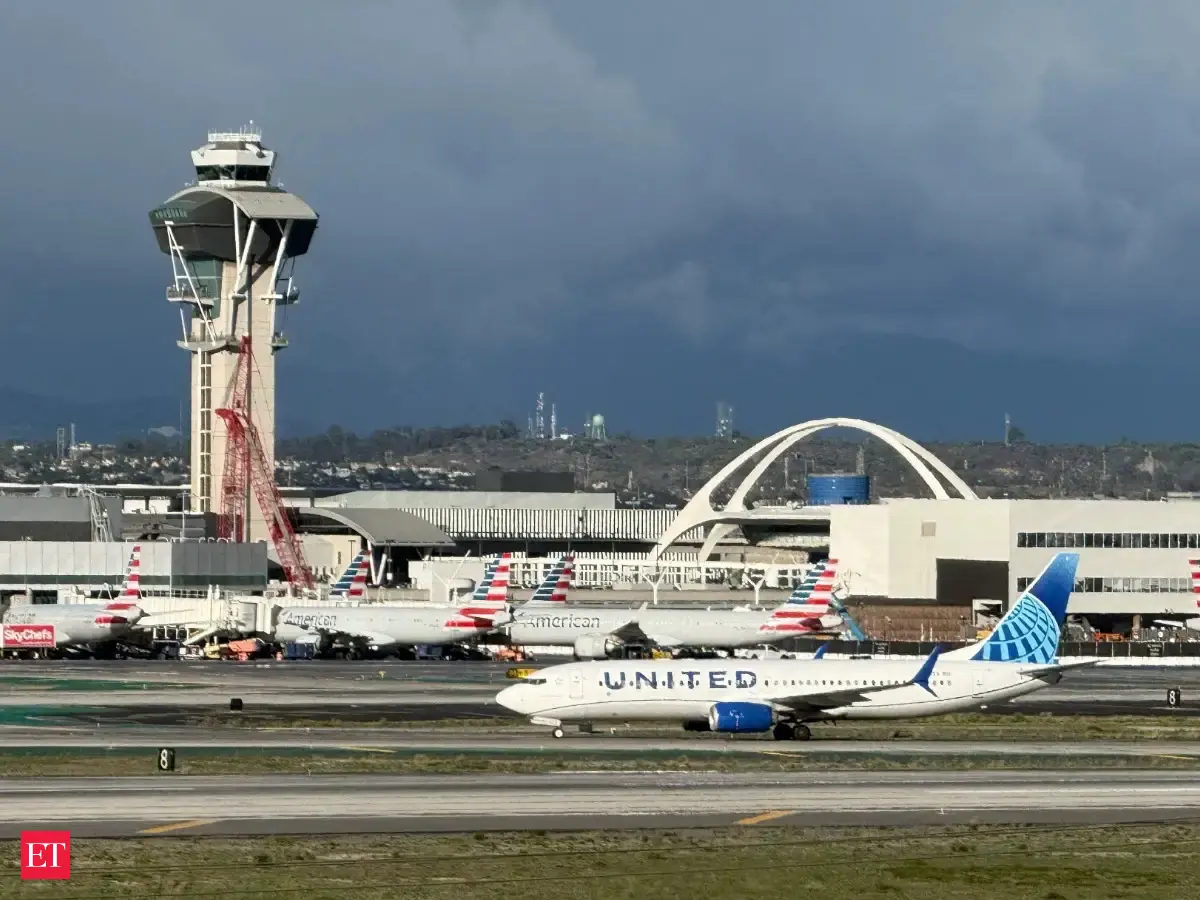
The FAA grounded all flights nationwide on Friday, November 13, after a telecommunications outage hit regional hubs. Officials said there was no indication of a nefarious act. The agency recently started using an AI tool called SMART to manage air traffic, though it was not linked to the incident.
On November 13, the nation's air traffic came to a halt when a telecommunication outage struck regional hubs. While the FAA insisted there was no indication of malicious intent, the fallout included the cancellation of over 1,000 flights and significant delays for countless passengers. Notably, the FAA's newly rolled out a new AI tool SMART, days ago.
All flights were grounded nationwide on Friday, November 13, the Federal Aviation Administration (FAA) announced. Top-ranking homeland security officials said the issue was caused by a telecommunications outage at regional centres and there was no indication of "nefarious act", AP reported.
The incident marks only the third time all flights have been halted since the computer malfunction in January 2023 and the September 11, 2001 attacks. While the FAA has been investigating the outage, airlines cancelled over 1,000 flights and delayed about 10,00, according to Reuters.
Homeland Security Secretary, Markwayne Mullin, addressed concerns about the incident, saying, "There's no reason for the public to be afraid or scared for your loved ones. This isn't another 9/11."
The FAA launched a new AI tool, SMART days ago
Days before the outage left several stranded at airports across the country, the FAA had expanded a new AI tool, the Strategic Management of Airspace Routing Trajectories (SMART) and expanded it to all air traffic controls. The $875 million new tool is aimed at assisting in the management of air traffic across the whole national airspace system, Ars Technica reported earlier.
Before expanding it across the country to 22 routes, SMART was rolled out in Washington DC in September 2026. According to Gizmodo, the FAA had already used it to reroute 180 flights and as a result saved an average of 10 minutes and 80 gallons of fuel.
The cloud-based tool assists by merging nearly 200 data streams, including data on flight paths, schedules and weather, on one platform, according to the New York Post. This helps it anticipate any issues that may arise in flight paths. According to an FAA fact sheet, the tool provides air traffic control and aircraft operator "a shared, data-driven view ot the national airspace before flights depart". It can further analyse airline schedules, airport capacity and airspace conditions to predict traffic flows and any conflicts before they happen.
Amid concerns about the roll out and the tool's safety, several Democrats sent a letter to the Government Accountability Office (GAO) urging it to review the tool and its safety risk management.
The FAA earlier reassured passengers and airlines that the AI tool would only be used to suggest routes and will not affect air travel security.
Did the AI tool prompt the ground stop?
As news of the ground halt spread, several users across social media started speculating whether SMART was behind the outage, claiming it was too much of a coincidence. The vendor behind the AI tool, Air Space Intelligence (ASI) denied any connection between the tool and the stop. The firm said "The current ground stop is not based on or a result of the SMART system, any product of ASI or our integration with FAA and ATC."
Upon being asked whether SMART impacted the air traffic control systems, Homeland Security Secretary, Mullin, said "You can't rule out anything at this point."