
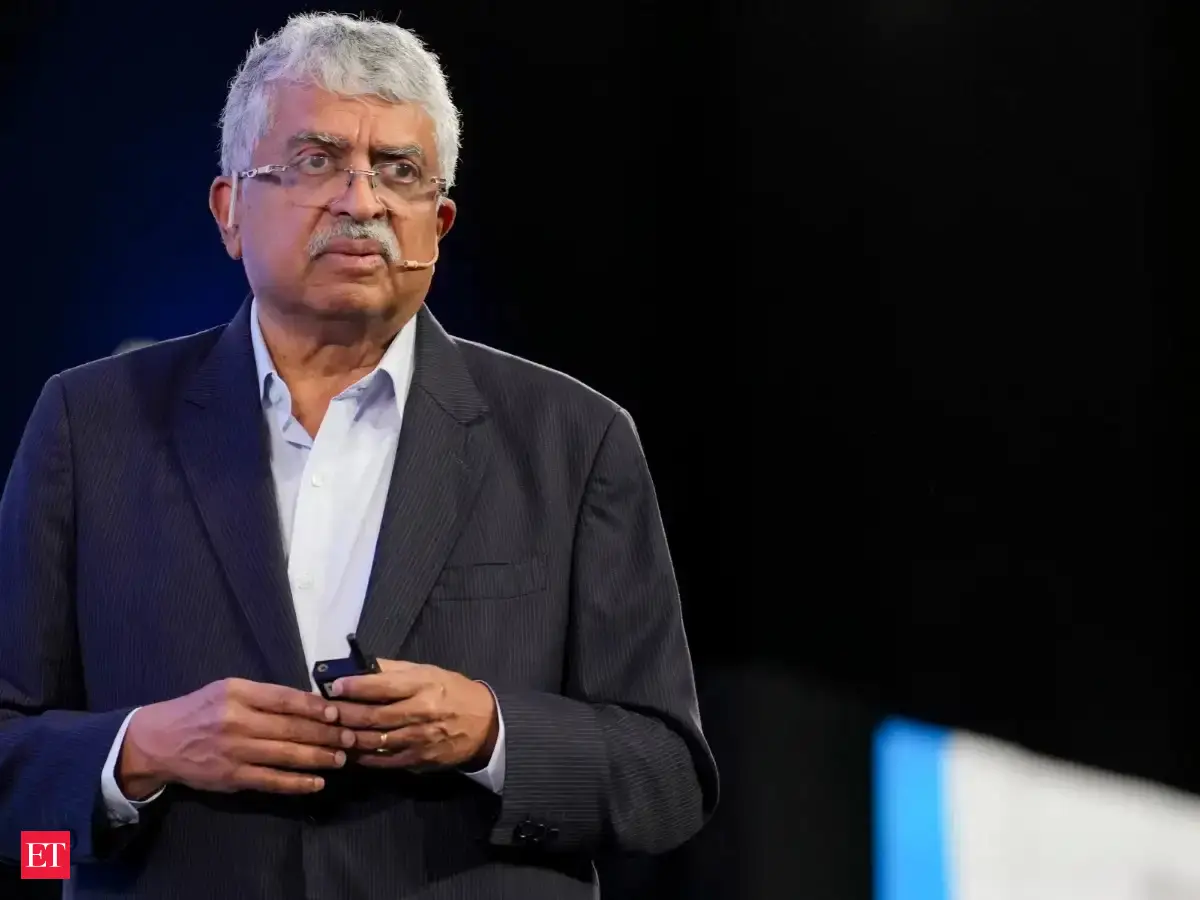
Nandan Nilekani called for AI-generated question papers and nationwide computer-based testing on Tuesday. Speaking at the Bloomberg Economic Forum, he said, "The way to solve this is to really have a massive bank of questions." This shift aims to stop exam leaks and fraud by removing economic incentives for cheating.
Synopsis
Nandan Nilekani suggested a significant change in India's examination framework during the Bloomberg Economic Forum. He emphasized the use of artificial intelligence to create question papers on the day of the exam. This approach aims to eliminate the risk of leaks and fraud associated with traditional question papers. Nilekani noted the importance of transitioning to a Computer-Based Testing model nationwide for equitable access.
Infosys co-founder Nandan Nilekani on Tuesday called for a big shift in India's framework for conducting examinations and proposed the use of artificial intelligence to create question papers on the day of the test in a bid to remove the risk around fraud and leaks.
"Question papers create an economic incentive for them to be sold. So, the way to solve this is to really have a massive bank of questions, and only at the last minute generate the question paper for that day, and therefore the question of 'a' question paper goes away, and there's no economic incentive for that. That's one way to think about how to solve this," Nilekani said while speaking at the Bloomberg Economic Forum in New Delhi.
Prime Minister Narendra Modi, earlier in the year, turned to Nilekani who has built one of India's largest software companies, to fix issues with India's examination system. This happened after Gen-Z led protests led to the resignation of erstwhile Union Education Minister Dharmendra Pradhan post the infamous leak of the NEET-UG question paper.
Modi tapped Nilekani to chair a high-powered panel on exam reforms after repeated paper leaks seemed to erod public confidence in the testing system.
Live Events
The Infosys co-founder on Tuesday stressed that there was a need to changer towards a nationwide Computer-Based Testing model.
"The other thing is, of course, how to make sure all exams are done on a computer-based testing, and that requires a network of locations. We have 150,000 locations where a young boy or girl can take a test. That needs to be expanded," he added.
(You can now subscribe to our Economic Times WhatsApp channel)
Curbing rupee bets: What the RBI’s new rules mean for the hedge-now-or-wait question
Brinjal, buffalo, bacteria: Inside India’s pay-for-nature system
Homebuyers wait as NCLT panel picks holes in unfinished Jaypee projects
The NBFC saga - Part 3: How one default in 2018 changed the way RBI reads risk
Four rules made HDFC Bank a compounder. All four have stopped. Can the new CEO rewrite them?