
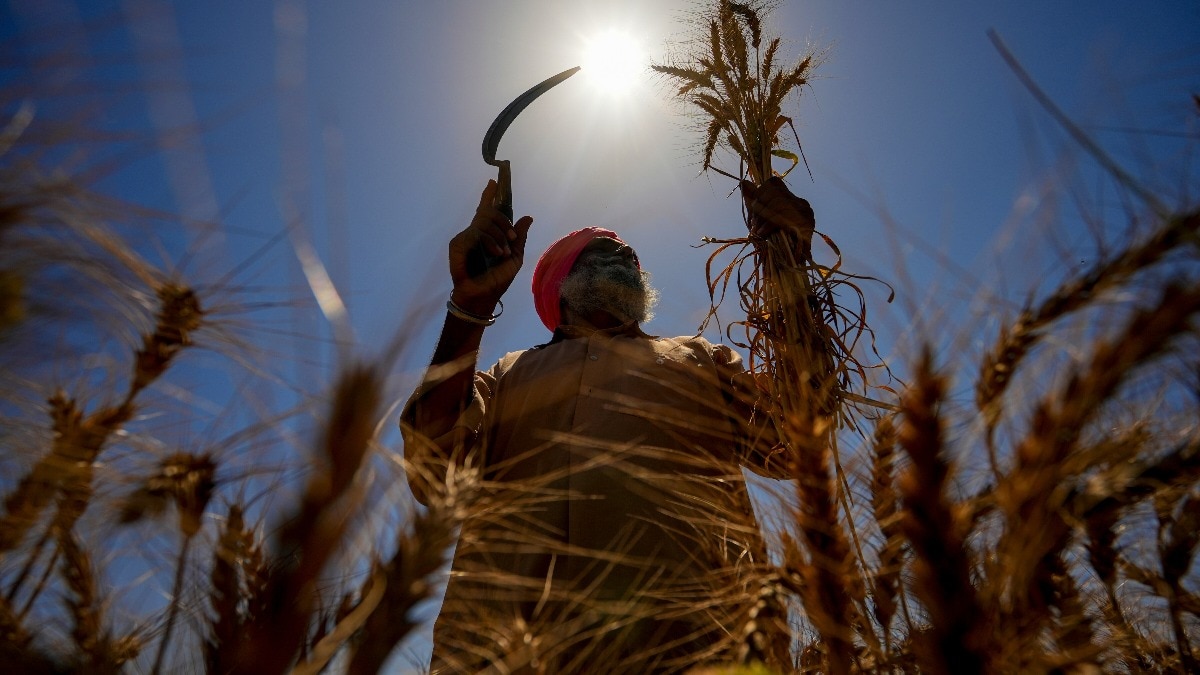
Microsoft researchers developed a machine-learning method to improve weather forecasts published in Nature on October 14. The system corrects recurring errors in existing models without needing a total rebuild. This could help Indian farmers plan sowing and irrigation better, as the tool runs on ordinary computers to save costs.
Predicting the weather a few days ahead has become easier with modern technology. But forecasting conditions two to six weeks in advance remains a major challenge, leaving farmers, water managers and disaster response teams with limited guidance.
Researchers at Microsoft and collaborating institutions have developed a machine-learning method that could make these forecasts more reliable.
The findings were published in the journal Nature on October 14.
Instead of building an entirely new forecasting system, the method learns from the mistakes existing weather models repeatedly make and corrects them. This could help improve forecasts without requiring weather agencies to start from scratch.
HOW DOES THE NEW WEATHER FORECASTING SYSTEM WORK?
Called Probabilistic Bias Correction (PBC), the method compares past forecasts with what actually happened to identify recurring errors. It then uses this information to adjust future predictions.
Weather models use observations of the atmosphere and oceans to estimate how conditions will evolve. However, small errors can grow over time, making forecasts increasingly difficult beyond the first couple of weeks.
PBC aims to tackle this problem by correcting these recurring errors rather than replacing the underlying model.
When researchers tested the method on a leading forecasting system from the European Centre for Medium-Range Weather Forecasts (ECMWF), forecast skill improved for 98% of the evaluated precipitation targets and 92% of temperature targets. Atmospheric pressure forecasts also improved across 91% of the targets assessed.
These figures indicate how often forecast skill improved, not the percentage of predictions that were correct.
HOW CAN INDIA BENEFIT FROM IMPROVED WEATHER FORECASTS?
More reliable forecasts covering the next two to six weeks could help India prepare for weather conditions that affect agriculture, water supplies and energy demand.
Farmers could use improved outlooks to plan sowing and irrigation or prepare for dry spells. Water managers could make better-informed decisions about reservoir operations, while disaster response agencies could gain additional time to prepare for potential extreme weather.
The India Meteorological Department (IMD) already issues extended-range forecasts covering the coming weeks. PBC could potentially improve such existing systems, although its performance would need to be tested under Indian weather conditions before its local benefits could be established.
Another advantage is that the method can run on ordinary computer processors, reducing reliance on expensive computing infrastructure. Its open-source availability could also help weather services with limited resources test and adopt the technology.
A version of the approach topped ECMWF's 2025 forecasting competition across the weather variables and forecast lead times evaluated.
The research offers a promising way to improve forecasts during a period when reliable guidance is difficult to obtain. However, PBC cannot eliminate uncertainty or guarantee accurate predictions weeks ahead. Its real value will depend on how well it performs in operational forecasting systems, including those used in India.