
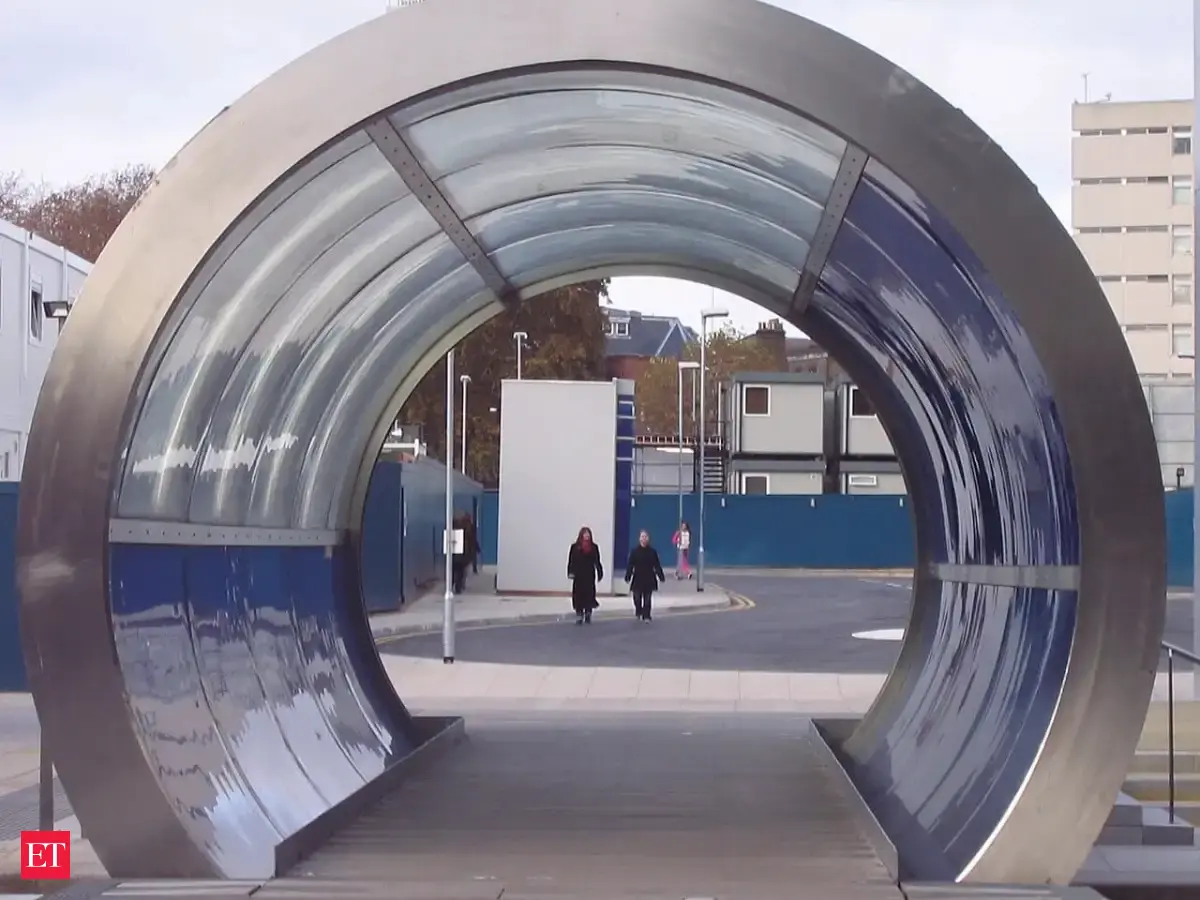
London built the Helix Bridge, a unique structure that twisted like a corkscrew to clear the canal for boats. The bridge got removed in 2013 because it became too expensive to repair. Experts said, "practical architecture tends to endure in relevance," as many complex, pretty designs often fail over time.
The Helix Bridge, a unique structure in London known for its twisting design to facilitate boat traffic, faced high maintenance challenges leading to its eventual dismantling. Studies suggest that while visually striking designs can captivate, they may fade in prominence. In contrast, practical architecture tends to endure in relevance, highlighting the Helix Bridge's message about valuing functionality alongside aesthetic considerations.
Imagine a footbridge that twists like a strand of DNA to allow barges to pass through. Believe it or not, this was a real bridge in London, and its tale may sound eerily familiar to Americans who have been obsessed with finding 'hidden gems' to include in 15-second videos on Reels over the past few years.
The Helix Bridge, a glass and steel pedestrian crossing located at Paddington Basin, would fold back when needed thanks to its twisting helix frame. However, according to the Inland Waterways Association, after its removal in 2013, only two of Paddington's three 'moving art' bridges remained. It was not demolished because Londoners did not like it, but because it did not work anymore. It was too expensive to repair, so it had to be taken down.
A pretty idea that forgot to be practical
Although these kinetic 'art' bridges look stunning in pictures, they are notoriously hard to look after. They are complex, involving a range of mechanical, electrical and structural features. These are all very vulnerable to the corrosive water in the canal. A 2009 conference paper titled "Structural Health Monitoring of Bridges: Fundamentals, Application Case Study, and Organizational Considerations," published by the American Society of Civil Engineers in the Proceedings of the Structures Congress, found that movable bridges have much higher maintenance and renovation costs.
One end of the unusual canal footbridge, The Helix Bridge, which retracts like a corkscrew to allow boats to pass. Image credits: Wikimedia Commons
This is due to the proximity to the waterway, mechanical parts wearing down, and fatigue. The Helix Bridge had no exceptions to this. This is where the story can really make you think. This has happened in some of the 'modern' architecture in 2020s America. From the 'infinity' structures we see on Instagram in Miami to the glass walkways built in medium-sized towns in America. We are constantly designing structures with 'Instagrammable' architecture in mind.
The Instagram effect is real, and researchers have receipts
A 2024
study titled "Visuality peaks, function lasts: an empirical investigation into the performance of iconic architecture on Instagram," published in the Archnet-IJAR: International Journal of Architectural Research, looked at the Instagram traffic of 16 buildings known as iconic architecture between 2011 and 2019. Their findings showed that those which were focused on for their wow factor tended to increase in popularity quickly but then declined. Those which were known for their functionality increased more slowly but held their popularity. Basically, those with the wow factor get lots of likes but not loyalty.
The Helix footbridge. Image credits: Wikimedia Commons
This is exactly what happened with the Helix Bridge. It opened with great fanfare as a piece of 'moving public art' and was reported to move at a slow 75mm per second. However, after just a few years, it stopped moving completely. It was replaced in 2014 with the Merchant Square footbridge. This has a fan-style structure and still moves.
Why this matters
This is not to say that we should not aim for ambitious designs. The issue is that we are creating 'wow factor' without any maintenance plans. This was a big issue with the Helix Bridge. With many cities in America currently looking to add statement footbridges, viewing platforms and turning sculptures to revamp their town centres, the Helix Bridge can provide a useful lesson. Something which gets you in the news can become something nobody wants to pay to repair. Whilst the Helix Bridge no longer exists and has been deconstructed and mostly forgotten about, except by engineering and waterway historians, its legacy is everywhere. Anywhere a city decides to go for the 'wow factor' rather than something long-lasting, which, according to research, is roughly every few years somewhere new.