
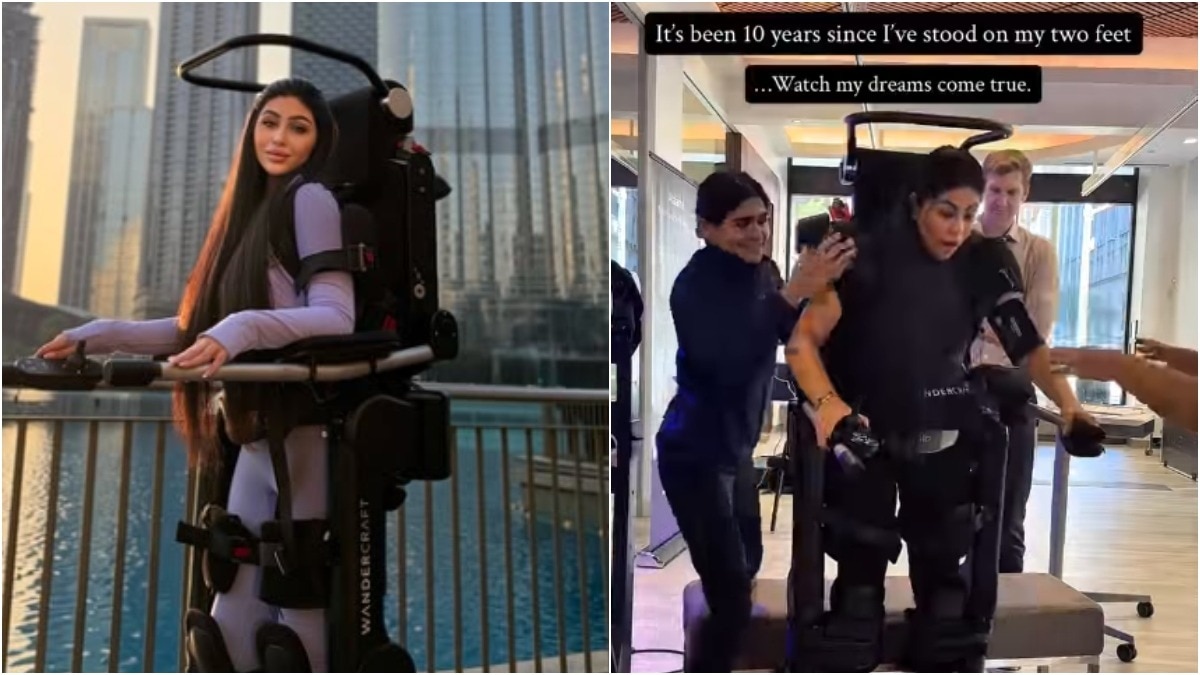
Jessica Tawil, paralysed since a 2014 car accident, recently stood up and walked using a robotic exoskeleton named Eve. The Lebanese woman shared a video of her progress after years in a wheelchair. In August 2026, she noted that the device got FDA clearance, offering new hope for assisted movement.
A Lebanese woman, Jessica Tawil, has shared a glimpse of a milestone she once thought might be out of reach: standing upright and taking steps after living with paralysis for more than a decade.
In a video shared on her Instagram, Jessica was seen using a robotic exoskeleton to experience movement with assistance.
Jessica's days of struggle began when she was paralysed in 2014. At just 16 years old, a car accident left her with a spinal cord injury that resulted in T6 paraplegia, affecting movement in the lower half of her body.
She has relied on a wheelchair since the accident while adapting to life with the lasting effects of the injury.
For years, walking was not part of her daily experience. But advances in assistive technology have since offered new ways for people with spinal cord injuries to explore movement. Jessica shared a clip of herself using a robotic exoskeleton called Eve, which helped her stand upright and take steps.
The overwhelmed "Oh my God!" and the glowing expression of glee proved how much the miraculous moment meant to her.
Watch the video here:
The video marked a significant moment in her journey, allowing her to experience supported movement after years of paralysis.
She has also shared glimpses of how she incorporates the device into aspects of her daily routine, showing how assistive technology can become part of life beyond rehabilitation sessions.
Jessica's experience has resonated with people online, drawing attention to the challenges of living with paralysis and the possibilities that emerging technology can offer. While the exoskeleton enables assisted movement, it does not mean that her paralysis has been reversed.
Instead, the device offers another way for her to stand and move with mechanical support.
In August 2026, Jessica shared that Eve received clearance from the US Food and Drug Administration (FDA), marking a further step in the development of this technology.
Watch here:
For people living with spinal cord injuries, devices such as robotic exoskeletons can offer opportunities to experience standing and walking with assistance. Their use, however, depends on individual medical circumstances and the guidance of healthcare professionals.