
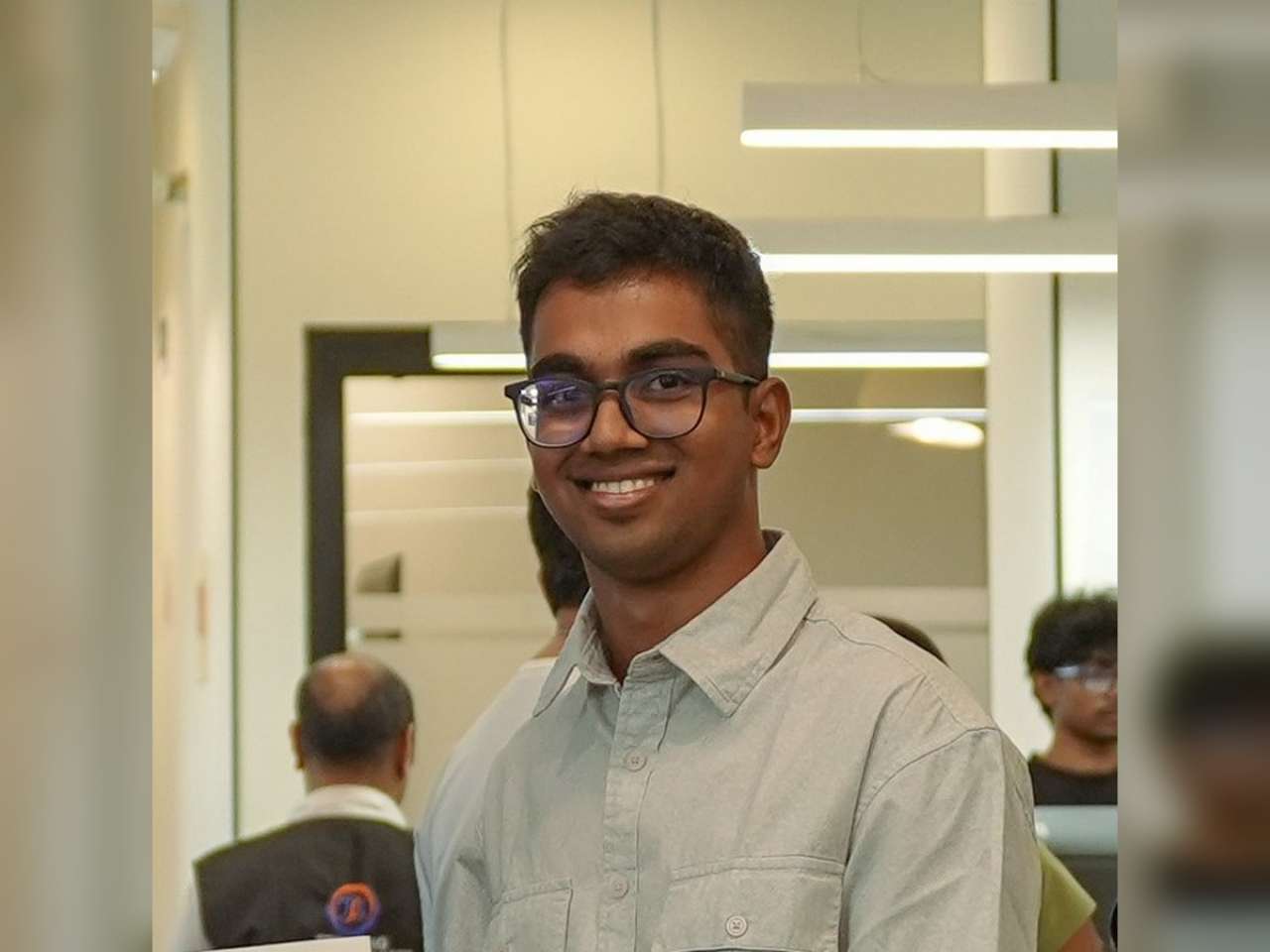
Karthikeya Meesala is taking early growth roles at AI startups like Composio and Oasis. While companies once built products before hiring sales staff, this order has now reversed. Meesala said, "You are not there to scale anything, because there is nothing to scale yet." These startups prioritize early commercial development.
Software companies once hired commercial staff only after they had something to sell. At a number of AI startups, including two where Karthikeya Meesala has held the role, that order has been reversed. Oasis, a company that makes software for assembling and coordinating groups of AI agents.
Ten years ago that allocation would have looked premature. The conventional order at a software startup was to build first and sell later. Founders spent a year or more on the product, hired engineers, handled the first customers themselves, and brought in commercial staff somewhere around a Series A, once there was enough to sell to justify the salary. Giving one of the earliest roles at a company to growth would have suggested a business getting ahead of itself.
At some AI companies that order has been reversed. The reasons have less to do with ambition than with a change in which part of building a company is now the slow part.
Composio, then Oasis
Karthikeya Meesala has taken an early commercial role at two companies in the sector. He joined Composio, which builds infrastructure allowing AI agents to connect to other software and has offices in India and the United States, during an early stage of its product and customer development.
Composio announced a $25 million Series A led by Lightspeed Venture Partners in July 2025. In January 2026 the company told Forbes India that its platform had passed 200,000 developers and was processing more than 100 million tool calls a month, with a team of roughly 25 people. Those figures were provided by the company and describe its own account of platform usage at that time.
He is now Head of Growth at Oasis, which operates as Mercury Intelligence Inc. and makes software that allows users to configure several AI agents for different tasks without writing code. The platform opened to the public in July 2026.
What the job involves at that stage
Neither role resembled the one the title usually describes. At a company with no paying customers, there is no acquisition funnel to optimise and no retention curve to defend, which are the activities a growth team performs at a larger business.
"You are not there to scale anything, because there is nothing to scale yet," Meesala said of working at that stage. "You are there to find out whether the thing people say they want is the thing they will actually put into production, and to tell the founders quickly when the answer is no."
That is his description of his own work rather than a standard definition, and responsibilities attached to the title vary considerably between companies. Similar work is labelled business development, go-to-market, customer development or founder's office depending on the organisation. What the versions share at an early stage is that the activity sits closer to research than to selling. It consists largely of conversations with people who have not bought anything, conducted to establish whether a stated interest would survive contact with a budget, a security review and an existing way of working.
Why the order changed
Two things happened at roughly the same time. Building software became substantially cheaper, and persuading an organisation to adopt it did not become easier.
On the first, the available comparisons are striking, though they cover a self-selecting group of companies. Emergence Capital's analysis found AI companies growing about four times faster than comparable software businesses and operating with seven to eight times fewer employees for each dollar of revenue. Industry analyses put revenue per employee at AI-native startups at around $3.48 million, against a long-standing software benchmark closer to $300,000. These figures describe the companies performing best in a young category and should not be read as typical of the sector.
On the second, Gartner's 2026 assessment of agentic AI reported that 17 percent of organisations had deployed AI agents, while more than 60 percent expected to do so within two years. The distance between those two figures is not principally a technical one. It reflects the time an organisation takes to satisfy itself that unfamiliar software can be trusted to act, and additional engineering does not shorten it.
"The old sequence assumed building was the slow part," Meesala said. "A small team can ship something credible in a few weeks. Getting one real company to depend on it still takes months."
Hiring patterns suggest founders have reached a similar conclusion. A 2026 startup hiring report by Recruits Lab describes first-of-function leadership hiring, meaning the first head of sales, the first head of product or the first commercial hire, as running at an intensity last seen in 2021.
What remains unsettled
Meesala has now done the job at both ends of that stack, first at a company selling infrastructure to engineers and then at one selling finished agents to people who do not write code. He is wary of drawing a general rule from it.
"The thing I would not assume is that any of it transfers," he said. "What worked at an infrastructure company did not survive the move to selling to operations teams. Every layer has its own version of the trust problem, and mostly you find out what it is by getting it wrong first."
If agent software becomes familiar enough that buyers evaluate it the way they evaluate ordinary business tools, the advantage of hiring commercial staff unusually early may narrow again. For the moment the pattern holds at a particular kind of company: small, technical, and selling something its customers have not bought before. At those companies the growth title has come to describe one of the first people through the door rather than one of the last, and the number of people who have held it twice remains small.