
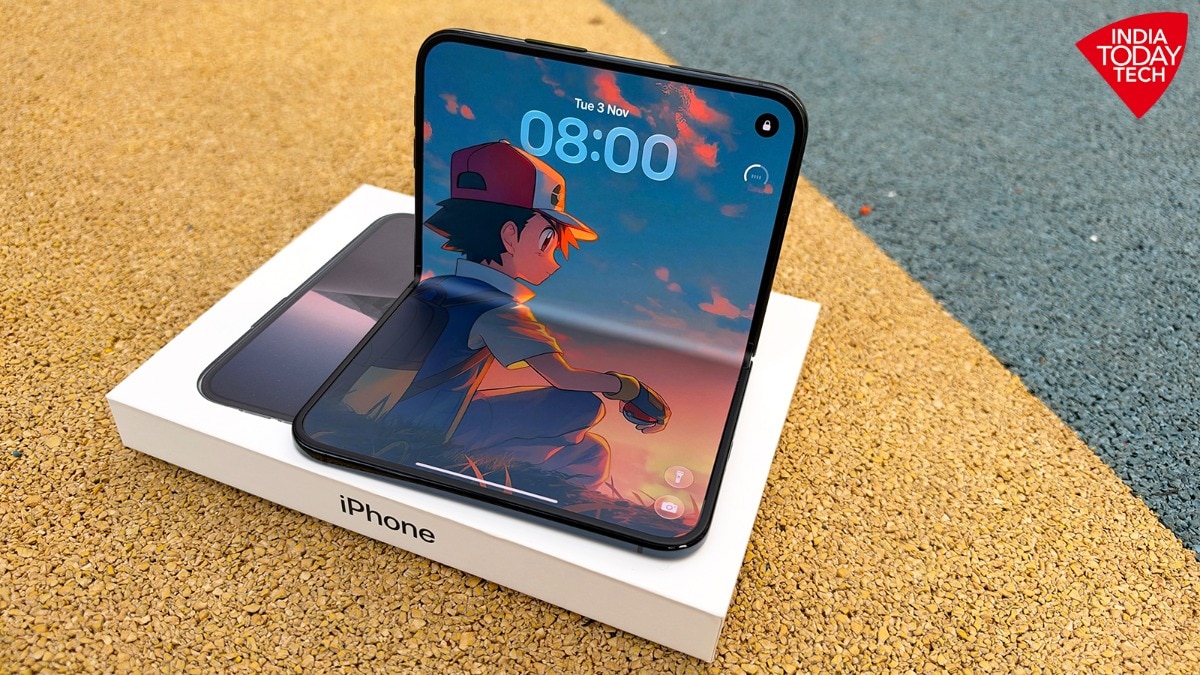
Apple finally entered the foldable market with the iPhone Duo, which went on sale in India in late October. The device features a unique, symmetrical design with a 1:1.414 aspect ratio. While the phone is impressive and well-built, it remains expensive for many users at a price of Rs 2,99,900.
Apple has finally made an entry into the foldable phone segment. The iPhone Duo is a fabulous phone with some design tweaks that are genuinely useful and impressive. But it is also expensive and somewhat limiting.
One of the most anticipated phones of the last few years has been the first foldable phone from Apple. This year we got one. The iPhone Duo arrived a few weeks ago and went on sale in India in late October. I have been using it for over two weeks and now understand the hype. It is real. It is warranted. The Duo is a phenomenally good phone in ways other -- and older -- foldable phones are not.
But true to its character, which is its foldable design, it is also a phone that is suitable to a certain type of user. I am not that user.
We will come back to this question of who should get the Duo and who should not -- granted you can afford it at its price of Rs 2,99,900. Before that let me talk about what the Duo does right and what it cannot do.
And the story needs to start with the design of the phone. Foldable phones are not new. There are a number of Android phones that can bend, open, and shut. Yet, you pick the iPhone Duo and you immediately notice that this one is special.
Like a passport
Unlike most foldable phones, which look like two tall-boy devices stacked side-by-side, the iPhone Duo is a phone with a broader body and a stubby shape. It is squarish in its shape when folded. The phone when folded has a height of 4.6 inches and a width of 3.3 inches. When unfolded, its height remains the same but the width increases to 6.5 inches.
One interesting bit about this size is that the phone's screen has an aspect ratio of 1:1.414, which is also the aspect ratio of something like the A4 paper. When folded and unfolded in half its aspect ratio remains the same. This is one reason why the device looks so pleasingly symmetrical, and why some of the cool software tricks -- such as the folding and unfolding animation on the screen -- work beautifully on the Duo.
The actual screen size of the Duo in foldable state is 5.4 inches. When unfolded, the inner display measures 7.6-inches. Both screens are extremely bright, although the inner screen due to its special coating is less contrasty.
The overall shape and size of the Duo makes it handy when you are carrying it. It looks like a couple of passports stacked together, and while its shape is slightly too wide to fit snugly in hand when you are carrying it folded, it will not stretch your fingers. Unless you have particularly smaller hands.
Apple is using a different design compared to other foldable phones also by making the corners on the left and right different. The right side of the phone features overly rounded corners, whereas the left has straight edges. This too adds to the phone's unique passport style, or book-style, look.
Apart from the aspect ratio and shape, there are two more noteworthy design highlights of the Duo. One is the hinge. The phone has by far the most satisfying and usable hinge I have used on a foldable phone. It opens and folds with just the right amount of force, and it snaps shut with a satisfying and a reassuring thud.
Then there is the inner display. Unlike other phones, the iPhone Duo sports a nano-texture on the inner display. It has a matte finish, which makes the phone significantly less reflective. Although, it reduces contrast compared to glossy screens. The coating also makes the inner screen feel luxurious to touch, almost like you are touching velvet. Most people will fall in love with the Duo inner screen as soon as they try it.
Another advantage of the matte finish is the display crease, which is inevitable in a foldable phone, is barely visible.
The rest of the phone is classic Apple -- which is to say tasteful and superbly built. The frame is made of titanium with glossy finish. Compared to a regular iPhone, there are a few more design changes here. The FaceID is not included on the iPhone Duo. In its place you get the finger print scanner embedded inside the power button. On the front, there is no Dynamic Island. Instead, you get a selfie camera in the punch hole, although Apple uses software to mimic the Dynamic Island. On the inner display the camera is placed under the screen. There is no cutout for it. So, you get to see the whole screen intact.
Unlike most other foldable phones, the iPhone Duo supports IP68 protection against water and dust. This is a phone available only with eSIM. Setting up one with three major carriers in India -- Jio, Airtel and Vodafone -- is seamless and takes just a few minutes.
The Duo comes in two colours -- Star White and Night Sky. You can see the Night Sky variant in this review. The base variant starts with 256GB storage. If you can and want to spend more, you can bump up the storage and go up to 2TB.
Using the iPhone Duo
Now as much as I love the design, shape, size and form factor of the iPhone Duo, I also find that it offers the similar pros and cons to users that other foldable phones also do. Although, in case of pros, Apple quality means you really get top class experience. And in case of cons, the same Apple factor means they are relatively better than what other foldable phones offer. But do understand this: the iPhone Duo is a phone with compromises.
One of the best bits about the Duo are its screens. The front screen sports a fantastic panel and shows rich colours. It also has a layer of Apple's Ceramic Shield 2, which is evidently the most scratch-proof screen layer you can get in a phone. The size of this outer display means you will spend a lot of time using the Duo in folded form. The wide profile of the phone means you don't need to pop it open most of the time. You can very well get by using the outer display.
But it is when you are doing something less phone-y stuff -- such as watching a movie, streaming some videos, reading something, scrolling through photos -- that you will unfold the phone to get to its bigger display. This one too is brilliant in every way -- bright and pleasantly vibrant. Though in outdoor conditions its matte finish means you will not get the high contrast that glossy screens offer, and some parts of the display will look a little faded.
Personally, I find that the pros of the matte screen -- less reflections, better perceived colour depth, better for eyes when you are reading something on it, and the velvety feel under the fingers -- outweigh the disadvantages. And I believe most people, when they use the phone, will agree with me.
What about the crease on the inner display? The crease is there but barely visible, thanks to the matte layer on the display. You can feel it under your fingers when you glide them on the display, but barely. Overall, I find that the crease is not an issue for me on the Duo.
Just like its screens, the performance of the iPhone Duo too is great. The A20 Pro inside the phone is the most powerful smartphone chip and it reflects when you use the phone. It is butter-smooth inside out. It also runs fairly cool, whether you are playing games on the large inner display or mashing the camera button in quick succession while clicking fireworks during Diwali -- something I tried the last few days.
But a foldable phone is as much about software as it is about hardware. And in that aspect the iPhone Duo is a mixed bag. It is a beautiful phone, made even more delectable and delightful by some of the software tricks that Apple has used on it. The most notable is that animation that stretches the screen when you unfold the phone, gradually revealing the full image.
But at the same time, the iPhone Duo software doesn't offer anything substantially more than what one can do on a regular premium phone. The multitasking on the Duo is better because you can stack two apps side-by-side on the inner display in both portrait and landscape mode. Similarly, some apps offer dual-pane design in landscape mode. For example, the Settings app is similar to how it is on Mac or iPad. Same with the Files app. And so on.
Then there are nifty features like StandBy mode, which turns the phone into an impromptu calendar and clock when you place it half opened on a table. Or Kid Cue, a feature which brings an animated Snoopy on the outer display when you are clicking photos of a kid (or anyone for that matter) and want them to look at the phone instead of left, right, up or down.
But overall software remains a work in progress. The extra canvas offered by the large inner display is still not used by most apps in a way that can make the experience truly unique on the Duo. The UI elements that most apps show on the bigger display seem incoherent given the nature of the phone. This is the case with most apps, or even web pages, that look as if they have been blown up to fit the larger display instead of being created or redesigned for full use of the available real estate.
I believe that the app ecosystem and developers will take a while before they catch up to the possibilities that the Duo offers. It will get better. But currently I find the software in the Duo, the one created by Apple as well as third-party developers, offer little distinct advantage over the experience we get from regular high-end iPhones.
Similarly, there are two aspects of the Duo that seem somewhat of a step back when compared to a top-end iPhone like the 18 Pro. One is the lack of FaceID. The TouchID in the Duo is extremely fast and precise. But it is still not as seamless in use as FaceID.
And two, the camera system is clearly not in the league of what the iPhone 18 Pro offers. This is, however, to be expected because cameras are a casualty of the extremely thin -- the Duo is 5.2mm when unfolded -- design of a foldable phone.
Expected or not, in the Duo you will miss some of the performance and versatility of the camera system that top-end iPhones offer. The Duo has four cameras -- two rear cameras, one on the outer display and the one on the inner display. The main camera, a 48-megapixel shooter, is clearly the best. It clicks extremely good photos and records clean video. The ultra-wide camera is a notch below in its performance.
On the front, the selfie camera is definitely not as good as the excellent -- and arguably the best selfie camera in any phone -- that you get with the recent iPhones. It gets the job done but needs good light to truly shine. The selfie camera on the inner display, meanwhile, is not good at all. It sits under the display, and hence is using exotic new technologies. But as it happens with new technologies it needs to mature before it can match regular cameras.
Thankfully, because the Duo is a foldable phone, you can use the rear cameras for selfies. Although, it also means that you will have to unfold the phone for a selfie and its size then means you have to be a little careful in how you hold the phone while clicking the photo.
Click on any image below to view the entire gallery of sample shots
If you can look beyond the compromises, the Duo rewards you with a great experience in some other aspects: reading a book, or a PDF report, on it is a hoot. Absolute joy, thanks to its matte screen and almost a pocket-book like shape. The phone is equally great for watching content, particular videos with taller frames. For example, if you play the IMAX trailer of Odyssey on the Duo, it fills up the entire screen edge to edge. The experience is also helped by the fact that the Duo has phenomenal speakers. They can fill an entire room with sound, good quality sound.
Battery life is another highlight of the Duo. It is extremely good, even with plenty of inner display use. In my use I often easily got around 15-17 hours of use before I felt like connecting the phone to a charger. For most people I believe that the Duo would last close to 20 hours on average.
Phenomenally good but not for everyone
I enjoyed using the iPhone Duo. It is truly a remarkable piece of engineering, and arguably the best foldable phone in the market. And yet, I would not choose it. Instead, I remain firmly committed to the iPhone 18 Pro, or something similar.
The reason is simple: the iPhone Duo is not for power users, and definitely not for people like me who want the absolute best cameras in their phone. I pair my phone's camera capabilities with the Nikon Z8 when I am out doing some photography. The iPhone 18 Pro is perfect for that. The Duo cannot be.
Similarly, it is not a phone for you if you are looking for a powerful device that you can use with one-hand, which you can throw around and make use of without needing to fold and unfold it.
Instead, the iPhone Duo is a perfect phone for people who are not power users. In other words, those who are not geeks, or those who are not running their business or work through their phone. Or, metaphorically speaking, it is a perfect phone for people who are driven around by chauffeurs and don't have to juggle a phone and steering wheel at the same time. It is a device that forces you to be slightly slower. It wants you to relish what you do on your phone, whether that is watching a movie or casually browsing the web.
There is an audience for this phone but geeks and power users are not those. Instead, the perfect users for this phone are those for whom the phone is not an extension of their hand or life. It is for those who use their phone to take a call on it, read a mail on it, and then slip it back in their pocket. Yes, they can take it out again when they are clicking the photos of their niece or granddaughter celebrating her birthday, but it is not for people like me who obsessively check how clean are the shadows in photos and what sort of dynamic range the camera has captured.
More significantly, with its design, uniqueness, and extremely high price, the iPhone Duo is also a phone for those who want to be seen carrying something special when they go out, metaphorically speaking, for a business dinner. The Duo is a good phone to have when you want a good smartphone experience. But it is a great -- or rather must have -- phone to own when you want to impress the rest of the world.
I believe Apple understands this. Hence the price of the phone, hence its limited availability. It is a special phone for people who are special in some way. And if you think you are one of these people, special in ways where a phone will complement your life, the iPhone Duo is the perfect for you. That it is also a fairly capable and functional phone is just the cherry on the cake.