
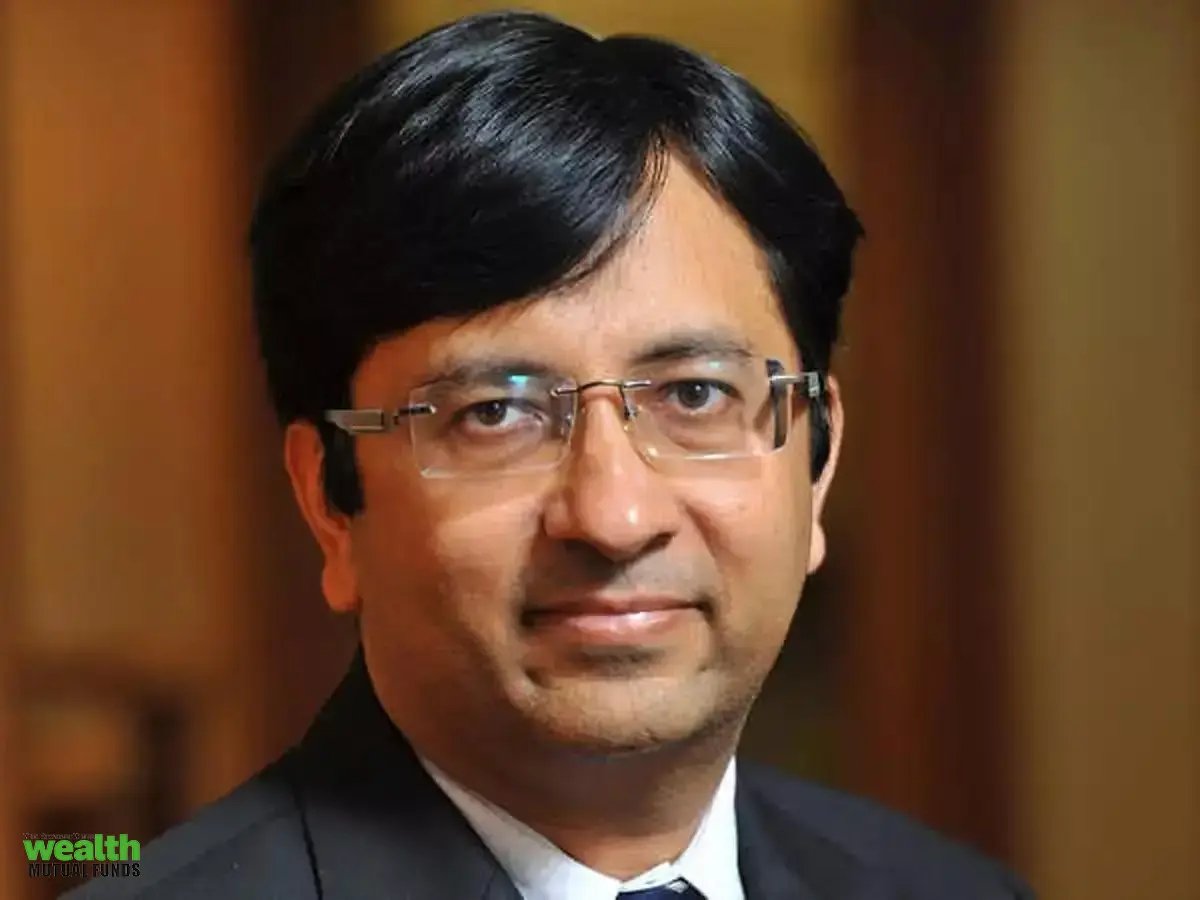
PPFAS Mutual Fund continues to hold IT services stocks despite concerns over AI disrupting traditional business models. CIO Rajeev Thakkar said, "Market narratives can sometimes be exaggerated." He noted that IT majors added 14,000 employees in the September quarter, showing the industry is not becoming obsolete as many people fear.
Synopsis
PPFAS Mutual Fund continues to hold IT services stocks despite concerns over AI disrupting traditional business models, with exposure below 10% of its portfolio. CIO Rajeev Thakkar explains why negative sentiment could create investment opportunities, how employee additions challenge the obsolescence narrative, and why the fund house remains invested in select IT, banking, energy and real estate companies.
Artificial intelligence (AI) has triggered concerns about the future of India's IT services companies, popularly referred to as WITCHES stocks — Wipro, Infosys, TCS, Cognizant and HCL Technologies. However, PPFAS Mutual Fund has not exited these companies despite the negative sentiment surrounding the sector.
Its exposure to IT services stocks is less than 10% of its portfolio. Speaking at PPFAS Mutual Fund’s 13th unitholders’ meet on Saturday, CIO and Director Rajeev Thakkar explained why the fund house continues to hold these businesses and believes the negative narrative surrounding the sector could be creating investment opportunities.
Thakkar said market narratives can sometimes be exaggerated and investors should examine actual business developments and financial data rather than react to prevailing sentiment. He also pointed to recent employee additions and technology job openings as evidence that the IT services industry is not necessarily becoming obsolete.
Best MF to invest
Looking for the best mutual funds to invest? Here are our recommendations.
View Details »
Thakkar said concerns about AI making traditional IT services companies obsolete have become widespread. Some investors believe AI tools will automate software coding to such an extent that only a handful of people will be needed to manage entire projects.
Live Events
However, he argued that the market narrative needs to be assessed against actual data. Citing September-quarter numbers, he referred to a brokerage report showing that IT majors had added around 14,000 employees sequentially, the highest net addition in eight quarters.
HCL Technologies recorded the highest net addition among peers, adding 6,450 employees, while Cognizant added 10,100. The report also showed that technology job openings in India had reached an 18-month high of around 1.17 lakh in September 2026, up 7% month-on-month and 15% year-on-year, according to Xpheno's Active Tech Jobs Outlook.
Thakkar said these developments should be viewed alongside the negative commentary surrounding the sector. He added that PPFAS's exposure to IT services companies, including Infosys, TCS, Wipro and HCL Technologies, was less than 10% of its portfolio.
He believes that when a sector becomes extremely unpopular and expectations turn excessively negative, it can create investment opportunities. Conversely, when a sector becomes a market favourite, valuations can become excessive, potentially resulting in several years of muted returns.
While acknowledging concerns about AI-related valuations and spending, Thakkar said the technology itself is real and is likely to play a significant role in the future. However, he cautioned that the scale of capital expenditure by companies in the AI ecosystem could lead to challenges over the next two to three years.
Thakkar said the emergence of open-source and open-weight AI models could challenge the assumption that a handful of companies developing frontier models would dominate the market. While these models may not match the most advanced offerings in every respect, they could be sufficient for several everyday applications.
He said PPFAS Mutual Fund's investments in Alphabet, Amazon and Microsoft are supported by the strength of their existing businesses, in addition to their AI opportunities. These companies have established cash-flow-generating businesses spanning digital advertising, e-commerce and consumer applications. These traditional businesses could help them withstand periods of volatility arising from higher AI-related investments.
Thakkar said Alphabet has capabilities across AI models, chip design and manufacturing partnerships, enterprise customers, and consumer applications such as Search, Gmail, YouTube and Maps. This gives it multiple business segments to support its AI investments.
At the time of the meeting, the PPFAS Flexi Cap Fund had an allocation of around 10.5% to global companies. Approximately 3.5% was invested in Netflix, while the remaining exposure included companies such as Alphabet, Amazon and Microsoft.
Thakkar also said the fund house had sold its stake in Meta and shifted the investment to Netflix, which it considered more attractive at the time.
Banks accounted for around 20% of the fund house's portfolio, while other financial businesses, including insurance companies and NBFCs, contributed another 6-7%, he said.
He said the banking sector had faced a period of weak sentiment, although some concerns had eased. The balance sheets of the banks held by the fund house were in good shape, with past non-performing assets having been cleared. Concerns about deposit growth had also moderated.
He added that current account and savings account (CASA) deposits become more valuable for banks in a rising interest rate environment. PPFAS believes the banks in its portfolio have strong businesses and balance sheets that can support their long-term prospects.
Thakkar said investors had been enthusiastic about solar, wind and electric vehicle companies as part of the energy transition theme. However, he pointed out that the infrastructure required to support this transition was equally important.
For instance, some solar power projects have faced challenges because the electricity grid is not equipped to evacuate all the power they generate. PPFAS Mutual Fund, therefore, has investments in businesses such as power exchanges, electricity grids and coal mining companies. The fund house looks for companies in these areas that are available at reasonable valuations and offer growth prospects, he said.
Thakkar said the fund house had also built positions in real estate companies and REIT-related businesses, despite concerns about elevated property prices.
He explained that PPFAS Mutual Fund prefers companies with limited or no borrowings and those that own land acquired historically, rather than businesses that have purchased land at current elevated prices.
The fund house's investments include companies with portfolios of office spaces, retail and entertainment assets, and hotels. These assets generate regular cash flows, while REITs distribute income to investors periodically.
Thakkar said companies such as DLF and another real estate company held by the fund house have a combination of development businesses, existing income-generating assets and strategic land banks. This provides them with multiple sources of value and cash flows.
If you have any mutual fund queries, message ET Mutual Funds on Facebook or Twitter. We will get them answered by our panel of experts. You can also email your questions to ETMFqueries@timesinternet.in, along with your age, risk profile and Twitter handle.
(Catch all the Mutual Fund News, Breaking News, Budget 2024 Events and Latest News Updates on The Economic Times.)
Subscribe to The Economic Times Prime and read the ET ePaper online.
...moreless
(Catch all the Mutual Fund News, Breaking News, Budget 2024 Events and Latest News Updates on The Economic Times.)
Subscribe to The Economic Times Prime and read the ET ePaper online.
...moreless
KYC and KYB: Zydus Lifesciences – From the chemist’s counter to US pharmacies. Part 1 of 3
What would it take for the world to stop needing the Strait of Hormuz?
Hidden export winners: The unlikely products finding real buyers abroad
India’s USD25 bn copper drive moves from building smelters to securing mines
Why IndiGo could land a sharp rebound in profit despite a sluggish aviation market
Gold still rules, but with a difference: How young India is redefining wedding jewellery