
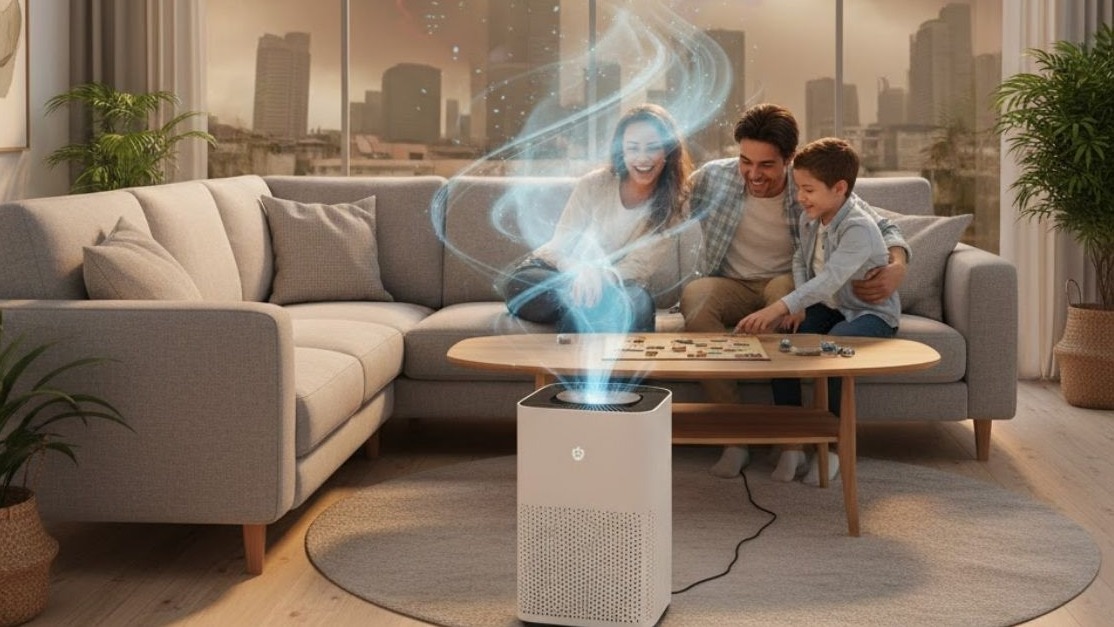
Air purifiers help improve indoor air quality as pollution becomes a growing concern. Dr. Vikas Mittal said, "Choosing an air purifier requires understanding the type of pollutants you want to address, the size of your room and the device's filtration capabilities." Always check HEPA filters and CADR ratings before buying.
With air pollution becoming a growing concern, an air purifier can help improve indoor air quality. From HEPA filters and CADR ratings to room size and maintenance, here's what to check before buying one.
While keeping windows closed during periods of high pollution may limit the entry of some outdoor pollutants, it does not necessarily make the indoor air clean. This is where air purifiers can help. However, buying one without understanding its filtration technology, capacity and maintenance requirements may not deliver the results you expect.
According to Dr. Vikas Mittal, Director - Pulmonologist, CK Birla Hospital, Delhi, choosing an air purifier requires understanding the type of pollutants you want to address, the size of your room and the device's filtration capabilities.
HOW DOES AN AIR PURIFIER WORK?
An air purifier works by drawing indoor air into the device, passing it through one or more filters and releasing filtered air back into the room.
Depending on its filtration system, it can capture airborne particles such as dust, pollen, pet dander, smoke particles and fine particulate matter.
A purifier equipped with a suitable High-Efficiency Particulate Air (HEPA) filter can help capture fine airborne particles, including PM2.5. Some models also contain activated carbon filters, which help reduce certain gases, unpleasant odours and volatile organic compounds (VOCs). These are gases released by certain household products, paints, cleaning agents, furniture and building materials, which can affect indoor air quality.
However, an air purifier cannot eliminate every indoor pollutant. Its effectiveness depends on the filtration technology, room size, airflow, placement and how regularly it is used.
5 THINGS TO CHECK BEFORE BUYING AN AIR PURIFIER
1. Look for a HEPA filter
* If your primary concern is airborne particles such as dust, pollen, smoke and PM2.5, pay attention to the type of filter used in the purifier.
* HEPA filters are designed to capture very small airborne particles. However, not every product marketed as 'HEPA-type' or 'HEPA-like' offers the same filtration performance.
* Check the actual filter specifications and performance information before making a purchase.
2. Check the CADR rating
* Clean Air Delivery Rate (CADR) is one of the most important specifications to consider when buying an air purifier.
* It indicates how quickly a purifier delivers filtered air. A higher CADR generally means that the device can clean a larger volume of air in a given time.
* Choose a purifier with a CADR suitable for the room where you intend to use it. A device with insufficient capacity may struggle to clean the air effectively in a larger space.
3. Match the purifier to your room size
* An air purifier designed for a small bedroom may not be sufficient for a large living room.
* Before buying one, measure your room and check the manufacturer's recommended coverage area. Ceiling height and open-plan layouts also matter because they influence the volume of air that needs to be filtered.
* Choosing the right capacity can help ensure that the purifier circulates and cleans the air effectively.
4. Consider an activated carbon filter
* While HEPA filters are designed to capture airborne particles, they are not intended to remove all gases and odours.
* If you are concerned about cooking smells, smoke odours or certain gaseous pollutants, look for a purifier that also includes an activated carbon filter.
* However, its effectiveness depends on the quantity and quality of carbon used in the device. An activated carbon filter should complement, not replace, particle filtration.
5. Check filter replacement costs and maintenance
* Buying an air purifier is not a one-time expense. Filters need periodic cleaning or replacement, depending on the type of filter and the manufacturer's instructions.
* Before purchasing, check the availability and cost of replacement filters, their recommended lifespan and the maintenance requirements.
* A clogged or poorly maintained filter can affect the purifier's performance. Regular maintenance is therefore essential to ensure that the device continues to work effectively.
ARE IONISERS AND OZONE GENERATORS SAFE?
Some air purifiers use additional technologies such as ionisation, plasma and electronic air cleaning. However, certain devices can generate ozone, which is a lung irritant and can aggravate respiratory problems.
Avoid air cleaners that intentionally produce ozone. Before buying a device with additional purification technologies, check its specifications and reliable safety information.
CAN AN AIR PURIFIER COMPLETELY PROTECT YOU FROM AIR POLLUTION?
An air purifier can help reduce exposure to certain airborne pollutants indoors, but it should not be considered a complete shield against air pollution.
Its performance depends on choosing the right device, using it appropriately and maintaining its filters. It also cannot replace measures that address pollution at its source.
Along with using a suitably sized air purifier, avoid smoking indoors, minimise unnecessary burning of incense sticks and candles, and ventilate your home when outdoor air quality is suitable.
Ultimately, improving indoor air quality requires a combination of reducing pollution sources, adequate ventilation when conditions permit and using appropriate air filtration. An air purifier can be a useful part of this approach, provided you choose the right one for your home.