
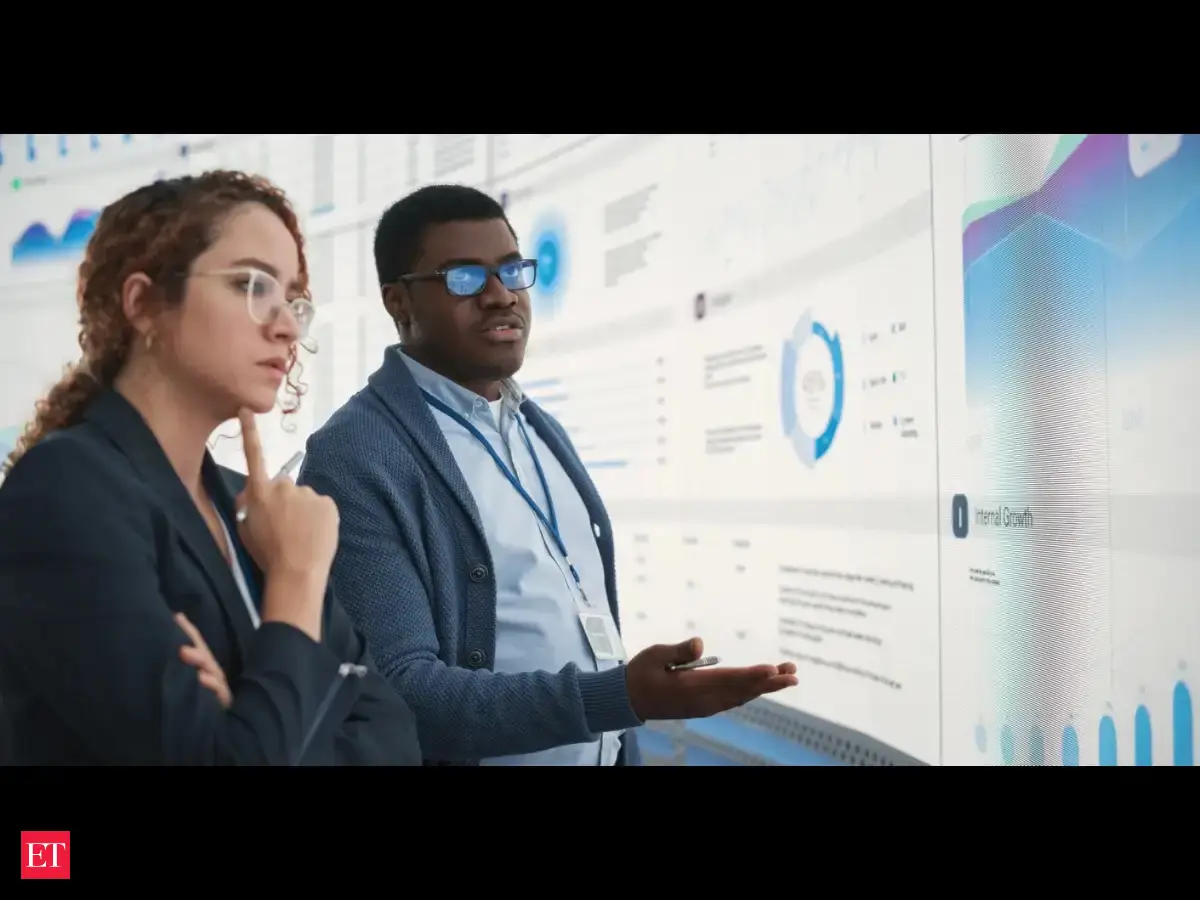
AI is reshaping jobs and how employees work. Microsoft’s 2026 Work Trend Index showed 32% of Indian AI users are redesigning tasks around AI agents. Meanwhile, the India AI Workforce Report 2026 found nearly half of AI-enabled career outcomes happened outside engineering, as employers now value critical thinking and quality control.
Synopsis
AI is changing more than the tasks employees perform. It is reshaping how jobs are structured, which skills employers value, and how responsibility is divided between people and intelligent systems. For businesses, the next phase of adoption will depend on redesigning roles and preparing employees to work effectively alongside AI.
When a software tool takes over part of an employee’s work, the immediate question is how much time it saves. The more consequential question is what happens to the role once those tasks are no longer central to it. A recruiter who once spent hours reviewing applications may devote more time to evaluating candidates.
A financial analyst using AI to process routine information may be expected to interpret findings and explain their implications. In both cases, the technology changes the balance of work, placing greater emphasis on judgement, context and decision-making.
India’s experience offers an indication of how this transition is unfolding. Microsoft’s 2026 Work Trend Index found that 32% of Indian AI users surveyed qualified as “Frontier Professionals”, a category defined by the company as employees actively redesigning work around AI agents. The findings suggest that a segment of the workforce is moving beyond using AI for individual tasks towards rethinking how work gets done.
The skills equation is changing
As job responsibilities evolve, employers need to reconsider what makes a candidate effective. Technical knowledge remains important, but employees increasingly need to assess AI-generated output, identify errors and decide when a recommendation requires further scrutiny.
Live Events
Microsoft’s survey found that 63% of Indian respondents prioritised quality control of AI output, while 59% identified critical thinking as an important skill in an AI-powered workplace. The figures point to a practical requirement: employees must understand enough about their work to question the systems assisting them. Producing an answer is only part of the job when its accuracy and consequences still require human assessment.
The demand for AI capability is also spreading beyond traditional technology roles. The India AI Workforce Report 2026 by Scaler, based on insights from 11,444 professionals, found that nearly half of AI-enabled career outcomes were outside conventional engineering roles, spanning areas such as consulting, leadership, marketing, finance and human resources.
For employers, the implication is significant. AI capability cannot sit exclusively with specialist technology teams if employees across business functions are expected to use the tools. Training needs to connect technical familiarity with the practical demands of each role.
Redesigning work, not just deploying tools
Skills programmes alone will not resolve the challenge. If AI is introduced into existing workflows without reconsidering responsibilities, employees may end up managing automated outputs alongside their previous workload.
Organisations need to establish which decisions remain with people, how accountability is assigned and where employees can apply the capacity gained from automation.
The NIIT India Skills Gap Report 2026 identifies AI, cybersecurity, digital and data capabilities among India's critical future skills. Its findings reinforce the need to align training with the work businesses actually require, rather than treating upskilling as a general exercise.
The next phase of workforce transformation will depend on how well companies connect technology adoption with job design, learning and career progression. These questions will be central to discussions at The Economic Times’ Future of Knowledge Work Summit 2026 in Mumbai.
AI may automate individual tasks, but its wider impact will be determined by how organisations rebuild the jobs around them. The companies that manage this transition effectively will need employees who can work with AI, challenge its output and take responsibility for decisions that technology alone cannot make.
Register Now!
The ABCD of the US mid-term elections – Part 1: Why it matters across the globe
Onion inflation at 108%? Yes, but not really. What is different this time?
Curbing rupee bets: What the RBI’s new rules mean for the hedge-now-or-wait question