
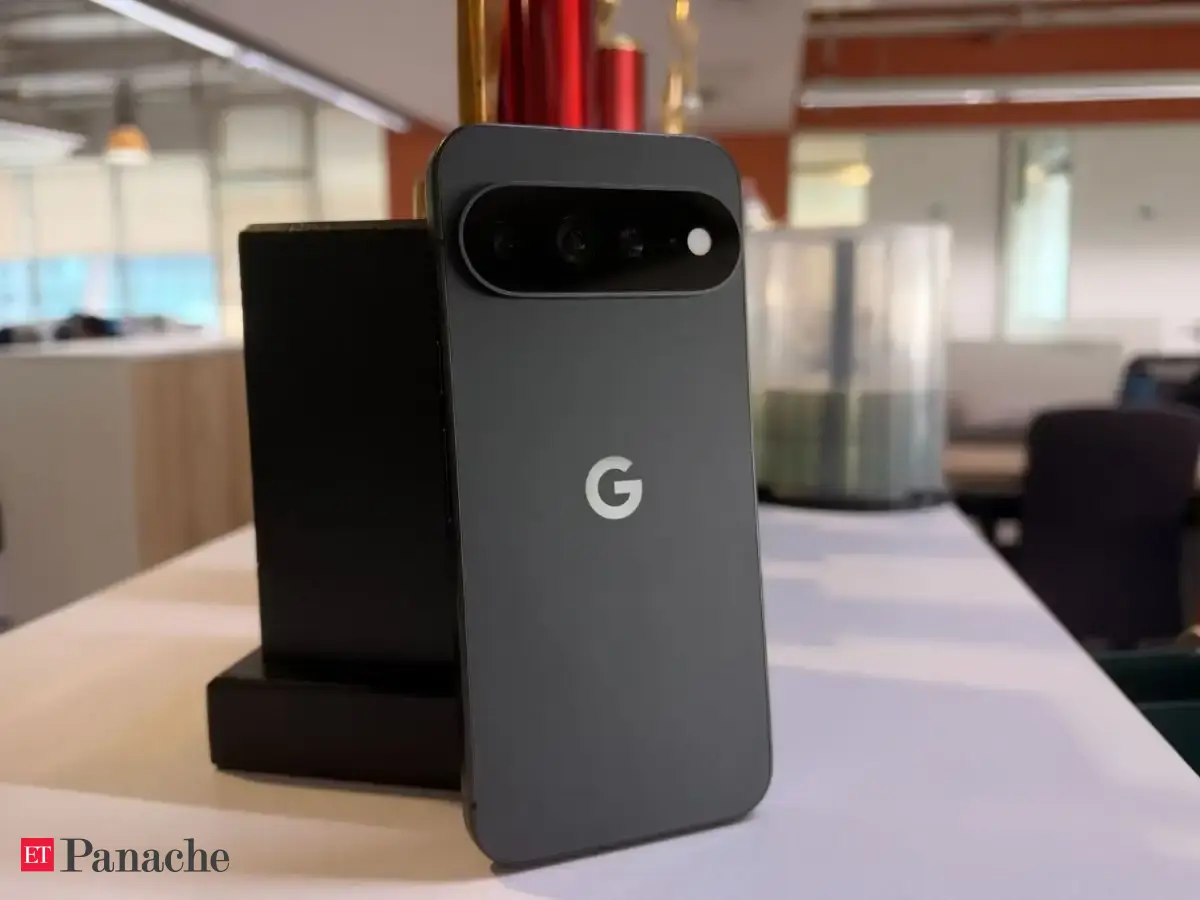
The Google Pixel 11 Pro XL launched in India on August 20 at a starting price of ₹1,34,999. This flagship phone features a premium design, reliable battery, and improved cameras. While the Tensor G6 processor trails Apple, the smooth software and seven years of updates make it a strong Android alternative.
Synopsis
Google Pixel 11 Pro XL is Google's most complete flagship yet, with a premium design, excellent display, reliable battery life and improved cameras. While its Tensor G6 processor trails Apple's latest iPhone in raw performance, its smooth software, seven years of updates and better video recording make it a compelling Android alternative. Priced at ₹1,34,999, it is particularly appealing to iPhone users considering a switch.
Last year, when we reviewed the Pixel 10 series, we felt Google had finally managed to turn the Pixel into a mainstream smartphone. What was once a device primarily for Android enthusiasts had evolved into a credible alternative to the iPhone, with a more refined design, dependable cameras and an excellent software experience.
With the Pixel 11 Pro XL, Google has built upon that foundation.
There are subtle design refinements, a new HiLight system at the back and improvements to performance and cameras. More importantly, Google has retained what makes a Pixel special: clean software, computational photography and increasingly useful AI features.
But the competition has also moved forward. Apple's iPhone 18 Pro Max continues to set a high benchmark for performance, while Android flagships have become more capable than ever.
After using the Pixel 11 Pro XL for nearly three months, we believe this is Google's most complete smartphone yet. But does it offer enough to convince an iPhone user to switch?
Price and availability in India
The Google Pixel 11 Pro XL starts at ₹1,34,999 for the 12GB RAM and 256GB storage variant. The 16GB RAM and 512GB storage variant costs ₹1,49,999.
The smartphone went on sale in India on August 20, 2026, through the Google Store, Flipkart and authorised retail partners.
At this price, Google is competing directly with Apple's Pro iPhones and other premium Android flagships. Naturally, expectations are high.
Design: Familiarity works in Google's favour
Google Pixel 11 Pro XL Design
The Pixel 11 Pro XL is a large smartphone, featuring a 6.8-inch display, weighing approximately 226 grams and measuring 8.5mm in thickness. Yet, it is surprisingly comfortable to hold.
The build feels solid, the weight distribution is good, and despite its size, the device is relatively easy to carry around.
Interestingly, several people who saw our review unit immediately compared it to an iPhone. The similarities in proportions, frame and overall finish are hard to ignore.
We don't necessarily see that as a bad thing. In fact, this familiarity could help users transitioning from Apple's ecosystem. A smartphone that feels familiar in the hand makes the switch to Android less intimidating.
Our review unit comes in Obsidian, Google's matte black finish. While the Pixel 11 Pro XL is also available in Canyon, Fog and Olive, we prefer black. It is understated, looks premium and, in our opinion, will age better than the brighter finishes.
However, there is one omission we find difficult to overlook.
In 2026, a dedicated, customisable Action Button should be standard on a premium flagship.
The Pixel still relies heavily on its power button for shortcuts, including activating Gemini through a long press. A separate button that users could configure to launch the camera, open an AI assistant, start recording or access a frequently used application would have made far more sense.
For a smartphone built around AI and productivity, giving users greater control over hardware shortcuts should be a priority.
Nevertheless, the Pixel 11 Pro XL is a well-designed smartphone. It may not immediately impress with dramatic changes, but its ergonomics and practical design grow on you over time.
Display: One of its strongest attributes
Google Pixel 11 Pro Display
The Pixel 11 Pro XL features a 6.8-inch Super Actua LTPO OLED display with a resolution of 1344 x 2992 pixels, an adaptive 1Hz–120Hz refresh rate and up to 3,600 nits of peak brightness.
In everyday use, the display is excellent.
Over three months, we watched everything from live programming and YouTube videos to Netflix shows. Colours are vibrant, contrast is excellent, and the display remains smooth across applications.
The stereo speakers are equally impressive, delivering clear and sufficiently loud audio for multimedia consumption.
The in-display fingerprint sensor is quick and reliable, while the haptic feedback deserves special mention.
Google has calibrated the vibrations exceptionally well. Whether typing or navigating the interface, the feedback feels precise and premium. In fact, we found it better than what several other Android flagships offered this year.
These are small details, but they make a noticeable difference to everyday usability.
Software: The biggest reason to buy a Pixel
Google Pixel 11 Pro Software
Software continues to be Google's strongest advantage.
Running Android 17, the Pixel 11 Pro XL delivers a clean, fluid and cohesive experience. There is little unnecessary complexity, and Google's integration of AI into the operating system continues to improve.
We used several large language models on the device, and the experience was consistently responsive. However, Google's most interesting new software-linked feature also highlights one of its limitations.
HiLight: A good idea, but limited execution
Google Pixel 11 Pro has HiLight, Google's new ambient lighting system
HiLight is Google's new ambient lighting system integrated around the rear camera flash. It uses coloured lighting patterns to communicate activities such as Gemini listening, processing requests or responding. It can also indicate incoming calls from selected contacts.
We appreciate the concept.
As AI assistants become more integrated into smartphones, a visual indicator showing when an assistant is active makes sense, especially when the phone is placed face down.
But we haven't used HiLight nearly as much as Google would have hoped.
The primary reason is simple: Gemini isn't our preferred AI assistant. We use ChatGPT for most of our everyday AI interactions, and HiLight currently lacks equivalent native integration with it.
There is also the issue of activation. While Google supports voice-triggered Gemini interactions, we frequently found ourselves long-pressing the power button to activate the assistant.
For a feature intended to make AI interactions more natural, we would have preferred a more seamless experience.
HiLight has potential, but broader third-party integration and greater flexibility would make it considerably more useful.
A better ecosystem for switching
Another development worth highlighting is the improving compatibility between Android and Apple's Mac ecosystem.
With Quick Share and AirDrop interoperability on supported devices, transferring files between a Pixel and a MacBook is becoming easier.
This matters because Apple's ecosystem has traditionally been one of the biggest reasons users hesitate to switch smartphones.
For someone who wants to continue using a MacBook but move to Android, the Pixel is becoming a more practical option.
Google also promises seven years of operating system, security and Pixel Drop updates. At this price, that level of software support is important.
Performance: Capable, but competetion remains ahead
Google Pixel 11 Pro Performance
The Pixel 11 Pro XL is powered by Google's Tensor G6 processor, paired with the Titan M3 security coprocessor and up to 16GB of RAM.
Performance has improved over the Pixel 10 Pro XL, but this isn't a smartphone designed to win benchmark comparisons.
Apple's iPhone 18 Pro Max remains ahead when it comes to raw processing power, particularly for demanding workloads and sustained performance.
Google's priorities are different.
The Tensor G6 is designed around Google's software and AI ambitions rather than delivering the highest possible benchmark scores.
In everyday usage, that approach works well.
Applications open quickly, multitasking is smooth, and we encountered no major performance issues during our testing. AI applications also felt responsive, although response times for cloud-based models naturally depend on connectivity and server-side processing.
For most consumers, the Pixel 11 Pro XL offers more than enough performance.
However, if gaming, intensive workloads or outright processing power are your priorities, the iPhone 18 Pro Max remains the stronger option.
Google may not be winning the performance race, but for its intended audience, the Pixel gets the job done.
Battery life: Consistently dependable
The Pixel 11 Pro XL packs a 5,115mAh battery, supports wired fast charging and offers Qi2.2-certified Pixelsnap wireless charging at up to 25W.
Google claims more than 30 hours of battery life under its testing conditions.
In our usage, we consistently achieved approximately 7.5 to 8 hours of screen-on time, which is impressive for a flagship smartphone.
Our routine included messaging, social media, web browsing, video streaming, camera usage and AI applications.
Despite this mixed workload, the Pixel comfortably lasted through the day.
Google claims the battery can charge up to 75 per cent in around 30 minutes using a compatible 45W USB-C PPS charger or higher.
Charging speeds aren't class-leading, but the overall battery experience has been reliable. After three months, that consistency matters more than headline charging numbers.
Cameras: Still dependable, now better for video creators
Google Pixel 11 Pro Cameras
The Pixel 11 Pro XL features a triple rear camera system comprising a 50MP primary camera, a 48MP ultrawide camera and a 48MP telephoto camera with 5x optical zoom. There is also a 42MP autofocus front camera.
As expected, photography remains one of its strengths.
Primary camera
The 50MP primary camera delivers consistently pleasing results across everyday situations.
We photographed people, buildings, outdoor scenes and regular day-to-day subjects. Colours are generally well-balanced, dynamic range is good, and Google's computational photography continues to produce dependable results without requiring much effort.
This remains one of the biggest advantages of the Pixel camera experience.
Ultrawide and telephoto
The 48MP ultrawide camera is useful for landscapes, architecture and wider compositions, while the 48MP telephoto offers 5x optical zoom.
Google also offers Pro Zoom up to 120x, although we found the more practical zoom ranges considerably more useful for everyday photography.
Low-light photography and selfies
Night Sight continues to be effective in challenging lighting conditions, helping capture brighter and more detailed photographs.
The 42MP autofocus front camera, meanwhile, offers a wide field of view and works well for selfies and group photographs.
Video: An important improvement
This is where the Pixel 11 Pro XL has made a meaningful improvement.
Over the last three months, we have shot a considerable amount of content on the device, including videos.
One criticism we had with last year's Pixel concerned external microphone handling.
For anyone shooting interviews, reels or professional video content, reliable microphone support is essential.
With the Pixel 11 Pro XL, connecting a compatible external microphone has been far more straightforward. In our testing, the smartphone automatically recognised the microphone, eliminating the need for unnecessary adjustments.
More importantly, the recorded audio quality has improved.
We found the audio input better than what several other Android smartphones deliver and broadly comparable to an iPhone.
This may not sound like a headline feature, but for content creators, it makes a considerable difference.
A good smartphone camera is no longer just about photographs. Reliable video recording, audio quality and ease of use are equally important.
And the Pixel 11 Pro XL delivers a much more convincing experience in this regard.
Verdict: Google's most convincing Pixel yet
After nearly three months with the Pixel 11 Pro XL, we believe this is the most complete Pixel smartphone we have used.
It isn't the fastest smartphone available, and Google's Tensor G6 still trails Apple's latest silicon in raw performance.
HiLight is a promising feature that needs broader integration, and the absence of a dedicated Action Button feels like a missed opportunity on a flagship in 2026.
But these shortcomings don't take away from what Google has achieved.
The design is ergonomic, the display is excellent, battery life is dependable, and the software remains among the best Android has to offer.
The cameras continue to impress, while improvements to external microphone support make the Pixel a more practical choice for content creators.
More importantly, the Pixel 11 Pro XL makes a compelling case for people considering a move away from Apple's ecosystem.
Its familiar design, polished software and improving cross-platform compatibility help reduce some of the barriers traditionally associated with switching from an iPhone.
Last year, we believed Google had finally made the Pixel a mainstream smartphone.
With the Pixel 11 Pro XL, it has refined that formula further.
At ₹1,34,999, this isn't an inexpensive smartphone. But after three months of testing, it is one we can confidently recommend, particularly to iPhone users looking for a premium Android alternative.
Google may not have built the most powerful smartphone of 2026, but it has built its most convincing Pixel yet.
(Catch all the Business News, Breaking News, and Latest News Updates on The Economic Times.)
Subscribe to The Economic Times Prime and read the ET ePaper online.
...moreless
(Catch all the Business News, Breaking News, and Latest News Updates on The Economic Times.)
Subscribe to The Economic Times Prime and read the ET ePaper online.
...moreless
Some elections matter more than you know: No crop changed in the fields, yet sugar, coffee and soya got cheaper in a day
You can buy a walkie-talkie online. But can you legally use it?
KYB and KYC: Quick commerce, the Damani premium and what DMart must deliver – 3rd and concluding part
KYC and KYB: Inside Damani’s DMart, the retail chain for the middle class. And stock for the long term? – Part 2 of 3
Will it be a regulatory nightmare if an exchange lists on its own platform?
KYC and KYB: Inside Damani’s Avenue Supermarts that refuses to charge more – Part 1 of 3