
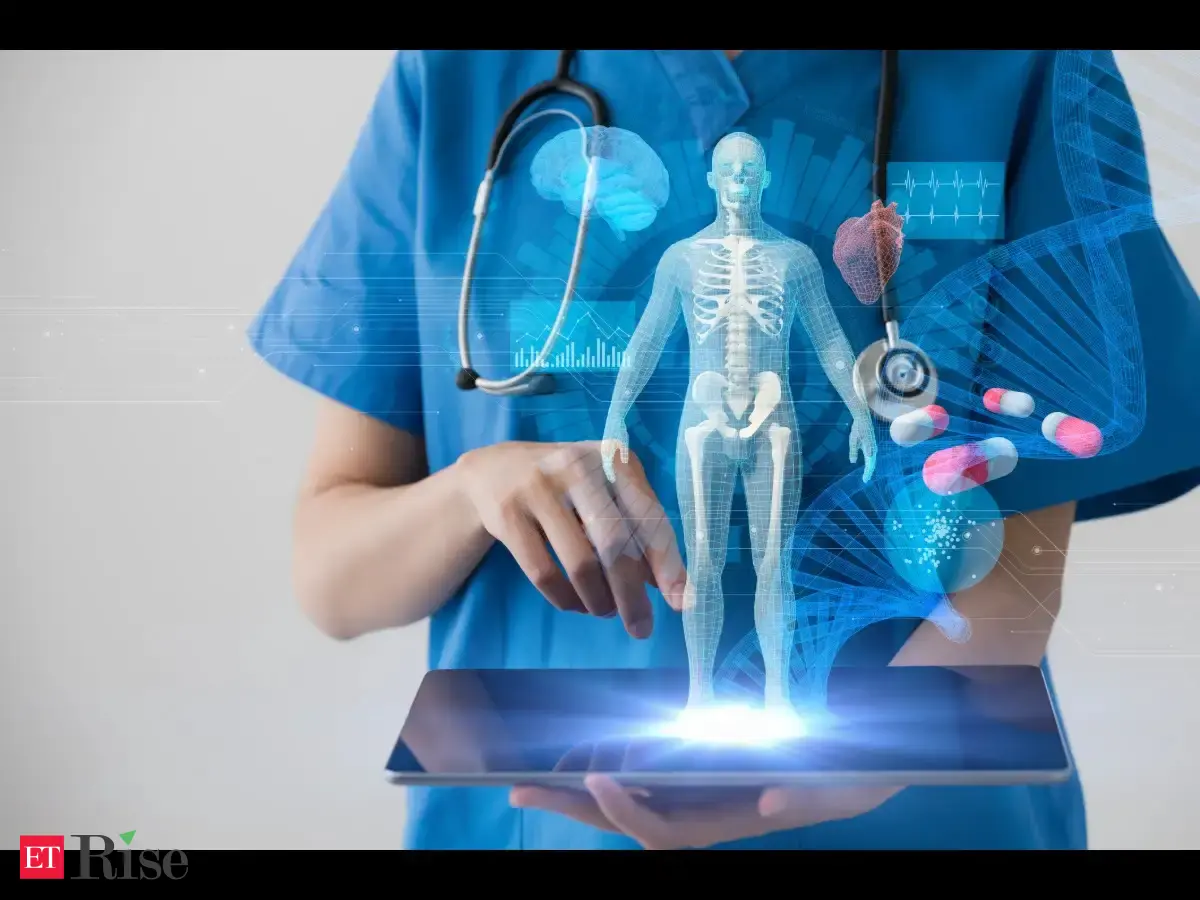
The Global Digital Health Summit 2026 will take place on 20-21 November 2026 in New Delhi, focusing on implementing AI in healthcare. Rajendra Pratap Gupta said, “AI has learned medicine, but has it learned to practise medicine?” The event features The CORTEX Test to compare AI and doctor decision-making skills.
Synopsis
Scheduled for 20-21 November 2026, the Global Digital Health Summit will take place in New Delhi, highlighting the role of artificial intelligence in healthcare. A key feature, The CORTEX Test, will evaluate decision-making from AI, doctors, and collaborative methods.
NEW DELHI: The Global Digital Health Summit (GDHS) 2026 will take place on 20-21 November 2026 at Bharat Mandapam, New Delhi, under the theme “Implementing Artificial Intelligence – AI in Action.” This year’s programme is about putting AI to use in patient engagement, clinical care, hospital operations, pharmaceutical research and MedTech. Its main feature is The CORTEX Test, a live clinical challenge.
The summit will look at what works, what can be trusted, where AI helps clinical decision-making and where it adds risk, and which technologies are ready to move past the pilot stage.
Rajendra Pratap Gupta, Chairman of the Global Digital Health Summit, said in a statement, “We will answer one of the most consequential questions in healthcare: AI has learned medicine, but has it learned to practise medicine? The CORTEX Test will move this debate from speculation to direct observation. Its findings could profoundly influence the future of medicine, the role of clinicians, and how we prepare the profession for an AI-enabled world.”
In The CORTEX Test, across several clinical specialties, AI alone, a doctor alone and a doctor using AI will each be given the same clinical case, the same evidence and the same time limit, so their decision-making can be compared side by side. The test will show whether AI can handle the ambiguity, context, risk and judgement of real medical practice, and how much better decisions get when physicians work with AI.
The CORTEX Test will be co-chaired by Vinod Paul, Former Member, NITI Aayog; K. Srinath Reddy, Founding President, PHFI; R. K. Srivastava, Former Chairman, MCI & DGHS, Government of India; and Rajendra Pratap Gupta, Former Advisor to the Union Health Minister, Government of India. Its findings could affect medical education, clinical workflows, patient safety, professional accountability and the role of the physician.
Live Events
Summit leadership includes Bakul Patel, Chair Emeritus, Global Digital Health Summit and Senior Director, Global Digital Health Strategy & Regulatory, Google; Viviana Martínez-Bianchi, President, World Organization of Family Doctors (WONCA); and T. Dileep Kumar, President, Indian Nursing Council and Board Member, ICN (SEARO).
Also taking part are Rajat Gupta, former Managing Partner of McKinsey; Arun Bhaskara Baba, CIO, Mayo Clinic; Prof. Ran D. Balicer, Deputy Director General and Chief Innovation Officer, Clalit Health Services, Israel; Cheristi Cognetta-Rieke, Vice Chair Nursing, Enterprise Transformation, Mayo Clinic; Peter Preziosi, President and CEO, TruMerit (CGFNS).
From Indian policy and industry, speakers include Vaidya Rajesh Kotecha, Secretary, AYUSH, Government of India and Rajeev Raghuvanshi, Drugs Controller General of India.
Delegates will see four showcases: Hospital of the Future, Clinician of the Future, Pharma of the Future and MedTech of the Future. Sessions will examine how ambient AI changes a consultation, how predictive systems affect beds, operating theatres and hospital command centres, and how connected medical devices should be governed once they start to learn and act.
In the AI Success Stories track, organisations that have moved past pilots are expected to talk about what they put in place, what it cost, where execution failed, what results they got and what they would do differently.
The summit also includes the Technology Recommendation Council (TRC), which will look at healthcare technologies from the point of view of clinicians, hospitals and governments; the CEOs’ Council for the Hospital of the Future; and the Digital Health Scientific Symposium. GDHS 2026 is accredited by the Indian Nursing Council and offers 12 CNE hours and 2 CNE credits to eligible participants.
Earlier editions of the Global Digital Health Summit have covered digital transformation, the healthcare workforce, AI, regulation, business models and the future of hospitals. GDHS 2026 is supported by the Ministry of Ayush, Government of India; the Department for Promotion of Industry and Internal Trade (DPIIT), Ministry of Commerce and Industry, Government of India, through Startup India; the Indian Nursing Council; and other bodies working in global health.
The global business of promising more
One company, 2 words. Bond yield and CDS: Will they decide the fate of global markets?
Business of Odd Things: Inside an industry that farms fish that nobody is meant to eat
War's second-order effects are becoming visible in critical sectors
US mid-term elections – Part 2: What does it mean for Trump to lose control of Congress?