
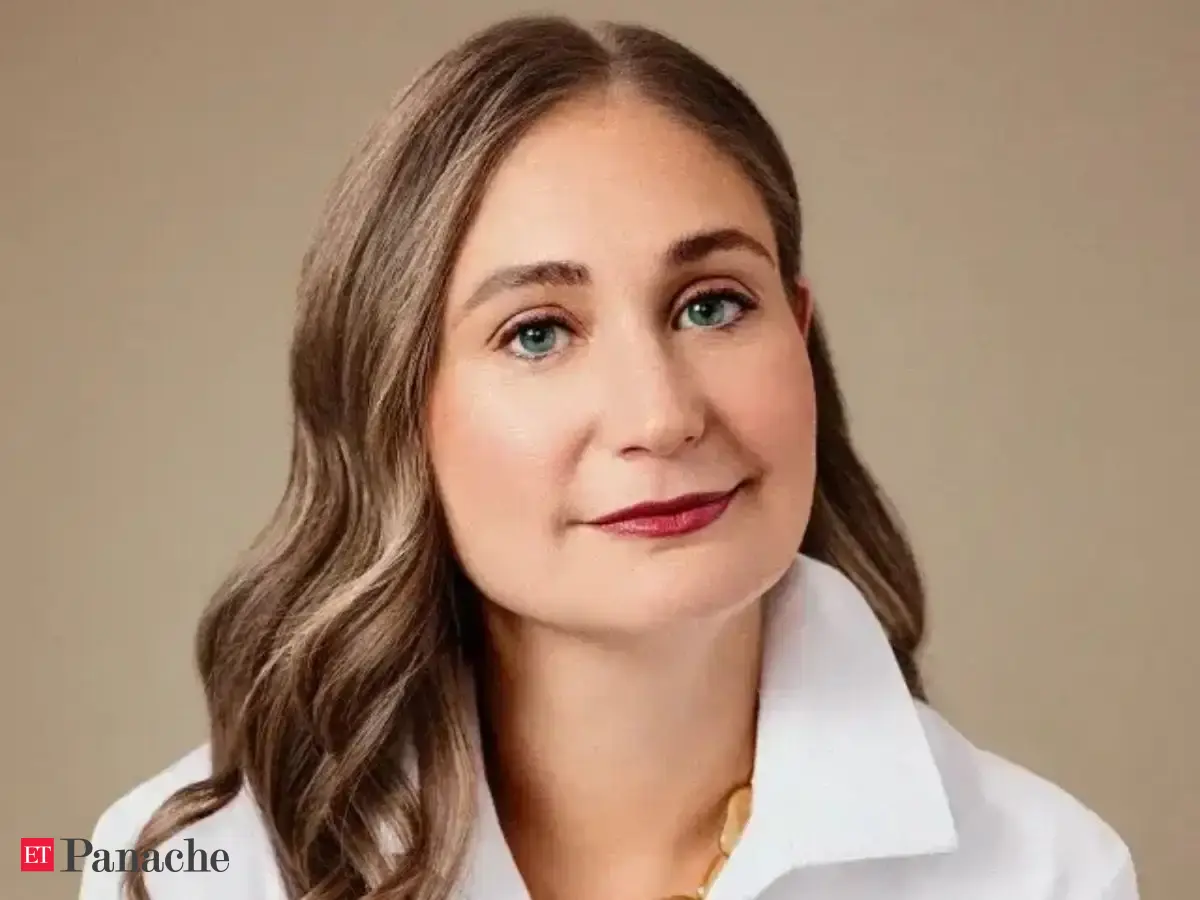
Daniela Amodei, the co-founder of Anthropic, studied English literature before building a career in AI. She co-founded the company in 2021 with her brother and other former OpenAI employees. Now, she has an estimated net worth of $15.5 billion. She said leaving OpenAI was “kind of a crazy thing to do”.
Synopsis
Daniela Amodei, the co-founder and president of Anthropic, studied English literature at the University of California, Santa Cruz before building a career in recruiting, risk management and AI safety. After working at Stripe and OpenAI, she co-founded Anthropic in 2021 with her brother, Dario Amodei, and other former OpenAI employees.
In an industry which is dominated by founders who have backgrounds in fields like computer science, engineering and physics, Daniela Amodei took a completely different route. She studied English literature at university, worked in recruiting and risk management, and eventually decided to enter the artificial intelligence industry. Today, she is the co-founder and president of Anthropic, with an estimated net worth of $15.5 billion, according to Forbes.
Her rise through the ranks offers a different perspective on the people who are building the AI industry. While her brother, Anthropic CEO Dario Amodei, has a scientific background, Daniela has built her career around management, safety, policy and understanding people.
From English literature to the technology industry
Amodei studied English literature at the University of California, Santa Cruz. According to Forbes, she joined financial technology company Stripe in 2013 as a founding recruiter before moving into risk management and compliance.
She eventually moved into the field of artificial intelligence by joining OpenAI, where she spent around three years as an engineering manager and vice president of safety and policy.
Her responsibilities included working to ensure AI systems were developed and deployed safely. The role placed her at the centre of debates about how advanced AI should be built and managed.
Amodei was also an unusual figure among Anthropic's founders. Inc.com notes that most of the company's original co-founders had backgrounds in physics or engineering, while she had studied literature. A CNBC profile described her as “the opposite of the AI founder archetype personified by OpenAI’s Sam Altman and Tesla/xAI CEO Elon Musk”.
Why Daniela Amodei left OpenAI to start Anthropic
In late 2020, Amodei and her brother faced a major career decision, which was to remain at OpenAI or leave to establish a new company. They eventually joined five other former OpenAI employees to co-found Anthropic in 2021.
Speaking at Stanford Graduate School of Business in 2026, Amodei described leaving OpenAI as “kind of a crazy thing to do”, according to Benzinga.
She recalled asking a trusted mentor for advice and their response was, “Honestly, I don’t think you really need to be on the phone with me. You already know what the right answer is.”
The conversation helped her trust her own judgement, she explained. The resulting venture has since grown into a major competitor to OpenAI, developing Claude, a family of AI models used by individuals and businesses.
What is the value in studying humanities
Amodei has argued that a technical degree is not the only route into the AI industry. She has said that she had “zero regrets” about choosing English literature.
“In a world where AI is very smart and capable of doing so many things, the things that make us human will become much more important,” she told ABC News.
Amodei has highlighted critical thinking, interpreting complex ideas and understanding human behaviour as skills that will matter as AI systems become more capable. She also believes communication and interpersonal skills will remain important in workplaces that are increasing their use of automation.
“At the end of the day, people still really like interacting with people,” she told ABC News. “In an ideal world, AI will complement those skills.”
Daniela Amodei's management approach
According to The Atlantic, she and her husband, Holden Karnofsky, use their collection of stuffed animals to act out workplace scenarios and think through management decisions.
The animals that the use have different personalities, including Jinji, a cat portrayed as lazy, and Maura, a pink bear characterised as a perfectionist. Beary Bonds, a panda, represents generosity and empathy. As per Inc.com, Amodei describes the exercise as “very useful in analyzing different personality types”.
How Anthropic's growth built her $15.5 billion fortune
The financial impact of Anthropic's growth has been substantial. Forbes reported in May 2026 that the company raised $65 billion at a valuation of $965 billion, surpassing OpenAI's reported $852 billion valuation at the time.
The funding round had greatly increased the estimated wealth of Anthropic's founders.
As Anthropic's president, she oversees work across research, engineering, product, governance and commercial execution, while managing the executive team, according to the company's website.
Anthropic IPO
Anthropic is reportedly preparing for a public market debut in mid-November, with some investors pushing for a valuation closer to $1.5 trillion rather than the company's targeted $2 trillion after its third-quarter results fell short of expectations, Reuters reported. The planned IPO is intensifying competition with OpenAI, which is reportedly seeking to raise around $30 billion at a valuation exceeding $1.4 trillion before its rival goes public.
However, market volatility, concerns about AI valuations and the rising cost of data-centre infrastructure have made investors more cautious, potentially affecting Anthropic's final valuation and the timing of its listing.
(Catch all the Business News, Breaking News, and Latest News Updates on The Economic Times.)
Subscribe to The Economic Times Prime and read the ET ePaper online.
...moreless
(Catch all the Business News, Breaking News, and Latest News Updates on The Economic Times.)
Subscribe to The Economic Times Prime and read the ET ePaper online.
...moreless
The global business of promising more
One company, 2 words. Bond yield and CDS: Will they decide the fate of global markets?
Business of Odd Things: Inside an industry that farms fish that nobody is meant to eat
War's second-order effects are becoming visible in critical sectors
US mid-term elections – Part 2: What does it mean for Trump to lose control of Congress?