
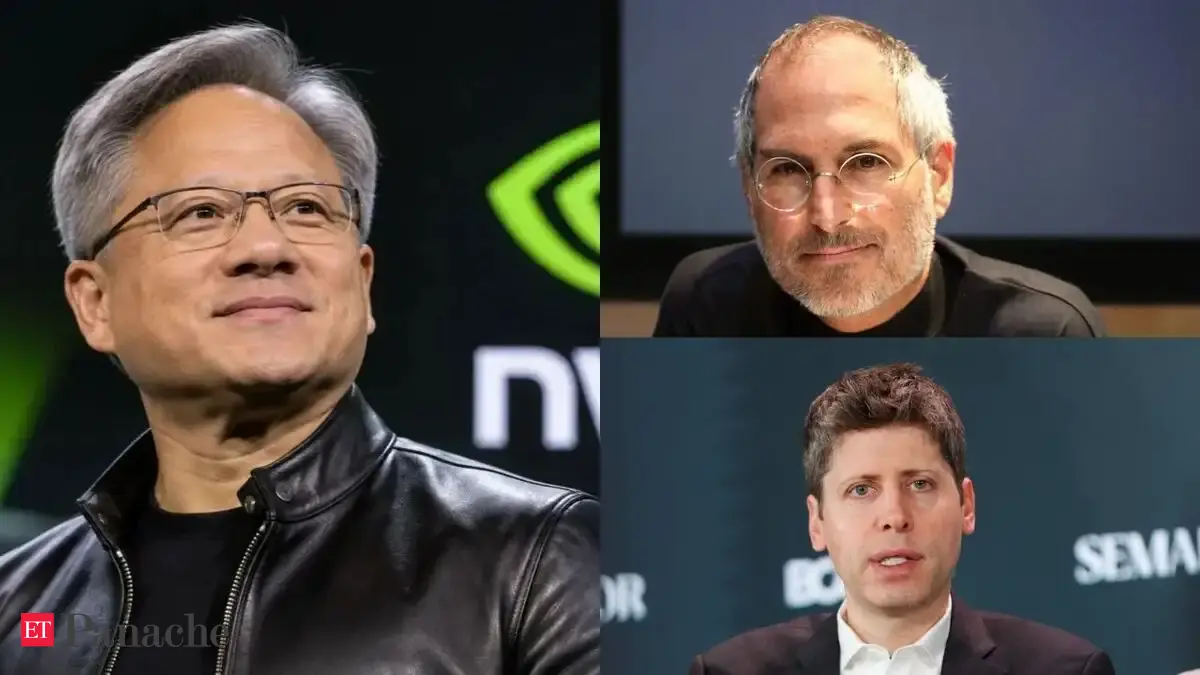
Jensen Huang returned as Nvidia CEO on November 23, just 11 days after he stepped down. The board reinstated him following discussions about his ability to lead the chipmaker. His quick comeback joins a list of famous business leaders who got a second chance to run their companies after leaving.
Jensen Huang's return as Nvidia CEO, just 11 days after stepping down, is the latest in a series of dramatic corporate comebacks. Over the years, several prominent business leaders have been forced out of companies they helped build, only to return years or even days later. From boardroom battles to employee revolts, here are five remarkable stories of CEOs who got a second chance at the top.
Jensen Huang, co-founder of Nvidia, has returned as the Chief Executive Officer of the company just 11 days after stepping down from the top job. The company's board said on November 23 it had unanimously reinstated Huang as president and CEO, ending a brief leadership change at the chipmaker that had come unexpectedly.
Huang had resigned on November 12, following which Nvidia CFO Colette Kress was appointed interim CEO. The board said it had decided to re-instate Huang after discussions and meetings which led it to believe in his candor and ability to run the company. The board added that it had received input from senior U.S. government officials and was confident his reinstatement posed no national security risk. The independent investigation into the circumstances of his departure will, however, remain ongoing.
Huang's return is a rare example of a corporate leadership comeback. But history is filled with examples of founders and former chief executives who've returned after being pushed out, and in some cases have gone on to lead major transformations.
Here are five of those leaders.
1. Apple - Steve JobsOne of the most famous corporate comebacks ever is Steve Jobs' return to Apple. The co-founder of Apple was ousted in 1985 following a power struggle with then CEO John Sculley. Jobs later founded the computer company NeXT and bought Pixar, which became a major animation studio.
Apple bought NeXT in 1996, and Jobs returned to Apple in 1997. He was initially named interim CEO, then became CEO and led Apple's transformation. During his tenure the company launched products such as the iMac, iPod and iPhone transforming its place in the global technology industry.
2. Jack Dorsey - Twitter/Jack Dorsey, co-founder of Twitter, was replaced as CEO in 2008 by fellow co-founder Evan Williams.Dorsey remained associated with the company as chairman of its board while going on to establish payment company Square, now known as Block.
He returned to Twitter in July 2015 as interim CEO after Dick Costolo stepped down. The following September, the board named him permanent CEO. Dorsey was tasked with addressing slowing user growth and strengthening Twitter's product and business strategy. He resigned again in November 2021, with Parag Agrawal taking over.
3. Sam Altman - OpenAISam Altman's return to OpenAI in November 2023 triggered one of the most dramatic leadership crises in the
tech industry in five days.
The company's board removed Altman on November 17, stating it had lost confidence in his leadership and that he had not always been candid in his communications. The decision led to a rebellion by employees as more than 700 of OpenAI's roughly 770 employees signed a letter threatening to resign and join Microsoft if the board didn't bring Altman back.
Altman had already been named to head a new advanced AI research team at Microsoft. But after intense negotiations, pressure from employees and investors, OpenAI announced on November 22 that Altman would be returning. He came back officially as CEO with a reconstituted board.
4. Steve Huffman - RedditIn 2009, three years after Condé Nast bought the company, Steve Huffman, Reddit co-founder, left Reddit. He later co-founded travel website Hipmunk, where he served as chief technology officer.
Huffman left the company in 2009 and returned as Reddit's CEO in July 2015, almost six years later. In his second stint he expanded Reddit internationally, redesigned the platform, and changed its content policies. The company also expanded its advertising business and user base during this period.
One of the biggest milestones of his leadership came in March 2024, when Reddit made its stock-market debut on the New York Stock Exchange, becoming a publicly traded company.
5. Arthur T. Demoulas - Market BasketArthur T. Demoulas' return to Market Basket was driven by an amazing display of support from employees, customers and suppliers. The former CEO of the supermarket chain was ousted in June 2014 during an ongoing family dispute with his cousin Arthur S. Demoulas, who controlled the board of the company.
He was fired and thousands of employees protested for weeks demanding his reinstatement. Workers were concerned that the new leadership would change the company's business model and workplace culture, which were closely linked to Arthur T.
The standoff ended in August 2014 when Arthur T. and his relatives agreed to buy the rival family's controlling 50.5% stake for $1.5 billion. He took back operational control of the supermarket chain and the staff hailed the outcome as a victory for their campaign.