
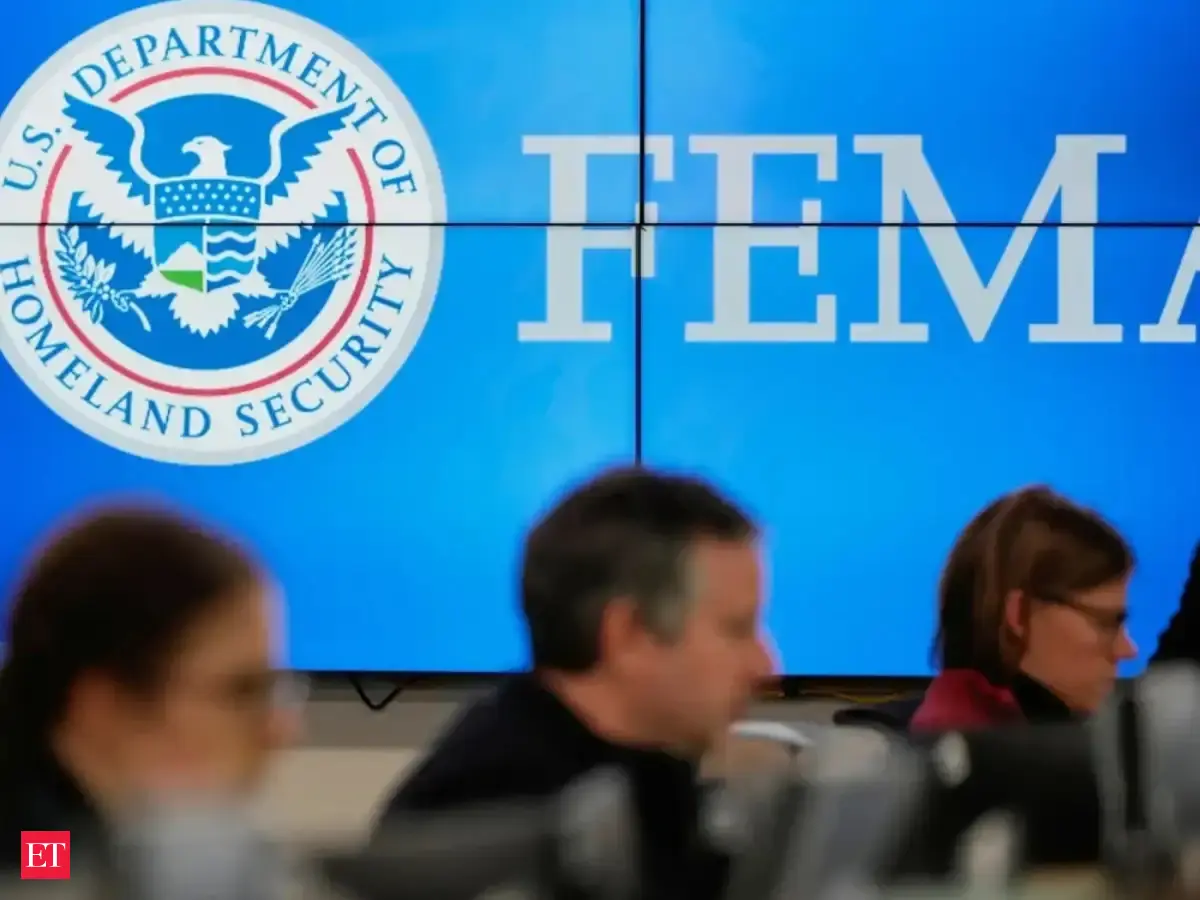
FEMA will conduct a nationwide emergency alert test on November 17. The agency dismissed online rumors of a blackout, calling the event a routine broadcast check. FEMA said there is "no secret emergency" connected to the test. Television and radio programming will be interrupted for one minute during the exercise.
Power outage Nov 17: FEMA's nationwide emergency alert test on November 17 has sparked online rumours of a possible blackout and widespread power outage across the US. The agency has dismissed the claims, clarifying what the test involves, whether cellphones will receive alerts and why Americans do not need to panic.
FEMA Emergency alert: The Federal Emergency Management Agency says today's nationwide Emergency Alert System test is a routine broadcast check, after online rumors suggested it could signal a blackout or a hidden emergency. FEMA said on Monday that there is "no secret emergency" and no blackout connected to the test. The agency and Federal Communications Commission are scheduled to send the test at approximately 2:20 p.m. ET on Tuesday, November 17. Television and radio programming may be interrupted for about one minute; FEMA says people do not need to take action.
The rumors include online claims that a nationwide blackout is imminent, with PolitiFact debunking one viral video that falsely purported to show President Donald Trump announcing a 90-day blackout. The scheduled alert test is not evidence that a blackout or other emergency is coming.
What will happen during FEMA emergency alert?During the FEMA emergency alert, the test will be carried by television and radio broadcasters, cable and satellite providers, and wireline video providers nationwide. Depending on the provider, people may hear the test, see it on screen, or both. The message will identify itself as a test and say that no action is required. FEMA says the interruption should last about one minute before normal programming resumes.
Cellphones will not receive alerts during this exercise. The 2026 test will focus on the Emergency Alert System (EAS), which broadcasts messages through television and radio. Wireless Emergency Alerts (WEA), which deliver notifications directly to mobile phones, were part of the previous nationwide test in 2023 but are excluded from Tuesday's exercise.
Why can't UK football fans watch 3pm Premier League matches live on TV?
FEMA said the test aims to assess whether broadcasters and other participating providers can receive and relay a national emergency alert. Federal law requires the agency to test nationwide public alert and warning capabilities at least once every three years. The exercise is designed to identify technical or operational issues before the system is needed during an actual emergency.
However, if an actual emergency or significant weather event makes the exercise inappropriate, FEMA and the Federal Communications Commission (FCC) may postpone it to December 3, the announced backup date.
Will there be power outage today?The answer is No. In its post, FEMA said it was aware of rumours and speculation about the test and described it as routine, legally required and limited to television and radio. The agency specifically rejected claims of blackouts or a "secret emergency."
Emergency alerts can carry urgent instructions during real events and today's message is a scheduled test: FEMA says it is checking the broadcast system, not warning people to evacuate, prepare for a blackout or take other action.
Vice President JD Vance addressed the stockpiling rumours in an interview with Fox News. Vance said friends had asked whether they should build a bunker or stock up on food and water. "My answer to that is no. We don't see a crisis coming down," he said, while adding that the government should be prepared for emergencies.
Homeland Security Secretary Markwayne Mullin had also rejected calls for Americans to stockpile. In a Fox News interview on Sunday, November 15, he said, "I'm not stockpiling," and added, "Don't worry unless you see me worry." He was responding to questions about the recent Federal Aviation Administration ground stop and online claims of widespread disruption.
Over 178 websites targetedAfter Microsoft, JPMorgan Chase bank and United Airlines suffered massive outages, over a hundred websites, including Zoom, HSBC, CNN, and Ikea were the target of a cyberattack on November 17, 2026. Over 178 websites after a malware tried to steal cryptocurrency and infect iPhones, a security firm said on Monday. These websites were exposed to malicious JavaScript delivered through a compromised third-party web platform, according to cybersecurity firm Report URI.
Other high-profile platforms affected by the incident on Tuesday via the Optimizely Web experimentation platform included Salesforce, GitLab, Equifax, Air France-KLM, crypto hardware wallet maker Ledger, and streaming service Peacock, Report URI said in a statement.
What was the purpose of the cyberattack?Multiple high-profile websites were targeted in a cyberattack involving multi-purpose malware designed to intercept payment card details, replace cryptocurrency wallet addresses with those controlled by attackers, and steal browser cookies and screenshots. According to the report, the injected code also delivered the Coruna and DarkSword iOS exploit kits to Apple iPhones and iPads. Verified transactions have already confirmed cryptocurrency thefts linked to the attackers.
The scripts made a bid to replace cryptocurrency payment addresses with the attacker's wallet, obtain card numbers while users entered credit card details, steal cookies and screenshots, and plant exploit code on iOS devices.
Most of the malicious code was swiftly removed after it was detected. By 21:52 UTC on Monday, the infected script was found in just one of the 188 affected snippets, down sharply from 169 at 20:56 UTC.
"This is a big one. We found malicious JavaScript being served through Optimizely to some of the world's largest websites. 178 organisations affected, with everything from crypto theft and card skimming to iOS exploits. Zoom, BBC, CNN, HSBC, Salesforce, GitLab, KLM, IKEA, Equifax, Ledger," a post on X, formerly known as Twitter, read.
According to HudsonRock, a cybersecurity firm, proof found that the sites had given malicious code to its users. Salesforce responded to the cyberattack and said it was investigating unauthorized Optimizely script alterations, and had disabled them to prevent any damages. Equifax also said it was investigating the issue and stopped using Optimizely. The company said it did not find evidence of any compromise to its systems.