
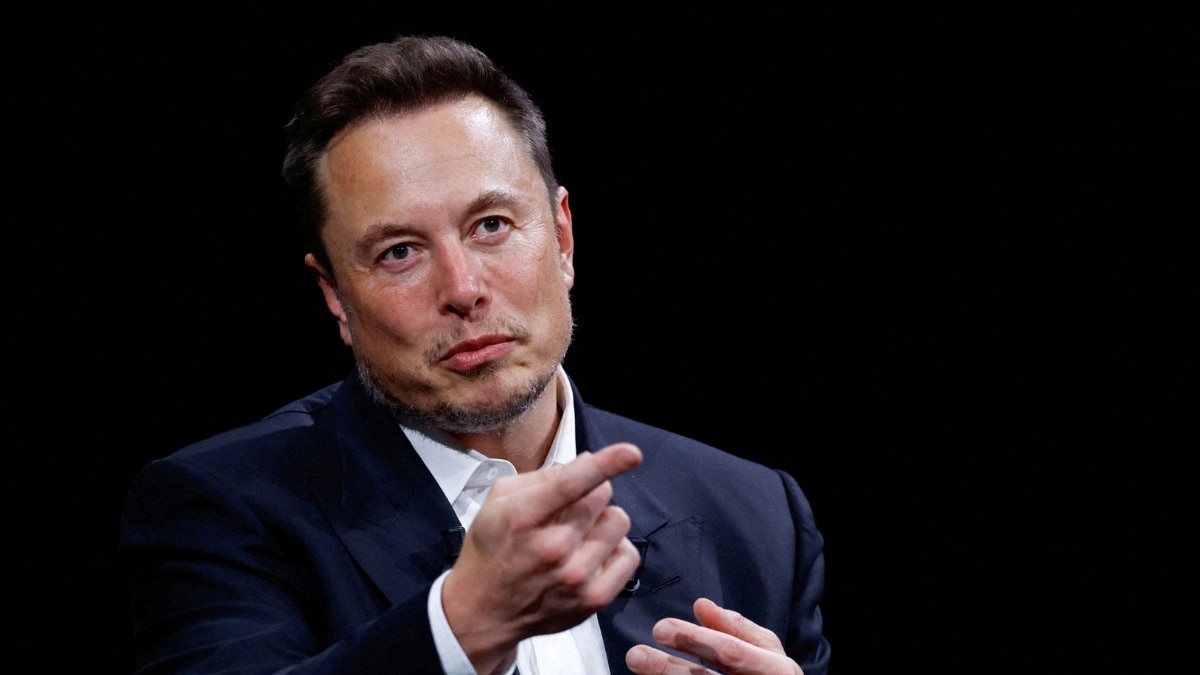
Elon Musk said, "China will be making a LOT of RAM in 2028." This shift could change the global memory chip market. While South Korean firms currently lead, China’s ChangXin Memory Technologies expanded its business. Many experts think this increased production might eventually lead to an oversupply of memory chips soon.
Artificial intelligence has a voracious appetite for memory chips, and its recent boom has left the world with a memory shortage. Prices of electronics and gadgets, including mobiles and laptops, are at a stratospheric high. But things are about to change. Elon Musk suggests that soon there will be a country that will produce a lot of chips.
On an X post, Musk wrote, "China will be making a LOT of RAM in 2028." His comment was in response to a post citing a column published in the South Korean newspaper Maeil Business. The column highlights the current situation of South Korea's economic performance, which is becoming increasingly dependent on its memory semiconductor industry. The current AI boom has boosted demand for memory chips, benefiting South Korean companies like Samsung and SK Hynix. But this sweet spot is said to be changing soon. The column warns that expanding memory chip production capacity, particularly in China, could lead to oversupply from around 2029. So, South Korea has only around two to three years to develop alternative growth industries before the semiconductor cycle potentially reverses.
Why China matters
China has stepped up its efforts to increase its memory manufacturing in the country. China's ChangXin Memory Technologies (CXMT) has been expanding its DRAM business. A September report from Seoul Economic Daily said CXMT's monthly wafer capacity could rise to around 550,000-600,000 by 2028, potentially approaching SK Hynix's current capacity. CXMT had also reached a 10 per cent share of the global DRAM market by revenue in the second quarter, according to Counterpoint Research.
However, more production does not necessarily mean an immediate oversupply. Samsung and SK Hynix compete in several memory segments, including high-bandwidth memory (HBM), which is used in AI computing systems. Chinese companies expanding conventional DRAM production would not automatically displace South Korean firms in the more advanced HBM market.
In fact, SK Hynix CEO Kwak Noh-jung told Reuters in July that the memory industry could face its worst supply shortage in 2027, with demand potentially exceeding production capacity beyond 2030.
If supply eventually outpaces demand, prices and profits could come under pressure. For South Korea, the challenge is to use the current boom to strengthen other industries before a possible downturn exposes its dependence on memory chips.