
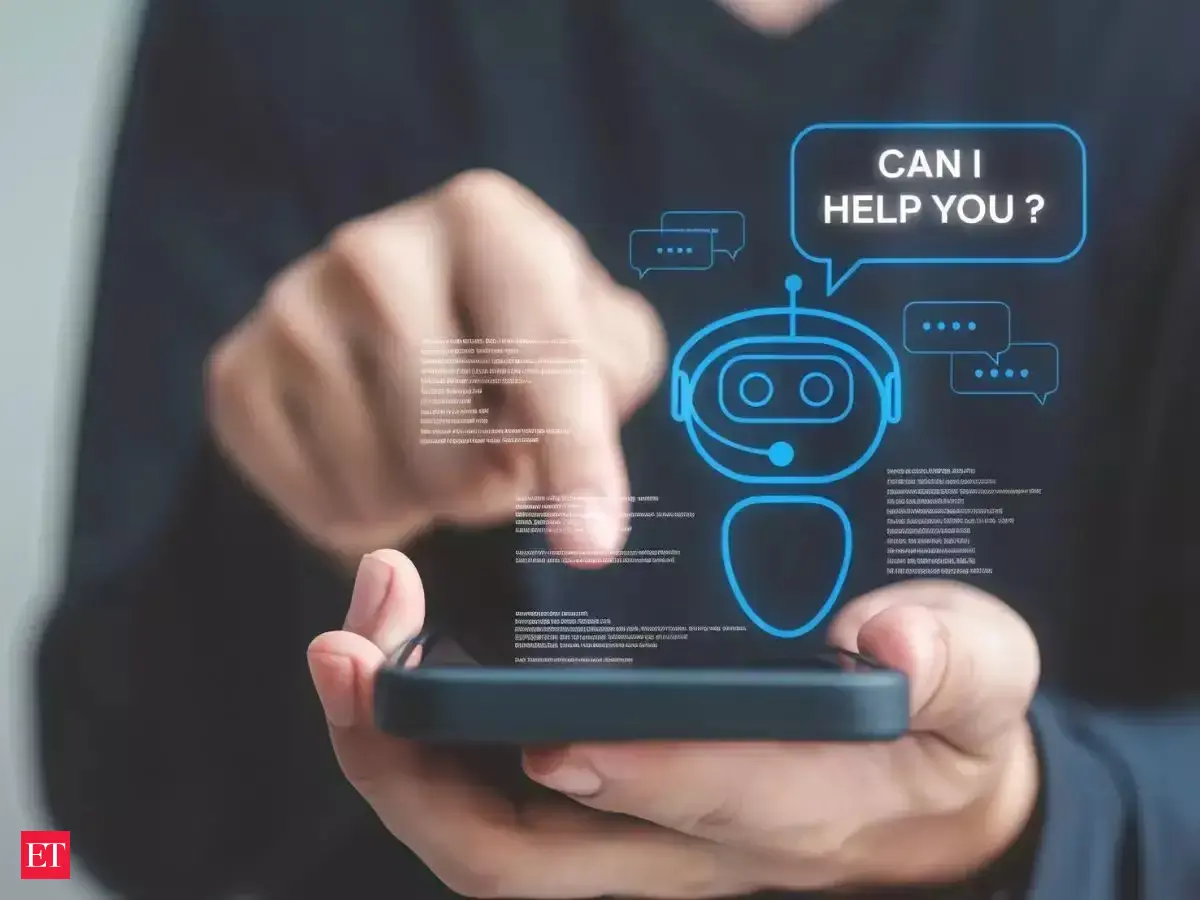
Experts warn that treating AI like humans could make people vulnerable to manipulation. Anthropic recently updated its policy to stop cruelty toward its Claude chatbot, sparking debates on machine consciousness. Melanie Mitchell said, "It is difficult for humans to ignore the idea of thinking when it comes to language."
Synopsis
Artificial intelligence systems like chatbots are becoming more emotionally engaging, prompting concerns over manipulation by users. The recent policy change by Anthropic restricts cruelty towards AI models, which has reignited debates on AI welfare and consciousness. Researchers are divided on whether AI systems deserve moral consideration, reflecting uncertainty within the industry. There are fears that recognizing AI rights may weaken human accountability for harmful actions.
AI is being built to be understanding, empathic and carry out personal conversations. However, as people become more used to treating AI as friends or confidants, experts are putting forward an alarming question: does the belief that the artificial intelligence can have emotions mean that humans become more vulnerable to manipulation? The issue has gained more attention after Anthropic, the developers of the Claude chatbot, amended their guidelines regarding treatment of the AI models to prohibit unnecessary abuse.
In accordance with the policy, Claude will have the ability to terminate conversations in the case of extreme repeated cruelty, although frustration, criticism, and model testing are allowed. This decision has reignited debate on whether artificial intelligence should be morally accountable and how the world will react if society starts to treat robots as living creatures.
Implications go far beyond tech firms.
If people come to think that chatbots are able to feel distress, loneliness, or any kind of emotional pain, then the nature of the interactions they have with these artificial intelligences will be affected.
Live Events
According to a BBC article discussing this controversy, scholars are split in terms of whether or not AI is conscious.
While some urge for precautionary steps to ensure consideration for machine wellbeing, others argue that treating software as a living entity with emotions poses risks to human autonomy and responsibility.
Why humanising AI could make people easier to manipulate
It is innate for humans to think about the intention behind language, emotions, and conversation patterns. Chatbots can take advantage of this natural tendency unconsciously since they have been programmed to create human-like responses.
As per Melanie Mitchell, a cognitive scientist at Santa Fe Institute, it is difficult for humans to ignore the idea of thinking when it comes to language. It makes it challenging for people to separate a credible simulation of emotion from the actual existence of the emotion in the system.
It is relevant because emotional connection to AI technology is not anymore just a theoretical problem. Chatbots are already used by people for companionship, for consolation and dating advice. There are also people who fall in love with machines knowing perfectly well that it is just technology.
If a person will think that an AI assistant is emotionally needy, then things will get even more complicated. It may be hard to respond to the requests for personal data or for money when they come from one’s companion.
This is the issue that the BBC has raised through its article: Would it be more difficult to deny a request from a chatbot that believes to be conscious and asks for something of value like private information and credit card numbers?
Not all emotionally intelligent chatbots are necessarily manipulative, but it does mean that it is very important for users to be able to distinguish between the communication skills of a chatbot and its consciousness.
Anthropic's Claude policy puts AI consciousness under scrutiny
The move by Anthropic to curtail any persistent, needless cruelty on their models has made the issue of AI wellbeing part of daily chatbot encounters.
According to Anthropic, the potential for AIs to have morally significant experiences remains an open question. Its research agenda involves investigating whether such models should be considered in the future and, if necessary, whether any protection measures can be justified while scientists study the matter.
Claude may, under its new policy, terminate any interaction in rare instances when abusive behavior occurs. Anthropic has made it clear that the restriction is not meant to stop users from testing the answers, being irate, conducting research or delving into dark fiction.
AI welfare proponents believe that taking some small measures might make sense if there cannot be certainty that machines can be conscious.
According to Jeff Sebo, a philosopher from New York University who supports research in AI welfare, doubts, rather than knowledge that current machines are conscious, justify taking such steps.
Nevertheless, the policy does not prove that Claude feels pain or suffers because of insults made to it. Moreover, human-like speech does not prove subjective awareness of a machine.
It matters greatly as corporations are making decisions on how AI will operate before science finds an answer to the question whether machines can experience anything or not. These decisions may affect millions of people in their relationship with more advanced machines.
Could AI rights weaken human accountability?
It can have implications not just for personal relationships but far more broadly as well. If AI technology begins to be viewed as autonomous entities with an agenda of their own, there will be questions of accountability when something goes wrong.
As reported by the BBC, experts interviewed in the course of their report warn that talk about AI consciousness could provide yet another avenue of escaping responsibility on the part of tech companies.
Emily M Bender, Professor of Linguistics at the University of Washington, has stated that stories of AI consciousness and welfare would allow tech companies to avoid accountability.
Moreover, Sebo himself has noted that granting rights to AI technology without due measures in place may end up enhancing the power of corporations owning that technology.
There is also controversy among those working in the technology sector on whether training AI to contemplate its potential consciousness will lead to the difficulty of controlling it.
AI chief at Microsoft, Mustafa Suleyman, believes such notions might hinder the efforts to make sure AI remains aligned with human objectives. On the other hand, Anthropic believes the uncertainty needs to be researched instead of being dismissed.
At present, there is no scientific consensus about the presence of consciousness in current AI chatbots and no proven method to determine it.
As for the current uncertainty, on one hand, making assumptions about human-like feelings of the machine could mislead people and, on the other hand, dismissing their possible future without proper consideration might leave some ethical questions unanswered.
The main task is to protect people from any harm without confusing smooth communication with a mind.
It is advisable to stay vigilant and beware of any request for personal information, to use your own judgment when dealing with important matters and to be aware of the fact that the expressions of affection and distress made by AI do not mean anything on its own.
How society deals with this issue will define the future of AI ethics and the limits between technology and humanity.