
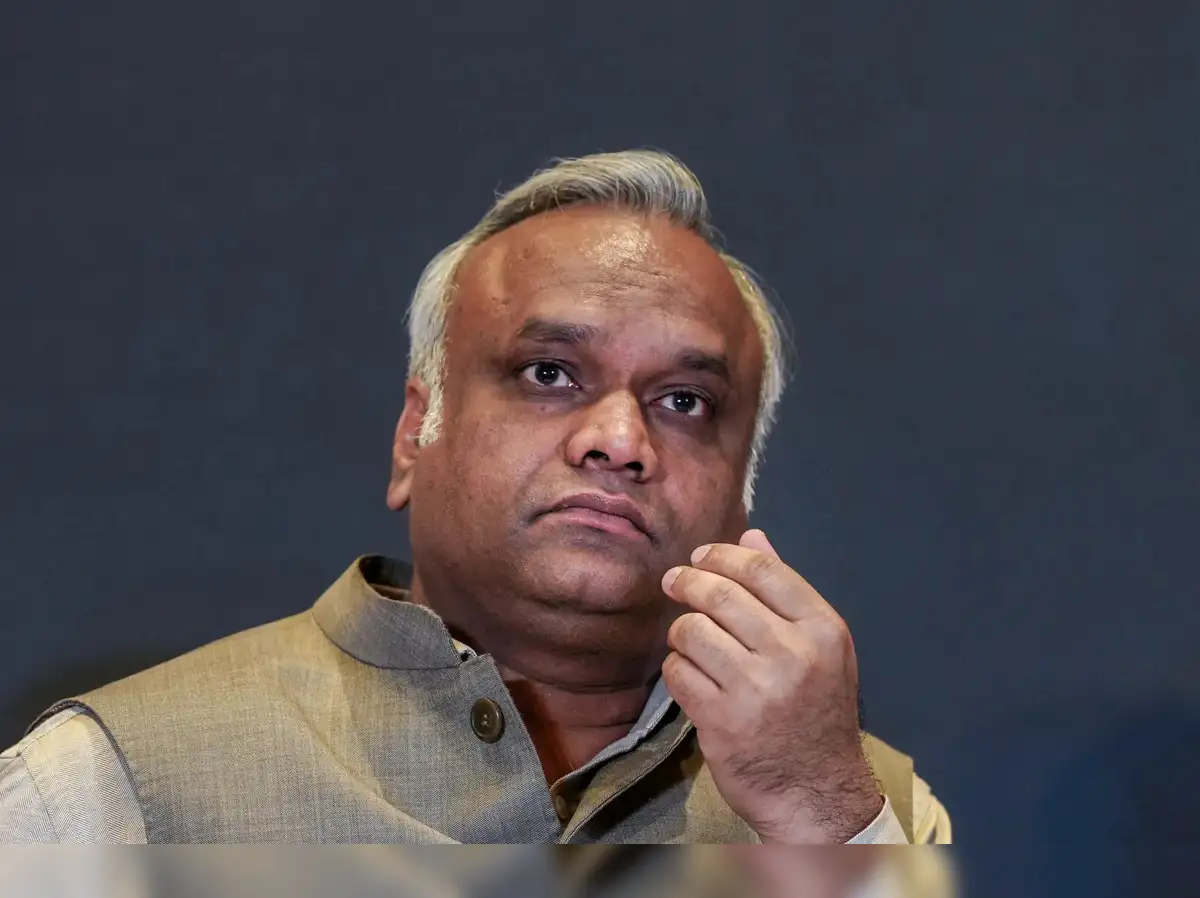
Karnataka IT Minister Priyank Kharge called data centres a “necessary evil” for the state’s AI ambitions at the Bengaluru Tech Summit 2026. He said the government is building a sustainable policy to manage power and water needs. Officials got many industry inputs to create a blueprint for public consultation soon.
Synopsis
Speaking to ET AI at the Bengaluru Tech Summit 2026 Kharge claimed Karnataka to be the first state in India to come up with a sustainable data centre policy.
Karnataka information technology (IT) Minister Priyank Kharge has called data centres a “necessary evil” the state cannot do without if it wants to grow its strengths in artificial intelligence (AI) and other frontier technologies.
In an interview with ET AI at the Bengaluru Tech Summit (BTS) 2026, Kharge said the government is working on a blueprint to make these facilities more sustainable that will be up for public consultation.
“Data centres, whether you like it or not, are a necessary evil. I cannot run my LLMs (large language models) or AI or deep tech or quantum without it. So, we are trying to figure out ways on what are the best available technologies that are going to be sustainable for the state,” Kharge, who handles the IT, biotechnology and e-governance portfolios, told ET AI.
His comments come as the state plans for at least one gigawatt of data centre capacity, which has raised concerns about the supply pressure of power and water for residents. Kharge said Karnataka has moved early on these concerns with a dedicated policy.
“We are the first state in India to come up with a sustainable data centre policy. The idea is to concentrate on green technologies, whether it is for water, for power that would be required to ensure that data centres thrive here,” he said.
The state government also held a data centre roundtable at the summit to gather views from the industry.
“We have got a lot of inputs. We’ll work on it, prepare a blueprint for it and put it out in public for consultation,” Kharge said.
Aligning policy for AI disruption
BTS 2026 ran on the theme “AI and beyond”, which Kharge said reflects the government’s efforts to understand how AI is changing sectors from agriculture and aerospace to manufacturing and life sciences.
“There’s so much disruption happening. And we want to figure out how it will impact people, how it will impact businesses. More importantly, I want to be policy ready for such disruptions,” he explained.
Kharge said the government held more than 150 conversations at the summit and will now decide its next steps on responsible AI, and on using the technology within governance.
The minister acknowledged that AI has disrupted both the skills market and the jobs market, and said mass upskilling and reskilling is the only way forward. The state has launched a programme called Nipuna Karnataka, which asks industry to identify the skills its sectors need and run the training.
“They will be leading the curriculum, and we will be paying 40 to 50% depending on the employability. The idea is that we no longer cater only to the local ecosystem. So people who are skilled in Bangalore can work everywhere. Skill locally, work globally is the mantra,” he added.
A summit with record investments
This year’s edition drew participants from more than 64 countries and over 70,000 attendees, along with 1,518 exhibitors, 923 startups, 704 speakers and 162 sessions.
The three-day summit ended on Thursday with investment commitments of about Rs 1,050 crore from 24 venture capital firms for Karnataka-based deeptech companies announced at the Future Makers Conclave. They are more than double of the Rs 400 crore announced last year.
Kharge said the event’s real measure is the value it creates. “It is very heartening when people come up to us and say, we’ve learned a lot in the Tech Summit. We met a lot of VCs at the Tech Summit. It helped us raise funding,” he said.