
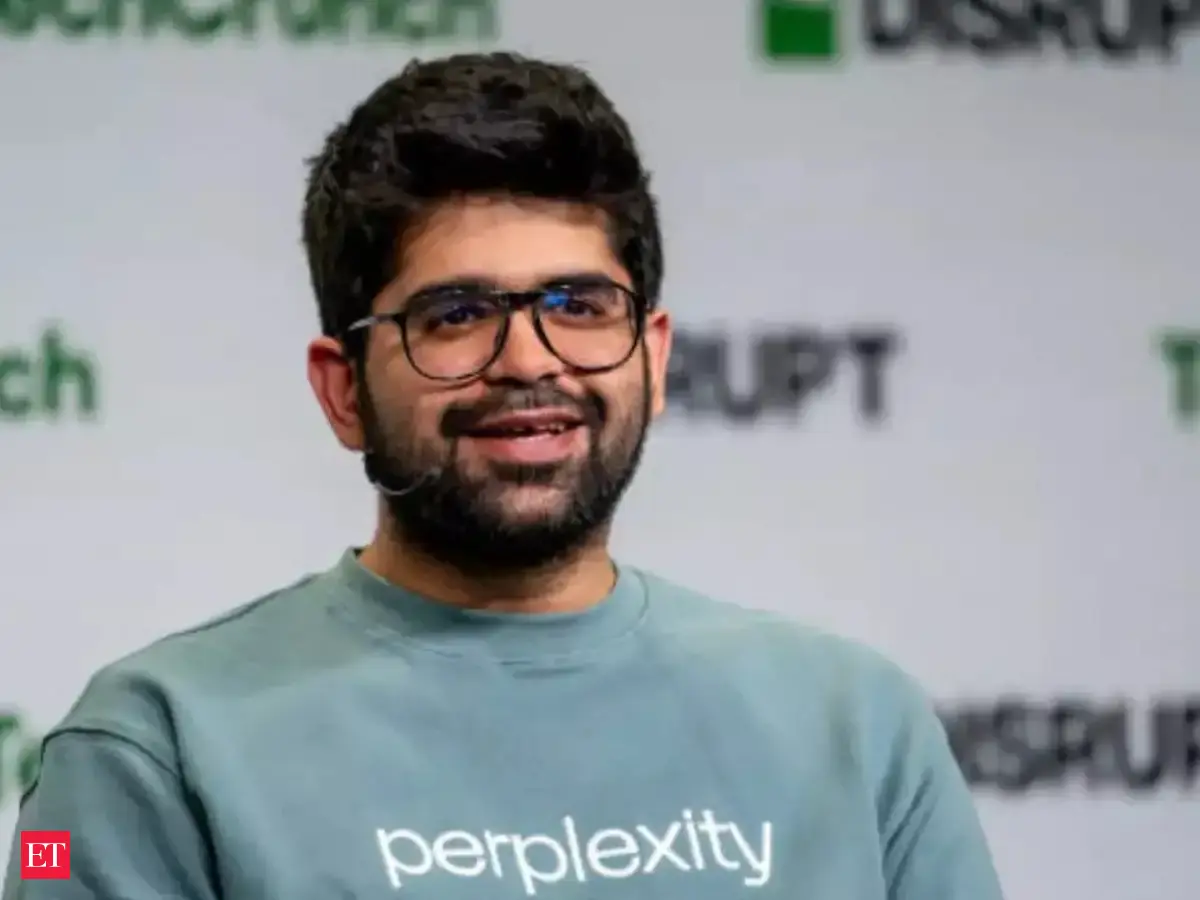
Aravind Srinivas and his co-founders built a Twitter search tool before focusing on Perplexity. They used large language models to help users ask questions about social data. Srinivas said, "I brought together my co-founders, Dennis and Johnny, to build products using large language models." This experiment shaped their future.
Aravind Srinivas and his co-founders experimented with a Twitter search tool before focusing on Perplexity's web search product. An unexpected response to a feature that summarised social media profiles helped shape their next move, eventually leading to a broader mission centred on knowledge and curiosity.
Before Perplexity became an AI-powered search product, Aravind Srinivas and his co-founders built a tool that let users ask natural language questions about Twitter data. The system translated those questions into SQL queries to retrieve information of mutual followers and tweets liked by multiple users. The idea was to make information buried in the platform's data easier to find without requiring users to write complicated database queries.
The project was an early experiment in using large language models to improve search. But collecting enough Twitter data was difficult, and the approach was not scalable. An unexpected response to a feature in Perplexity's first release eventually gave the founders confidence to focus on regular web search instead.
In his conversation with Lex Fridman in his podcast, Srinivas explained how the team moved from experimenting with Twitter's social graph to developing a broader vision centred on knowledge and curiosity.
Aravind Srinivas Wanted to Build an AI-First ProductSrinivas said he brought together his co-founders, Dennis and Johnny, to build products using large language models. At the time, it was unclear where AI companies would create the most value, but he saw an opportunity in products that could put generative AI directly in users' hands.
GitHub Copilot was an important inspiration. Srinivas wanted to build a company whose product would improve as AI advanced, attracting more users and generating more data that could help improve the product further.
You Might Also Like:
IRS is sending up to $5,000 per adopted child - could your family qualify?
He described this as an "AI-complete" problem, a concept he said he took from Larry Page.
His original search idea was to allow people to ask questions about what they saw through a pair of glasses instead of typing into a search bar. Elad Gil, the first investor who agreed to fund the company, advised him to start with a more focused opportunity before pursuing that larger vision.
Perplexity AI CEO Aravind Srinivas
The Twitter Search Tool That Came Before PerplexityThey explored information that people couldn't easily search using natural language by starting with relational databases.
You Might Also Like:
Can a home robot help older adults with dementia? Hello Robot gets nearly $3 million to find out
So the language model first interprets a question. Then translates it into a SQL query and runs that query against a database and returns relevant records.
The founders applied this approach to Twitter. Users could ask questions such as which accounts Lex Fridman followed that Elon Musk also followed, or which recent tweets had been liked by both Musk and Jeff Bezos.
But the technology was still limited in 2022 and Srinivas pointed out that the team initially believed SQL would be easier for language models to generate because its structure was more predictable than general-purpose Python code. That assumption proved wrong.
The founders had to write query templates themselves, learn SQL and build systems to catch errors and retry failed queries.
You Might Also Like:
Drake celebrates 40th birthday with Backstreet Boys performance and heartfelt speech: 'Tonight is just about being alive'
To populate their database, they scraped tweets using academic API accounts that Twitter permitted at the time. Srinivas said the team created fake academic accounts, using generated phone numbers and research proposals written with GPT.
Rather than trying to cover every Twitter account, the founders concentrated on interesting individuals and their connections. They eventually built a working search experience and demonstrated it to researchers including Yann LeCun, Jeff Dean and Andrej Karpathy.
Srinivas said the demonstrations helped the team attract talented people. The product also tapped into a basic human curiosity, finding out what was happening around people and subjects that interested them.
Why the Founders Shifted Away From Twitter SearchThe Twitter search project showed that AI could make complicated information easier to explore. However, the team had collected data through a workaround and could not index the entire platform.
Srinivas also expected Twitter API access to become much more restricted under Elon Musk's ownership. The founders recognised that their approach was not scalable enough to support the company's future direction.
They had also released regular Perplexity search, about a week apart from the Twitter search product. A feature connecting the two would unexpectedly help the startup gain attention.
Perplexity Feature That Helped Attract Its First UsersWhen a user's Twitter handle was missing from the team's index, Perplexity could fall back on regular web search, retrieve some of the person's tweets and generate a summary of their social media profile.
The results were not always accurate. Srinivas recalled that the AI sometimes produced hilarious responses. And some users were surprised by how much it appeared to know about them, others shared screenshots of its mistakes.
Those screenshots circulated on Discord forums and elsewhere, which helped introduce Perplexity to people who had not heard of the startup.
The founders knew that searching for one's own social media profile was unlikely to become a repeated query for most users. Still, the response gave them confidence that retrieving links and summarising information could be useful.
Srinivas said this helped the team decide to concentrate on regular web search. With the Twitter project difficult to scale and API access expected to become more restricted, the broader search product offered a more practical direction.
How the Pivot Shaped Perplexity's MissionPerplexity launched on December 7, 2022. Its first version returned a single answer with a summary and citations. Users had to enter a new query to continue exploring a topic.
The team introduced a conversational version with suggested follow-up questions a week after New Year. The usage then began growing exponentially, with users also clicking on related questions.
That behaviour helped the founders develop a wider mission. Srinivas told Lex Fridman Podcast, "It's not just about search or answering questions. It's about knowledge. Helping people discover new things and guiding them towards it, not necessarily giving them the right answer, but guiding them towards it," adding, "We want to be the world's most knowledge-centric company."