
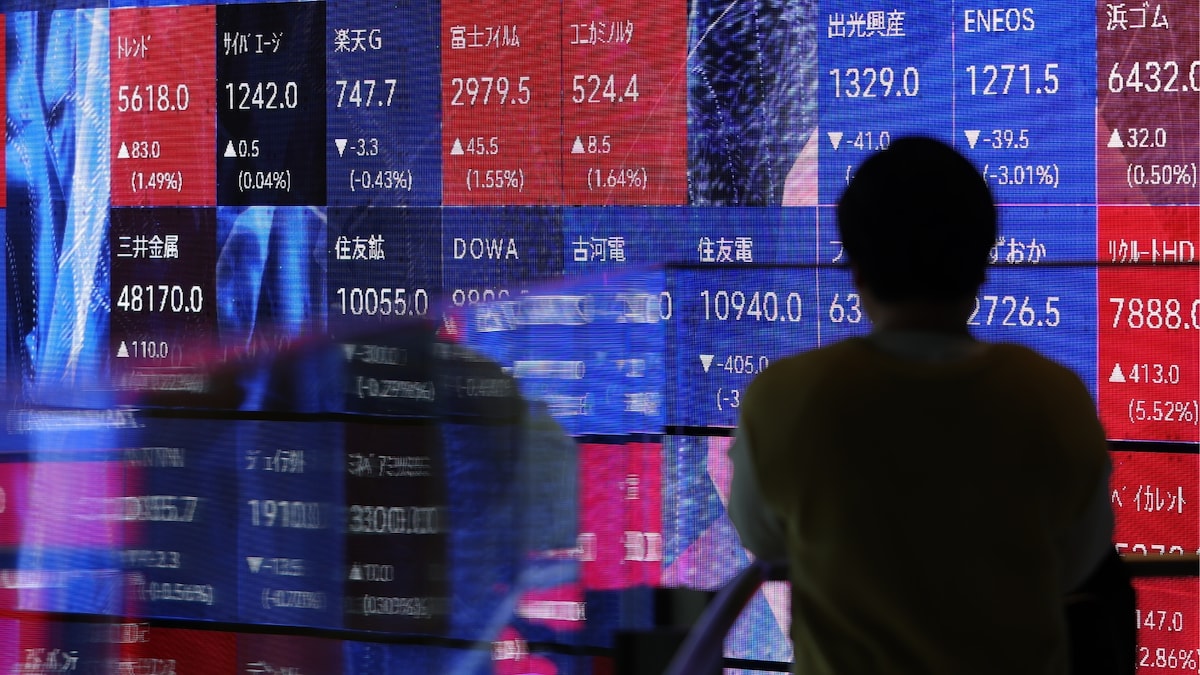
Asian markets are under pressure as worries about AI viability hit technology stocks hard. The KOSPI in South Korea fell over 3.50%, reaching its lowest level since April. Investors got scared and moved money into safer assets like Treasury securities and the yen, while Japanese markets also saw sharp drops.
Asian markets remain under immense pressure as a significant decline in technology equities intensified as market participants divesting from major technology corporations following an exceptionally strong performance in the preceding months and reallocated capital toward safer assets, including Treasury securities and defensive currencies such as the yen.
Asia Market Under Pressure
The Kospi Index in South Korea, which serves as a key indicator for the artificial intelligence sector, declined by close to 3.50%, positioning the index toward its poorest closing level since April, a Bloomberg report said.
The Japanese Nikkei 225 along with TOPIX slumped over 1.50%.
Meanwhile, Dalal Street is hinting at a different colour as the GIFT Nifty, the Nifty futures hinted at a 130-point gap-up start early on.
This decline resulted in a second consecutive day of weakness for MSCI Inc.'s regional equity index, bringing it to valuations comparable to those observed in July.
This negative sentiment extended to United States equity-index futures markets, with Nasdaq 100 futures contracts declining 0.1% following the underlying index's most challenging trading session since late June.
The deterioration in the artificial intelligence sector prompted investors to seek refuge in fixed-income securities. Treasury securities retained the substantial gains achieved in the preceding session following their most significant rally in over two years.
The benchmark 10-year Treasury yield, which experienced a decline of 17 basis points on Thursday, was trading at 4.96%. Government debt instruments in Japan and Australia demonstrated similar performance patterns to United States Treasuries.
The yen, traditionally regarded as a safe-haven currency during periods of market instability, demonstrated superior performance relative to all other major currencies. The currency appreciated by 0.4% to 156.20 per dollar during early Asian trading sessions. The dollar experienced modest weakness against the majority of its Group-of-10 counterparts.
Concerns Dragging Market
Traders experienced minimal relief from Brent crude following its 4% appreciation in the preceding session, with the international benchmark trading marginally below $113 per barrel. Crude oil had advanced on Thursday as violent incidents in Saudi Arabia intensified apprehensions regarding supply availability. Gold maintained the losses sustained on Thursday's session, when it declined by 2.8%.
Concerns regarding the long-term viability of artificial intelligence investments and their ultimate profitability have diminished technology sector valuations from recent peaks and are beginning to influence broader macroeconomic perspectives.
Market participants have concurrently reduced their probability assessments for an additional Federal Reserve interest-rate adjustment during the current calendar year.