
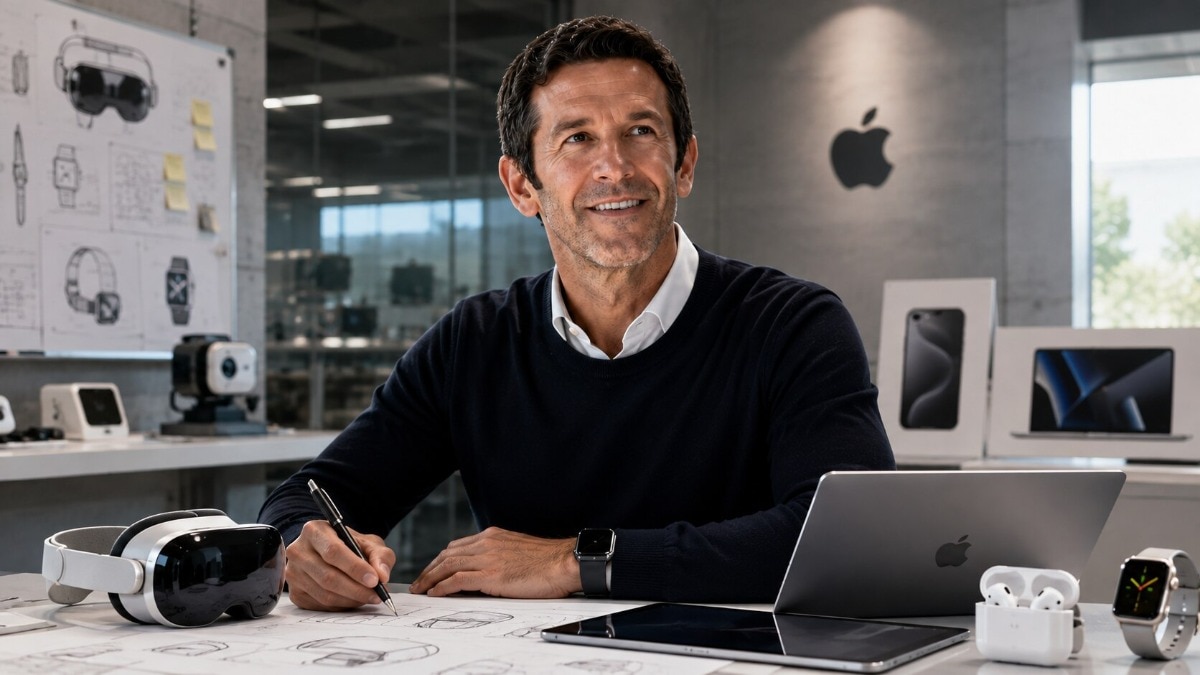
Apple CEO John Ternus said the company will not add AI features just to follow trends. He wants to build products that people love instead of shipping technology for its own sake. "Everyone has an opinion -- I really like where we're at," he said about their current AI path.
Apple CEO John Ternus has a different take on the AI race. He says the company doesn't want to add AI features just to follow the trend. Instead, Apple wants to use the technology to build products that people genuinely love.
As artificial intelligence becomes the hot topic and headline feature for all major new gadgets, Apple CEO John Ternus seems to be choosing a different path in the AI race. He thinks the technology should do its job without constantly demanding attention.
In an interview with Wired's Steven Levy, Ternus addressed Apple's place in the AI race, which has often been questioned after delays to its promised Siri upgrade. Ternus, who took over from Tim Cook on September 1, was not particularly worried about what people think. "Everyone has an opinion -- I really like where we're at," he said.
He made it clear that AI will remain part of Apple's plans, but the company does not want to add it simply to keep up with rivals. "We're absolutely going to leverage AI to do that. We don't want to ship AI for AI's sake. When we're doing it right, people won't have to think about whether it was AI that made this happen or more traditional software. What matters is, did we build something that they really love?"
Apple's revamped Siri AI
Apple has already started putting that idea to work. It introduced its revamped Siri AI at its Worldwide Developers Conference in June and began rolling it out in beta on September 14. The assistant is designed to understand personal context, recognise what is on a user's screen, answer broader questions and carry out more actions across apps. Apple says it uses on-device processing and Private Cloud Compute to handle requests while protecting personal data. Its latest foundation models were developed with Google and draw on Gemini technology.
Now, on the internet, there are so many murmurs around the future of AI and its impact on technology and gadgets. Some suggest AI assistants could eventually take on traditional apps, making them less important. In other words, the idea is that people may in the coming days ask an AI agent to book a cab or order food or edit a photo, rather than open separate apps. The interviewer, Levy put that possibility to Ternus, who was not convinced that apps and products would disappear.
"That could make life really easy, I suppose, but the creation of products is a deeply human and personal thing, something that we love to do," he said.
It is a distinctly Apple answer. Rather than present AI as a replacement for the products people already use, Ternus wants it to make those products better. That puts pressure on Apple to prove the idea in everyday use. Siri will have to be genuinely helpful, not just sound smarter in a launch video.