
The Frankfurter Buchmesse saw fewer trade visitors and exhibitors last month amid geopolitical tensions. Many Ukrainian publishers suffered losses due to the ongoing war, while the event highlighted the growing influence of machine intelligence. Despite these anxieties, the fair showcased innovative contributions from global comic book publishers and creators worldwide.
Synopsis
The Frankfurter Buchmesse this year experienced a decline in trade visitors and exhibitors amidst ongoing geopolitical tensions. Many Ukrainian publishers suffered losses due to the war, reflecting the continuing impacts of the Russia-Ukraine conflict. The event also highlighted innovative contributions from global comic book publishers and creators from various countries. Notably, the theme of this year's fair underscored the growing influence of machine intelligence in publishing.
Listen to this article in summarized format
AI and its discontents hung like a fug inside the 5 giant halls that housed this year's Frankfurter Buchmesse (Frankfurt Book Fair), now in the 78th year of its modern avatar. This was, of course, unavoidable, given the unease in the publishing industry over the increasing presence of machine intelligence in sectors of the book trade thought to be AI-proof.
But there were other causes of unease as well. The number of trade visitors at the world's largest trade fair for books last month had fallen by 2,000 from the previous year's tally of 2,38,000. Exhibitors, too, nearly fell by 10% from the 4,350 in 2025.
Blame it on geopolitics, fair watchers said. Two years ago, when I had first visited the fair, the Russia-Ukraine war had been going on for two-and-a-half years. It was depressing to find the spectre of the war still shuffling about 2 years on. Then, as well as now, the fair organisers had invited many Ukrainian publishers, authors, and journalists. They were there this year as well. But many had taken body blows. The first publisher who I had a meeting with had lost nearly 8 mn books after a drone hit their warehouse in August.
Most of my meetings were in Hall 3, where most of the European and Latin American publishers had their stalls. After the Philippines last year, Czechia was this year's guest of honour.
It was amusing to see the motto of the Czech pavilion, 'A Country on the Coast', a hat-tip to a certain Mr William Shakespeare who generously allowed a coastline to Bohemia in his play The Winter's Tale. Bohemia, part of today's Czechia, famously does not border on the sea. I was hoping that there would be other in-jokes of a Kafkaesque nature - Kafka on the Shore? - or, at least, a man in a Good Soldier Švejk costume, from the hero (sic) of Jaroslav HaSek's 1921-23 eponymous multi-volume novel - tramping about. But no.
It was also a good occasion to make friends with Chile, the guest of honour in 2027. The press I look after had recently brought rights to two Chilean collections of short stories. So our stock with the Andean nation was good, which at Frankfurt usually translates into free coffee.
For itinerant trade visitors like me, the quest for free coffee is a major motivator. By evening, the problem becomes one of plenty, as most national stalls host wine receptions, and it is possible to drink and nibble one's way from, say, Portugal to Estonia. The Indian stall is made of sterner stuff, and traffics in nothing more exciting than masala chai and samosas.
There are many who argue that post-Covid, rights fairs have become a bit of a white elephant, since one can as easily deal with other publishers and agents online, at virtually no cost. While this might be the case for publishers from the 'global north', 'south-south' conversations are much more likely to happen in places such as Frankfurt. In 2024 and 2026, my chief takeaway from the fair was the opportunity to meet small and independent publishers from Latin America, Africa, the Arab world, and Asia.
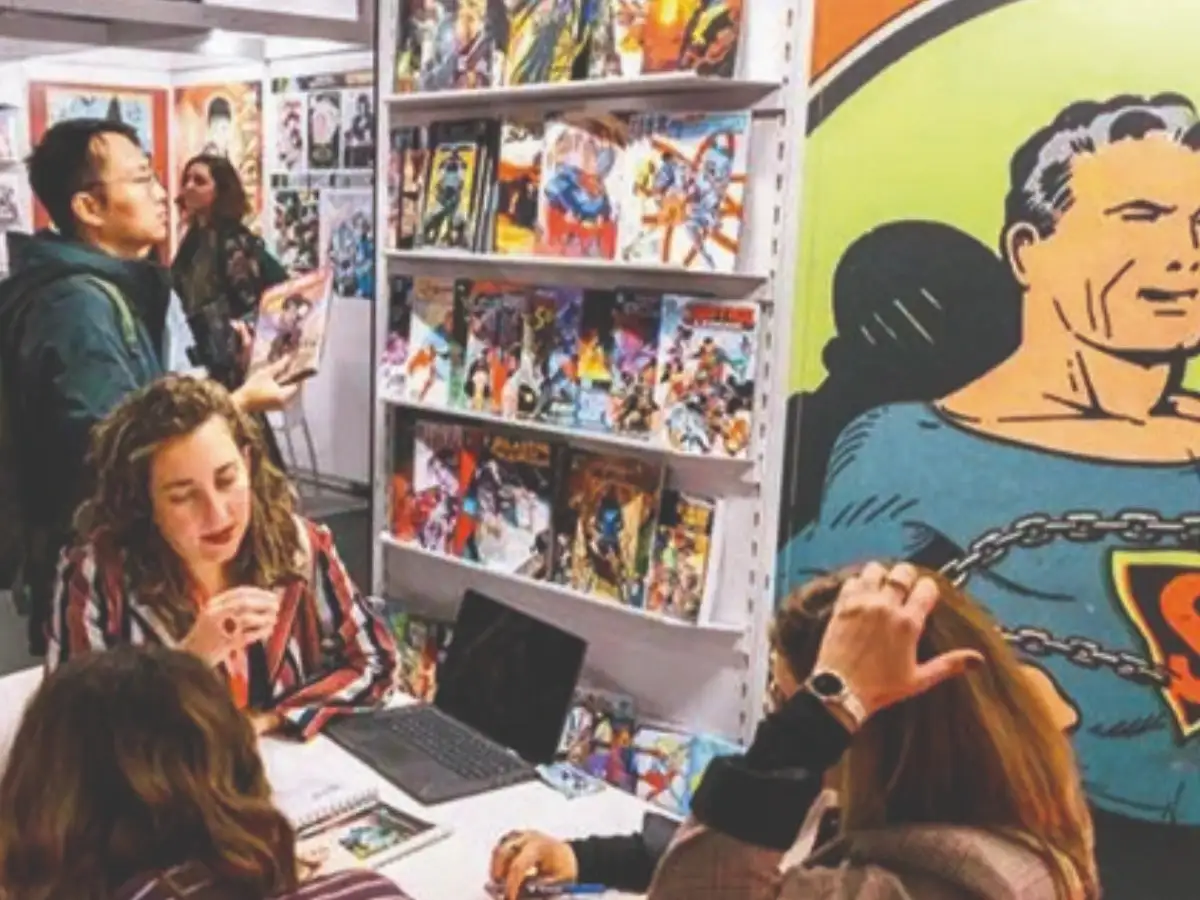
This year, the invitee theme was comics and graphic novels, and I was delighted to be able to meet a bunch of young, talented, and supremely innovative comic book publishers and creators from countries as diverse as Uruguay, Vietnam, Burkina Faso, Turkey, Egypt and Georgia. The possibility of translating a Vietnamese graphic novel - about the career of a young comic artist in Ho Chi Minh City - into, say, Bengali is an intriguing and challenging prospect.
Equally pleasurable was the discovery of a book of French poetry exclusively on football, 90 poems standing for 90 minutes, spanning the victory of Les Bleus in 1998 to the heartbreak of 2022. What's not to like--unless you're a fan of Argentina, of course?