
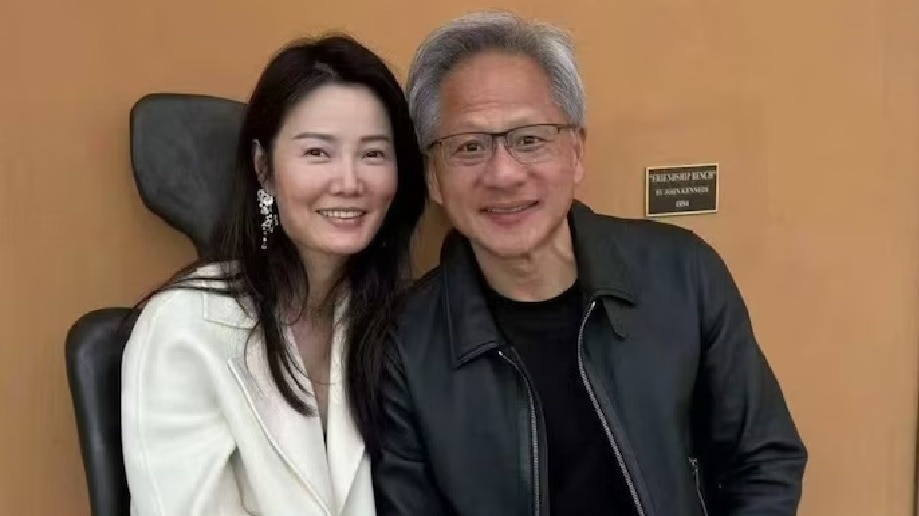
Alice Huang was the public face of Megaspeed, but a Chinese businessman named Li Ming ran the smuggling network behind the scenes. The Wall Street Journal reported that Li diverted restricted Nvidia chips to China. "These previously unknown connections show that efforts to help Chinese companies narrow the gap," the report said.
Alice Huang, who had an affair with former Nvidia CEO Jensen Huang and was suspected by US authorities of having links to Chinese intelligence, was merely the public face of Singapore-based Megaspeed, a company accused of supplying restricted AI chips to China, while a Chinese businessman was said to be running the smuggling network behind the scenes, The Wall Street Journal (WSJ) reported.
The alleged mastermind, identified as 52-year-old Li Ming, operated a network of companies involved in diverting Nvidia's advanced artificial intelligence (AI) chips to China in violation of US export restrictions, the report said.
Li was deeply involved in Megaspeed's operations, including key business decisions, despite Alice Huang holding a senior executive position. The report also said that he was also linked to several other companies trading Nvidia chips.
Li was charged with fraud in Singapore in February last year over allegations involving the diversion of Nvidia-powered computer servers to other countries. Although several companies were named in the charging documents, Megaspeed was not among them.
According to Singapore prosecutors, Li allegedly deceived US suppliers into believing that servers equipped with Nvidia chips were intended for use by his Singapore-based company. Instead, the equipment was shipped to neighbouring Malaysia before being sent to an unidentified third country.
Li is currently out on bail and reportedly lives in a luxury villa near the Chinese Embassy in Singapore.
The report also stated that Li had longstanding business ties with Alice Huang and her husband, Kang Wei.
Following the Biden administration's restrictions on exports of advanced Nvidia chips to China, the three began building a network of businesses across Southeast Asia to provide Chinese customers with access to advanced computing capabilities.
"These previously unknown connections show that efforts to help Chinese companies narrow the gap in the AI race extended far beyond the scope of the Megaspeed scandal," the report said.
JENSEN HUANG'S RESIGNATION AND ALICE HUANG CONTROVERSY
The revelations come days after Jensen Huang resigned as Nvidia's president, CEO and board member amid mounting scrutiny over his affair with Alice Huang and concerns about her suspected links to Chinese intelligence.
In a letter to employees in early November, Huang acknowledged being unfaithful to his wife and apologised for breaching the trust of his family and colleagues.
The controversy deepened after reports emerged of a second affair involving Kimberly Powell, Nvidia's vice president of healthcare, who reported directly to Huang, and another employee.
Meanwhile, an earlier WSJ report revealed that Alice Huang was introduced to Jensen Huang by her husband, Kang Wei, who had known the Nvidia co-founder for nearly a decade. Kang was reportedly aware of and accepted their romantic relationship, even joking to associates that his wife was the Nvidia chief's personal assistant.
Meanwhile, authorities in the US and Singapore have been investigating Megaspeed over suspicions that it diverted billions of dollars' worth of export-restricted Nvidia AI chips to China. The company has denied wrongdoing, maintaining that it complies with applicable export control regulations.
The scrutiny has also extended to Taiwan, where authorities revoked Alice Huang's entry permit and barred her from returning amid an investigation into whether her visits involved intelligence gathering or violated anti-infiltration laws.
According to the WSJ, Megaspeed supplied computing capacity to Chinese technology giant Alibaba through data centres in Malaysia, while some Nvidia-powered servers were shipped to China, raising further questions over possible violations of US export restrictions.