
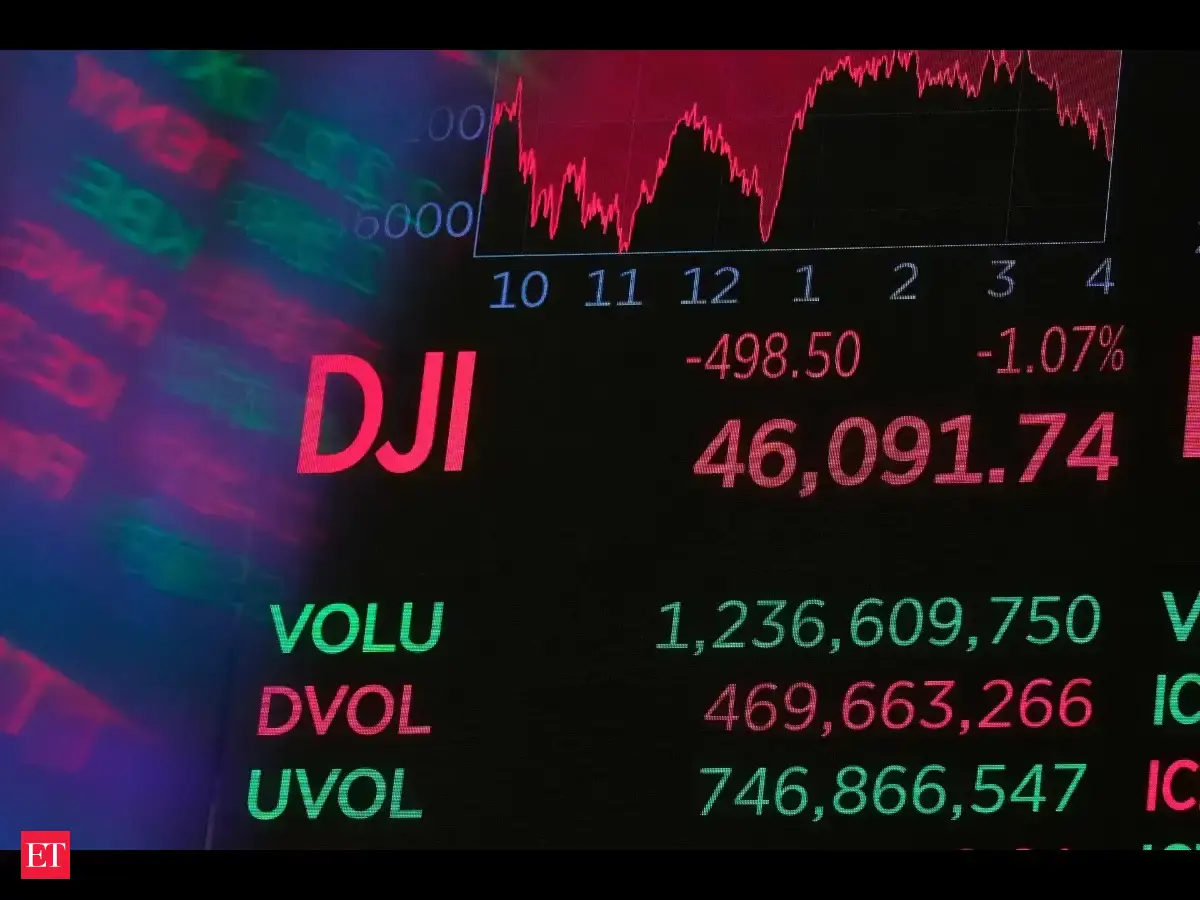
A Federal Reserve survey released Friday, November 13, shows 87% of experts now see artificial intelligence as the biggest threat to the financial system. Respondents warned that high stock prices and cybersecurity risks could trigger a market correction. Many also fear that heavy debt used for AI could cause losses.
Synopsis
A recent survey conducted by the Federal Reserve reveals that artificial intelligence is perceived as the primary threat to financial stability. Participants voiced concerns regarding inflated equity prices and possible market corrections. The survey also emphasized cybersecurity threats from nation-states and the risks posed by AI models. Other issues included AI financing challenges and rising hedge fund leverage since 2013, though the overall financial system currently shows stability.
Risks from artificial intelligence now sit at the top among the greatest threats to the financial system, according to respondents who participated in a Federal Reserve survey released Friday, November 13.
The US central bank’s twice-yearly Financial Stability Report, which looked at a variety of dangers, saw a spike in respondents feeling that the biggest danger comes from AI across several fronts, including debt, stock market valuations, and security risks.
On the Artificial Intelligence front, the respondents noted three distinct areas of concern: “elevated equity valuations and the possibility that lower-than-expected earnings could result in lower valuations and a market correction”; the second risk cited in the report is cybersecurity, “stemming from either a malicious attack by sophisticated state actors or damage caused by frontier AI models themselves”; and the third risk is associated with “complex forms of AI-related financing.”
The respondents to the Fed survey include a variety of market participants, economists, analysts, and institutional sources. 87% of respondents cited AI as a “salient risk” to the system, up from 50% in the spring survey, and far exceeding the next most-cited danger, an asset correction, mentioned by 52% of those surveyed.
This too had heavy AI implications as respondents cited the threat of a “sharp correction in AI-related equities, driven by uncertain returns on large capital expenditures,” the report says.
Live Events
“Many noted that stretched valuations, circular financing arrangements, and heavy reliance on debt to fund the AI buildout could amplify losses, with the potential for a deterioration in broader risk assets to spill over to business investment and household consumption.”
Other leading risks related to financial systems were higher long-term rates (48%), cyberattacks (43%), and fiscal debt sustainability (43%).
On cyberattacks, some of the respondents noted that “advances in AI are lowering the barrier to sophisticated attacks by state and non-state actors, while others pointed to the risk of unintended damage caused by frontier AI models themselves.” Many respondents were worried that disruptions to trading, settlement, or payment systems could materially damage confidence in financial institutions.
The report assessed respondents from September to October 28, before the latest turmoil at chipmaker Nvidia, where its CEO, Jensen Huang, had stepped down on Thursday after revelations of multiple extramarital affairs, including one involving a Chinese businesswoman who is under suspicion as a Chinese spy.
It is also preceded by the midterm elections, in which AI was one of the rising concerns of the American public. Other than the overwhelming risk related to AI, the report found the system fairly stable, though it noted that hedge fund leverage is at its highest since 2013 and is concentrated in a relatively small group.
Is CoreWeave's movement signalling a return of the AI trade?
How India’s INR22.5 lakh crore gold loan boom is hiding a big hole
KYC and KYB: Pidilite's margin keeps finding its way back, though costlier raw materials can knock it off course – Part 2 of 3
Business of Odd Things: The farm that needs no land, freshwater, or fertiliser
KYC and KYB: Inside Pidilite, the company that turned Fevicol into a word for a strong bond – Part 1 of 3
Seoul halts trading, Nifty has its best week since 2021: Money leaving the AI trade – will it land in India?