
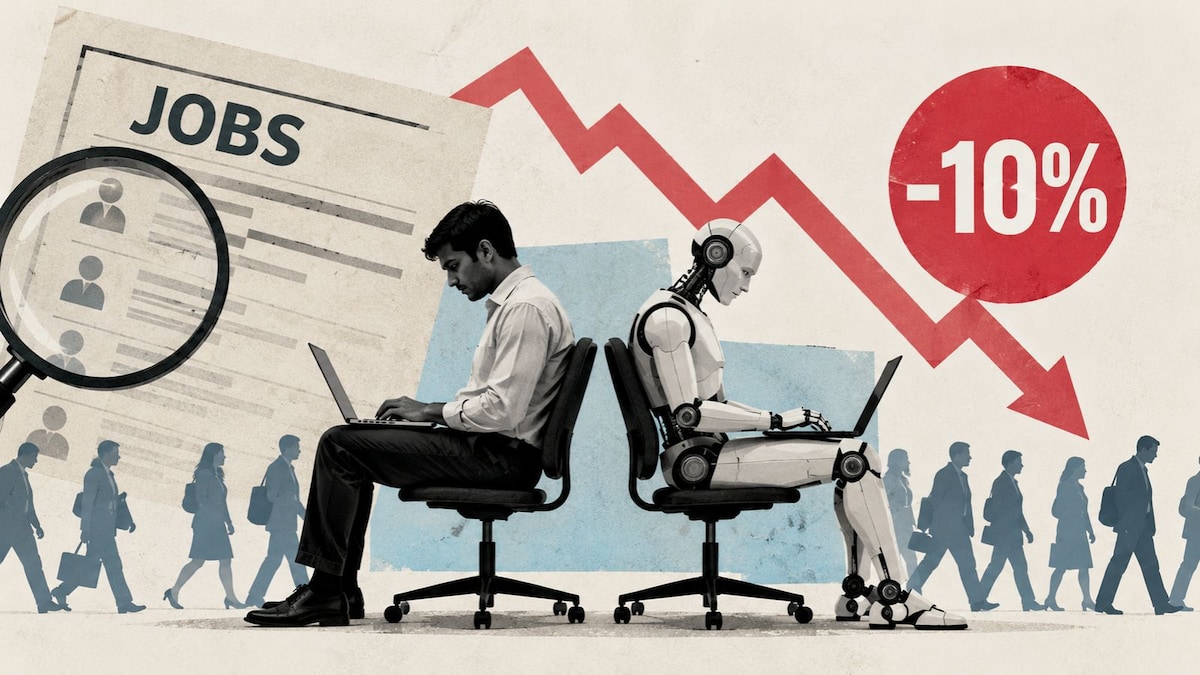
Hiring demand in AI-exposed occupations fell by nearly 10% across Asia, the IMF reported in October 2026. The study of 40 million job postings showed that while AI reshapes work, it does not eliminate it. Many employers now seek workers who can use AI tools to improve their business processes.
Hiring demand in occupations more exposed to artificial intelligence (AI) has fallen by nearly 10% relative to less-exposed occupations across Asia, according to a report by the International Monetary Fund (IMF), which found that the decline has stabilised even as AI capabilities have improved.
The findings are based on an analysis of 40 million online job postings across 19 Asian economies. The report, Regional Economic Outlook: Asia and Pacific, published in October 2026, examines how AI is changing labour demand, the skills employers seek and the implications for economies with different demographic profiles.
The IMF said the evidence points to AI reshaping work rather than eliminating it entirely. While hiring demand has declined in occupations more exposed to the technology, employers are also seeking workers who can use AI tools, develop AI-based applications and integrate the technology into business processes.
The report cautioned that the effects vary across economies and occupations. It also noted that job postings measure new hiring demand rather than the full impact on employment, meaning the consequences of changes in recruitment may emerge over time.
AI and hiring
The IMF's analysis found that hiring demand in occupations more exposed to AI weakened after the launch of ChatGPT in 2022. The difference became measurable as AI systems developed the ability to handle tasks that previously required more time and expertise from human workers.
By the time AI could perform tasks such as identifying and fixing bugs in a small software library, which would take a person about an hour, employer demand in more-exposed occupations had fallen by nearly 10% relative to less-exposed roles.
However, the report found that the decline in labour demand had stabilised even as AI systems became capable of completing tasks that could take a person several hours to perform.
The IMF said reduced hiring remained the more significant force in the evidence it examined, although new opportunities were emerging for workers with the skills to use AI.
The analysis has limitations. Online job postings provide information about recruitment demand but may not reflect actual hiring, as employers can change recruitment practices or use other channels to advertise vacancies. The report said further analysis of employment, wages and hours worked would help establish the broader effects.
The AI skills shift
The report identified prompt engineering, retrieval-augmented generation (RAG) and building AI agents among the emerging skills that have spread since 2023.
Employers are increasingly seeking workers who can use AI, build applications with it and connect the technology to their organisations' knowledge and processes. The IMF said demand for these skills is rising, particularly in occupations more exposed to AI.
About 6% of firms in Asia ask for AI skills in their job postings, according to the report. Demand for workers is growing faster at firms that seek AI skills than at those that do not, including in occupations more exposed to AI.
The findings suggest that the impact of AI on hiring reflects two forces: lower demand in occupations where the technology can perform more tasks and new opportunities for workers who can use it. The IMF said the latter is beginning to offset some of the decline, but has not yet outweighed the reduction in hiring demand.
The report also highlighted the implications for India, Indonesia and the Philippines, where large young populations create a need for job creation. Although workers in sectors such as agriculture are less exposed to AI, the technology could make it harder for these economies to move workers into higher-productivity manufacturing and services jobs.
The IMF said investment in skills and preparedness for AI would be important as Asian labour markets adapt to changes in employer demand.