
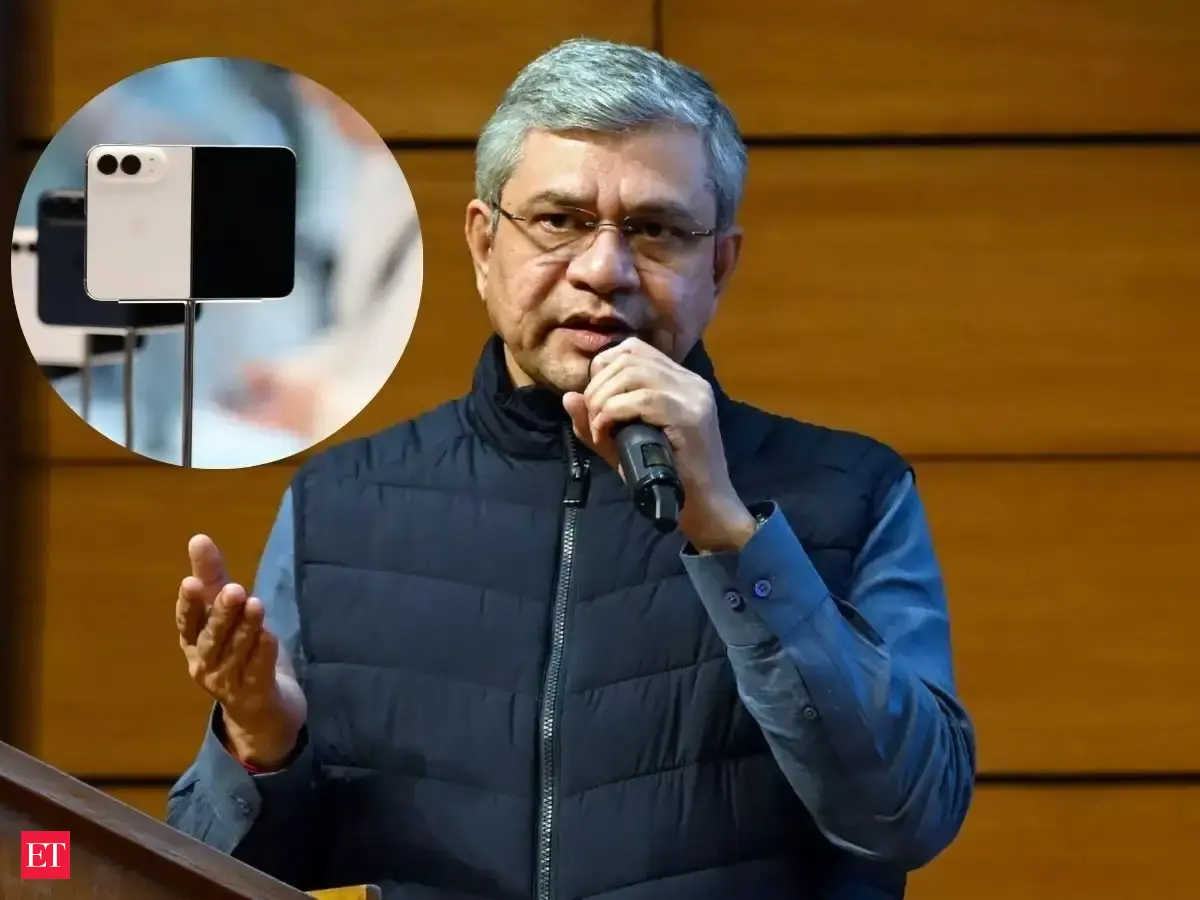
IT Minister Ashwini Vaishnaw said India will have its own homegrown smartphone brand by 23 October 2028. Speaking on 23 October 2026, he said, "You will have Indian-designed, Indian-manufactured, Indian-branded mobile phones." The government wants to build phones that compete with global giants like Apple and Samsung using local technology.
The iPhone Duo went out of stock despite carrying a price tag of nearly Rs 3 lakh, underlining the appetite for premium smartphones in India. But in the next two years, India could have its own homegrown smartphone brand with Indian design, manufacturing and intellectual property by October 2028 to take on global giants such as Apple and Samsung, according to IT Minister Ashwini Vaishnaw.
Speaking at the NDTV World Summit in Delhi on October 23, 2026, Vaishnaw set a two-year timeline for the proposed milestone. He told the audience to remember the date, saying that by October 23, 2028, India would have mobile phones designed, manufactured and branded in the country.
The minister's remarks come at a time when India is trying to strengthen its position in the global electronics supply chain. While the country has expanded smartphone manufacturing in recent years, developing the technology and intellectual property behind a competitive handset remains a more demanding task.
Ashwini Vaishnaw sets October 2028 deadline for Indian smartphonesVaishnaw said India was working towards a smartphone that would combine domestic design capabilities, manufacturing and an Indian brand. The goal, he suggested, is to establish a presence in a market dominated by international names such as Apple and Samsung.
"This is 23 October 2026. Please note it: 23 October 2028. You will have Indian-designed, Indian-manufactured, Indian-branded mobile phones," the minister told NDTV.
You Might Also Like:
China banned TBM exports, but India is building its own tunnel boring machines; Ashwini Vaishnaw shares progress & status of 125-km Rishikesh-Karnaprayag railway line with 16 tunnels
The timeline is significant because building a smartphone involves much more than putting components together. A competitive device needs carefully integrated hardware, efficient power management, reliable connectivity and software that works smoothly with the underlying technology.
Vaishnaw illustrated the challenge during the interview by taking a closer look at a smartphone's internal components. He explained that a device must accommodate radio-frequency communication, antennas, computing hardware, memory, cameras, a display and power-management systems within a compact body. Weight, battery performance and the limited space available inside the handset add to the engineering challenge. Getting all these elements to work together requires specialised design capabilities, testing and technical expertise.
India has already developed smartphone motherboard design capabilitiesThe minister said the groundwork for the proposed Indian smartphone initiative began several years ago, when the government challenged domestic designers to develop a printed circuit board (PCB) for a mobile phone. A PCB is a fundamental part of a smartphone's hardware, connecting and supporting electronic components that allow the device to function.
According to Vaishnaw, two companies took up the challenge, and one developed a design that was subsequently selected by a major US telecommunications service provider. He said the company had already designed and delivered a 5G-plus mobile phone to the US operator, with the device manufactured and supplied to customers. The development, he argued, demonstrated that Indian companies could acquire capabilities needed to compete in the international handset market.
You Might Also Like:
India's chip path is clearly laid out: Ashwini Vaishnaw outlines road map to a bigger, better semiconductor ecosystem
Vaishnaw said the experience gained over approximately three-and-a-half years would now help India develop a domestically branded phone while retaining its design and intellectual property within the country. The minister also expressed confidence that the proposed handset could become a major seller. However, he did not identify the brand, announce a specific launch date or disclose the phone's price and technical specifications during the event.
Why an Indian smartphone brand would be a major stepIndia is already a significant manufacturing base for smartphones sold by international companies. However, manufacturing a phone in India and owning the technology and brand behind it are two different things. The distinction matters because a successful homegrown brand could allow Indian companies to build expertise across several stages of the industry, from product design and hardware engineering to intellectual property and sales.
It could also create opportunities for domestic suppliers and electronics companies. The actual impact would depend on how much of the technology is developed locally, the scale of production and whether the finished devices can compete on price, performance and reliability.
Apple and Samsung have established global businesses with extensive product ecosystems, distribution networks and loyal customers. An Indian entrant would need to build consumer trust and demonstrate a clear reason for buyers to choose its devices over existing alternatives.
Vaishnaw's October 2028 target therefore represents an ambition rather than a guarantee of commercial success. The next two years will be important in determining how the proposed programme moves from design capabilities to a recognisable consumer brand.
Vaishnaw highlights India's electronics export growthThe minister also used the interview to discuss the wider transformation of India's manufacturing sector. He credited the government's
Make in India initiative, launched in 2014, with helping expand domestic production and improve the country's manufacturing capabilities.
Vaishnaw criticised the regulatory approach of previous Congress-led governments, arguing that excessive controls had held back manufacturing. He said the country's economic and political history needed to be considered when assessing its current industrial position.
He pointed to the production of mobile phones, drones, missiles, trains and other advanced equipment as evidence of the progress made by Indian manufacturers. According to the minister, electronics has become India's third-largest export category, and he expects it to rise to second place in the near future.
The proposed Indian smartphone brand would be another test of that progress. If the initiative succeeds, India could move further up the value chain, from producing devices for global brands to developing and selling phones under its own name.
For consumers, the more immediate question is what such a phone would offer. Its price, features, software support, quality and availability will ultimately determine whether an Indian-designed and Indian-branded device can make a lasting mark in a market where Apple and Samsung already have a strong presence.