
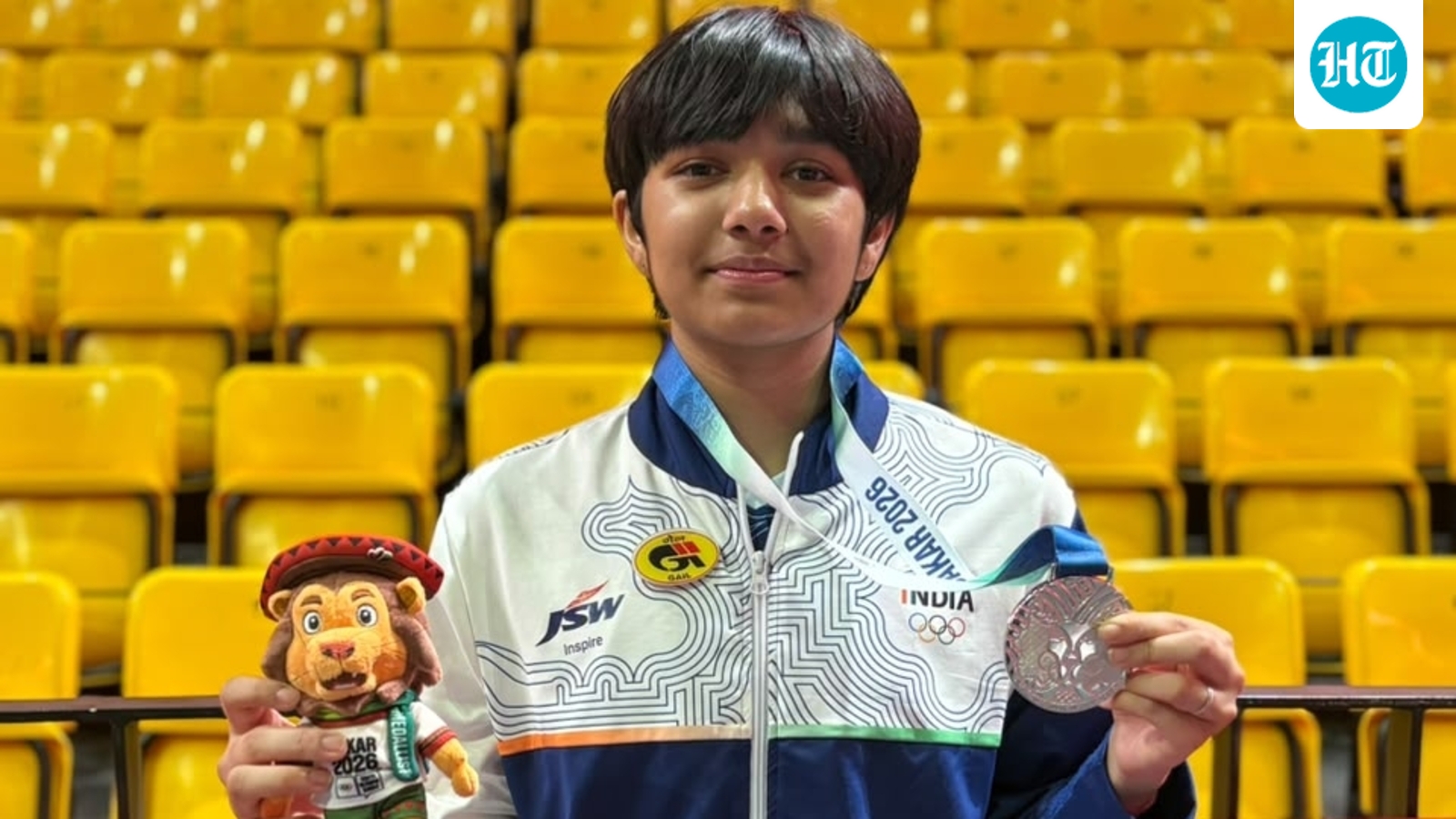
The 2026 Youth Olympic Games concluded in Dakar on Friday, leaving officials to reflect on the event's future. India finished with 10 medals across various sports. Coach Vimal Kumar said, “Some of these young athletes may have good potential, but we must understand a medal can only be a start.”
As the first Olympic event in Africa was drawing to a close, International Olympic Committee (IOC) president Kirsty Coventry threw an interesting number.
“15% conversion (of athletes) from the Youth Olympic Games to the Olympic Games. We have to be very realistic about what we want the Youth Olympics to be,” Coventry said.
It is in this context that the relevance of the Youth Olympic Games (YOG) — the 2026 edition concluded in Dakar on Friday with the future of the concept itself in pause-and-reflect mode, as per Coventry — needs to be reviewed. As does India's outing in it.
India finished with 10 medals and nine medallists from its 17-member contingent in a Games with fewer quotas and participants compared to the previous edition in 2018. Medals came in boxing, swimming, athletics, badminton, beach wrestling, judo and wushu. There were quite a few firsts: a first boxing gold, first medals in swimming and wushu, first female medallists in athletics and badminton.
"I'm happy when young Indian sportspersons do well. Having said that, this can only be an indication, at best," Vimal Kumar, India's badminton coach and selector, told HT. Tanvi Patri, the Dakar silver medallist, trains at his Centre for Badminton Excellence where Vimal is the head.
"Some of these young athletes may have good potential, but when they win Youth Olympic medals, we tend to go overboard and hype them up. We must understand a Youth Olympics medal can only be a start. They have a long, long way to go."
To these teens, a stage like YOG offers exposure and experience of a multisport event. Even if the quality of the field may vary across sports, given this edition's unique quota system that took into account a more global representation rather than a direct qualification pathway. For instance, the US had no competitors in athletics and swimming in Dakar, two major Olympic sports in which they often dominate at the real thing.
Still, Tanvi battled hard for gold with a Chinese world junior champion. Shourya Ambure won the women’s 100m hurdles bronze, competing alongside some of the top-ranked hurdlers in her age group. Dhinidhi Desinghu took the 200m freestyle bronze in a final won by an Asian Games medallist from China.
"It is a global event. Any time an Indian does well in an international swimming event... we are looking for role models, more visibility," said Nihar Ameen, swimming coach under whom Dhinidhi trains.
"It's brilliant that we won three medals in swimming. But what is it going to do for Indian swimming? How can we use it as a platform to launch the senior programme? At the youth level, we are not bad. But at the senior level, there's still a lot of work to be done."
Indian swimming, far from even making the finals at the Commonwealth Games and Olympics, has been grappling with that transition problem. For Indian sport overall, translating junior promise into senior success remains a big challenge. Only one Youth Olympic individual medallist from India has gone on to medal at the Olympics — Manu Bhaker, the 2018 YOG gold and 2024 Paris Games twice bronze medallist.
"I've seen many young athletes go wasted," said Vimal. "They will need to learn how to manage everything that will come after this — added recognition, money, etc."