
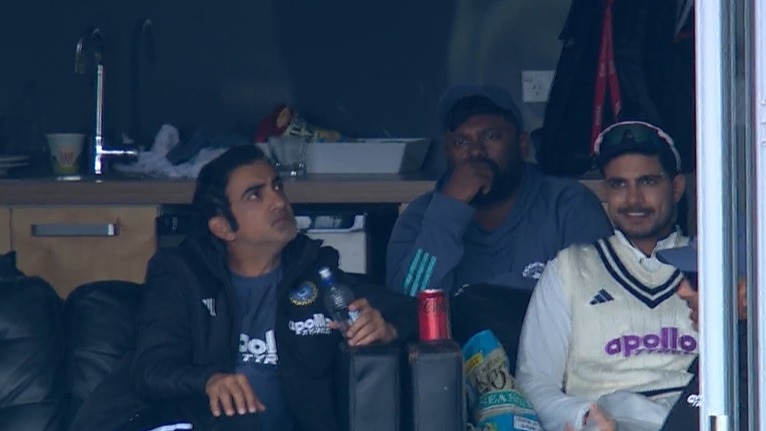
Shubman Gill explained why India settled for a draw against New Zealand in the Wellington Test. He said, "The fast bowlers were tired. They have bowled almost 50 overs in the match." Gill wanted to keep his bowlers fresh for the next game in Christchurch, considering the flat pitch conditions.
NZ vs IND 1st Test: Shubman Gill reveals why he went to chat with Gautam Gambhir before India settled for a draw against New Zealand in Wellington, citing tired fast bowlers, a flat pitch and the quick turnaround before the Christchurch Test.
Shubman Gill walked over to the Indian dugout for a discussion with head coach Gautam Gambhir before India decided to shake hands with New Zealand and settle for a draw in the first Test in Wellington.
The Indian captain later revealed that the conversation came down to whether India had enough time and assistance from the pitch to keep pushing for a win. With New Zealand's batters refusing to give in on the final day, India had to weigh up the chances of forcing a result against the workload on their fast bowlers.
NZ vs IND 1st Test, Day 5: UPDATES | SCORECARD
Gill said India might have continued had there been more in the wicket. However, the surface had become increasingly difficult for the bowlers, while the quick turnaround before the second Test in Christchurch was another factor.
"If there was a little bit more in the wicket, maybe. But the fast bowlers were tired. They have bowled almost 50 overs in the match, all of them," Gill said after the match.
"Also, there is a quick turnaround, with the next match in only three days and travel tomorrow. So we wanted to keep all our bowlers fresh. I didn't really think having five to 10 extra overs would have helped that much."
India and New Zealand eventually shook hands with 15 overs remaining, bringing an end to a Test in which the visitors had dominated with the bat but could not find a way to take the final five wickets.
INDIA'S WIN CHANCE
India had entered the final day needing eight wickets to win after setting New Zealand a daunting target. The hosts, however, were determined to bat out the day and make the most of a surface that offered diminishing assistance.
New Zealand had lost two wickets in the morning session, slipping from 132 for 2 to 139 for 4. India briefly sensed an opening, but Daryl Mitchell and Tom Blundell resisted before the latter was dismissed for 15.
Anshul Kamboj provided the breakthrough, with Rishabh Pant completing a sharp catch behind the stumps. India had another opportunity to build pressure, but Mitchell continued to dig in.
Glenn Phillips joined him after Blundell's dismissal, and the pair made sure India could not produce the late collapse they needed. Their partnership took the game towards a draw, with the visitors increasingly running out of time.
BOWLERS NEEDED REST
Gill's explanation also offered an insight into India's thinking ahead of the second Test. The fast bowlers had put in a substantial shift across the match, and the captain did not believe another five to 10 overs would have significantly improved India's chances.
The schedule added to the challenge. India were due to travel the following day, with the second Test in Christchurch beginning on November 27. Gill wanted his bowling attack to be fresh for that contest rather than push them through an extended spell with little prospect of a breakthrough.
The decision came despite India's commanding position in the match. After bowling New Zealand out for 368 in their first innings, India piled up 720 for 9 declared, taking a lead of 352 runs.
KL Rahul led the scoring with 136, while Rishabh Pant struck 128. Gill contributed 98, narrowly missing out on a century, as Yashasvi Jaiswal, Devdutt Padikkal and Dhruv Jurel also made valuable contributions.
New Zealand, though, showed considerable resolve in their second innings. Mitchell remained unbeaten on 49 and Phillips made 26 not out as the hosts reached 239 for 5 before the captains agreed to a draw.
CHRISTCHURCH NEXT
The result leaves India with work to do in the second Test, particularly with the ball. Their batting effort in Wellington gave them a strong platform, but they could not turn that advantage into a victory on a surface that became increasingly batter-friendly.
Gill will now hope the conditions in Christchurch offer his bowlers more assistance. With little time between the two Tests, managing the workload of the attack will also remain important as India look to take the lead in the series.